Politics
The Alamein Summit and the New Security Map
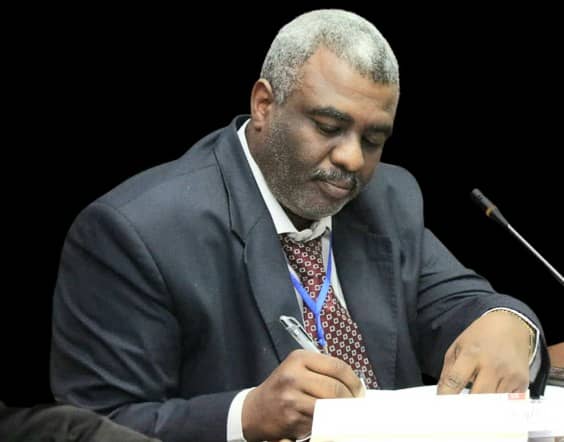
Voice of Truth: Dr. Ibrahim Shaglawi. Chairman of the Sovereignty Council and Army Commander-in-Chief Abdel Fattah al-Burhan participates this Sunday in the Alamein consultative summit, which brings together Sudan, Egypt, Eritrea, and Somalia to discuss regional developments and common security interests. The summit comes at a sensitive time, amidst escalating Ethiopian-Eritrean tensions and renewed fighting in Tigray, coinciding with military operations in Blue Nile state on the Ethiopian border.
Sudanile October 5, 2026Published 1 views
Source:Sudanile
Voice of Truth: Dr. Ibrahim Shaglawi. Chairman of the Sovereignty Council and Army Commander-in-Chief Abdel Fattah al-Burhan participates this Sunday in the Alamein consultative summit, which brings together Sudan, Egypt, Eritrea, and Somalia to discuss regional developments and common security interests. The summit comes at a sensitive time, amidst escalating Ethiopian-Eritrean tensions and renewed fighting in Tigray, coinciding with military operations in Blue Nile state on the Ethiopian border, which gives the summit an importance that transcends political consultation to shaping regional security. However, the significance of al-Burhan’s visit lies in the timing. The regional landscape is shifting rapidly, and security lines that once seemed separate have begun to intersect: the war in Sudan, Ethiopian-Eritrean tensions, and the security of the Red Sea and the Horn of Africa have all become parts of the regional equation. Therefore, the Alamein summit does not appear to be an ordinary meeting at an ordinary time. While the Egyptian presidency announced it as a consultative summit to coordinate on regional issues of common interest, reading between the lines suggests that the meeting comes at a complex moment, where the security environment of the Horn of Africa and the Red Sea is being rearranged while multiple crises converge at one point: Sudan, Ethiopia, and regional security. In Ethiopia, fighting has returned to Tigray since late September in the most dangerous escalation since the 2020–2022 war, and government forces have regained control of Mekelle airport, fueling fears that the internal confrontation could spiral into a regional conflict. The dispute is no longer purely internal to Ethiopia, given Addis Ababa’s severing of diplomatic ties with Eritrea and its accusations—alongside Sudan and Egypt—of supporting the opposition coalition, accusations which the parties concerned deny. But the most significant development for Sudan is occurring on the other side of the Blue Nile state. In recent days, military operations have escalated near the border, and the Sudanese army announced yesterday the recapture of the areas of Minza and Bashkarkad, delivering what sources describe as a knockout blow to the Rapid Support Forces (RSF) militia. Developments confirm that this front is no longer a footnote in the Sudanese war but has become one of its most sensitive areas due to its border location. Herein lies the importance of the Alamein summit: it is taking place as three security lines intersect: the Sudanese war, the Ethiopian-Eritrean conflict, and Red Sea security. Therefore, treating the Blue Nile front merely as a military front within the Sudanese war would be an incomplete reading. The region lies at a highly sensitive border junction, and any change in the balance of power there reflects on Ethiopia, just as any turmoil within Ethiopia will have political, security, and humanitarian repercussions for Sudan. When these developments coincide with tensions over Ethiopia’s insistence on gaining access to the Red Sea, geography transforms into politics. Hence, the choice of countries for the Alamein summit—Egypt, Sudan, Eritrea, and Somalia—is understandable, as they lie along a system that begins from the Nile and the Sudanese borders, extending across the Red Sea to Bab al-Mandab and the Gulf of Aden. Egypt gains particular importance as an alternative route for Saudi oil via the Red Sea to the Mediterranean, far from Houthi threats, while Sudan, Eritrea, and Somalia represent a geographic and security depth to protect the Red Sea and its vital passages. For Khartoum, the Alamein summit should be an opportunity to move from a position of being affected by events to a partner in formulating regional security arrangements, by establishing that its sovereignty, territorial integrity, and border security are part of the region’s security, and that Red Sea security begins with Sudan’s security. The Blue Nile region is particularly important as a point of contact with Ethiopia and Eritrea, necessitating regional arrangements that prevent the flow of weapons and fighters and limit cross-border movements. One can draw a parallel with the Makkah agreement between Saudi Arabia, Turkey, and Pakistan, which revealed a clear shift in the region. Countries are no longer satisfied with political coordination but are seeking arrangements to protect their interests and security through their own capabilities and partnerships. This means Sudan has the opportunity to move in the same direction, protecting its interests by participating in drafting its surrounding security rules; otherwise, it will find itself subject to arrangements made by others. Therefore, Sudan needs a clear vision for Red Sea security that protects its sovereignty and borders, prevents interference, secures maritime passages, and makes security a gateway to stability, development, and reconstruction. According to #Voice_of_Truth, the Alamein summit and the new security map place the country before a reality that cannot be delayed: its location between the Nile Valley, the Horn of Africa, and the Red Sea is no longer just a geographic advantage, but has become part of the regional security equation. Therefore, Sudan should not be content with being a subject in others' calculations, but should transform its location into a role, its sovereignty into a stance, and its borders into a joint regional responsibility. The new map is being drawn now, and true politics dictates that Sudan be a partner in drawing it, not an arena for its repercussions. Stay safe and well. Sunday, October 4, 2026. Shglawi55@gmail.com
Sudanileمنبر الرأي
Share
Comments
No comments yet. Be the first to share your thoughts.
Subscribe to our newsletter
Get a summary of the latest news and analysis delivered to your inbox.