
The Library
Babiker Badri: When Women's Education Became a Project to Change Sudan
Dr. Mohamed Abdalla: In the history of Sudan, there are men whose names have been linked to battles, positions, and political events, but few have been associated with a profound transformation in the structure of society. Among them is Sheikh Babiker Badri, who was not content with being merely a teacher, but fought early on for the right of Sudanese women to education and knowledge. In 1907, in a society where […] The post Babiker Badri.. when women's education became a project to change Sudan appeared first on Sudanile.
Sudanile October 8, 2026Published 1 views
Source:Sudanile
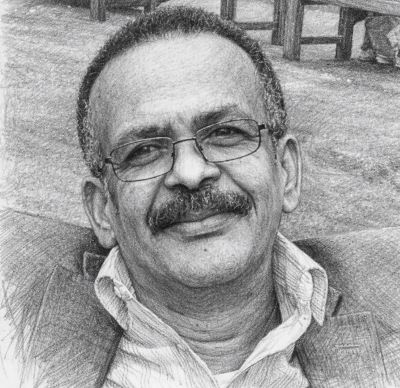
Dr. Mohamed Abdalla: In the history of Sudan, there are men whose names have been linked to battles, positions, and political events, but few have been associated with a profound transformation in the structure of society. Among them is Sheikh Babiker Badri, who was not content with being merely a teacher, but fought early on for the right of Sudanese women to education and knowledge. In 1907, in a society where girls' education was not a common practice, Babiker Badri established the first formal school for girls in Sudan in Rufa'a. The experiment began with seventeen girls, nine of whom were his own daughters and family members, and then it gradually expanded. The idea was not easy to accept at the time, as it faced social opposition and reservation from colonial authorities. However, the importance of Babiker Badri lies not only in the fact that he opened the door of the school to girls. More importantly, he realized, at an early stage, that women's education does not concern women alone, but its impact extends to the family and the entire society. A woman who is educated does not keep what she has learned to herself; she passes it on to her home and her children, and knowledge becomes part of the family's daily life. Herein perhaps lies one of the most important results of the Ahfad experiment, a result that does not always receive the attention it deserves. Over generations, thousands of Sudanese women have graduated from Ahfad schools and its university. They have become not only doctors, teachers, employees, researchers, and professionals, but also mothers who realized the value of education and its impact on human life. Every educated mother was, directly or indirectly, an additional teacher for her sons and daughters. From this perspective, the impact of women's education exceeded the limits of educating women themselves. It contributed to expanding the circle of belief in education within the Sudanese family, including the education of males. A mother who knew for herself the value of knowledge and experienced the horizons that education can open, became more keen on educating her children, on their continuity in study, and on viewing school and university as part of human building, rather than just a way to obtain a job. This is one of the deep meanings in the legacy of Babiker Badri: that he saw the reform of society from within the family, and realized that women are one of the most important keys to this reform. Therefore, the girls' school he established in Rufa'a was not just an educational institution, but the beginning of a social transformation that spanned generations. The experiment evolved from the first school to intermediate and secondary levels, and then to the Ahfad University College for Women in 1966, before the institution later became Ahfad University for Women. It is a painful irony that the man who fought the battle for the education of Sudan's girls more than a century ago had his own statue become a target for destruction by extremists. We all know that the statue of Babiker Badri in Rufa'a was among the statues that were smashed in the context of a wave that targeted a number of symbols and statues in Sudan. Smashing the statue may seem, at first glance, a matter related to the stance on statues or art in the public sphere. But reducing the incident to this aspect alone obscures its wider significance. The statue was not an idol, and its purpose was not worship. It was a symbol in a public space of a man who contributed to changing the history of his country, and a phase in which women's education became part of a broader project to build Sudanese society. When religion is used as a justification for destroying a symbol of this kind, the issue is no longer about a shattered stone, but about the ideas that might stand behind this act: restricting art, confiscating public memory, viewing women's education with suspicion, and imposing guardianship over knowledge and the intellect. Hostility toward women's education is not new in societies that have gone through such conflicts. Babiker Badri himself faced objections at the beginning of his project from those who did not see the need for formal education for girls. But experience has proven, over time, that women's education does not diminish society, but raises its capacity for learning and change. Hence, the incident of smashing Babiker Badri's statue acquires a meaning that transcends the statue itself. It is, in one aspect, an expression of a wider conflict between a vision that considers education a path to liberating the mind and building society, and another vision that wants to place knowledge under the guardianship of a narrow interpretation of religion. Sudan, which knew the Khalwa, the school, and the university, and from which generations of educated men and women graduated, cannot tolerate going backward. Societies do not return to eras of ignorance by a single decision; the journey begins when questioning becomes a matter of suspicion, the book a source of fear, women's education a subject of controversy, art an accusation, and then knowledge itself becomes something that should be subjected to censorship. That is why defending the legacy of Babiker Badri is not just a defense of a man from the past, but a defense of Sudan's right to its future. The Sheikh began his project with seventeen girls in Rufa'a. And after more than a century, the impact of that step extended to generations of Sudanese women, and to families that learned, from their daughters and mothers, that education is not a privilege for one group over another, and that knowledge has no gender. As for those who smashed his statue, they smashed a stone. But they could not smash the idea that the stone stood as a symbol for: that educating a woman is educating the whole society. muhammedbabiker@aol.co.uk The post Babiker Badri.. when women's education became a project to change Sudan appeared first on Sudanile.
Sudanileمنبر الرأي
Share
Comments
No comments yet. Be the first to share your thoughts.
Subscribe to our newsletter
Get a summary of the latest news and analysis delivered to your inbox.