
Politics
From Minawi to the Crisis of National Representation
From Minawi to the crisis of national representation, the competition for representing groups and the dilemma of the national project in a Sudan torn apart by war and the erosion of the state idea: the conflict over power is no longer just a competition for who rules, but has turned into a battle over who has the right to speak on behalf of others. While the country's institutions crumble under the weight of weapons, political and military forces race to [...] The post From Minawi to the crisis of national representation appeared first on Sudanaile.
Sudanile October 10, 2026Published 1 views
Source:Sudanile
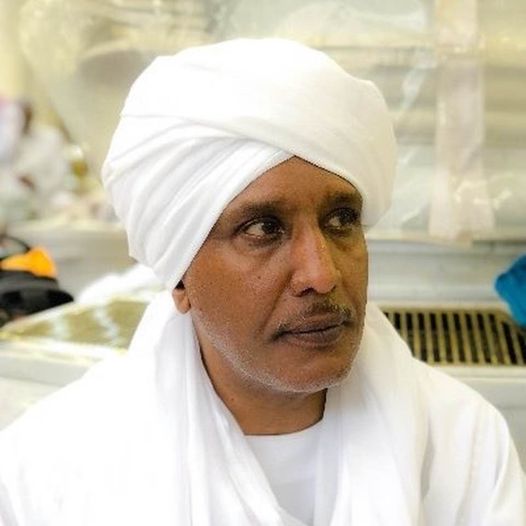
From Minawi to the crisis of national representation, the competition for representing groups and the dilemma of the national project in a Sudan torn apart by war and the erosion of the state idea: the conflict over power is no longer just a competition for who rules, but has turned into a battle over who has the right to speak on behalf of others. While the country's institutions crumble under the weight of weapons, political and military forces race to expand their circles of representation, as if the path to legitimacy lies through rallying groups behind leaders, rather than building a state that accommodates everyone. At the heart of this scene emerges the dilemma of Minni Arko Minawi: Can he transition from representing his movement and social base to claiming to represent a broader space referred to as "al-Zurqa"? Or does this attempt reveal the contradiction between mobilizing identities to build power and transforming Sudanese diversity into a shared national project? The importance of the question does not concern Minawi alone, but a deeper crisis: How do historical grievances, which are legitimate demands for justice, turn into tools for competing over power and legitimacy? And from where does a leadership derive its right to speak on behalf of an entire group? It seems Minawi seeks to expand his circle of political representation, moving beyond his direct organizational and social base into a wider space that includes what is referred to in Sudanese political discourse as "al-Zurqa". This trend can be understood as an attempt to assemble forces whose experiences of marginalization and exclusion intersect, and to build a more expansive negotiating position. However, moving from representing a political movement to claiming to represent broader social groups requires more than an inclusive speech or a shared memory; it needs a clear mandate and actual partnership in decision-making. Historical grievances do not grant any leadership, regardless of its sacrifices or the justice of some of its demands, an automatic right to monopolize speech on behalf of the affected. Grievances are real, but exploiting them does not give anyone exclusive political ownership of them. The experiences of different groups may intersect without their interests or political visions coinciding. Thus, expanding the circle of discourse does not necessarily mean an expansion of the mandate, nor does it prove that those whose identities are invoked have chosen a specific leadership to represent them. This dilemma cannot be understood in isolation from the broader competition for representation and influence in Darfur and Sudan. Minawi operates in a field where forces and figures compete to establish their political and military positions, while the "Tasis" (Foundation) platform—which Hemedti helped launch and which includes the SPLM and other forces—represents an attempt to build a broader political framework. In contrast, the center of power in Sudan has historically been able to determine the conditions for political participation and the distribution of influence, currently represented by Al-Burhan's leadership. Thus, three broad positions intersect in the representation equation: al-Zurqa, the Arab group, and the center of power; these positions do not necessarily correspond to the boundaries of social groups, nor do they reduce their multiplicity of positions and interests. Here arises a question that goes beyond the competition for representation to the nature of the crisis itself: Are we facing a balance of military weakness in which neither side can impose a stable settlement, or are we facing a fragmentation of the national political sphere that allows each force to invoke a social identity to expand its legitimacy? It is likely that both factors feed into one another; the inability to reach a national settlement on agreed-upon rules opens the door for competing forces to mobilize identities and invest in grievances, while the militarization of these identities deepens divisions and weakens the prospects for settlement. Thus, competition for representation does not become merely a reflection of power balances, but a factor that contributes to reproducing them and prolonging the conflict. The images of balance between these positions and their tools have changed across different stages of Sudan's history. It is not correct to deal with it as an eternal conflict between fixed groups, each with one will and unchanging interests. In the relationship between Darfur and the center, factors of inequality in power and wealth, competition for land and resources, the nature of local administration, the position of the regions in the state, and the role of elites and interest networks in reshaping alliances have all intertwined. Furthermore, military alliances do not necessarily correspond to the social affiliations they rely on or invoke. Therefore, the expressions "al-Zurqa," "the Arab group," and "the center group" should be understood as social positions, networks of influence, and alliances whose boundaries change with shifting power balances, not names of homogeneous entities. The interests of some actors may intersect with certain collective affiliations, but they may also diverge from the interests of broad sectors of those groups. Identities are not illusions, but they are not a closed political fate; their meanings and boundaries change with the changing experiences of the state, war, and alliances. Behind the slogans are networks of money and weapons, economic interests, and local and regional alliances, as well as competition for resources and positions of influence. These interests may intersect with social affiliations, but they do not necessarily coincide with them. For this reason, it is not enough for a leadership to raise the banner of a group or speak in the name of its grievances to judge the credibility of its project; the criterion is whether it allows those it claims to represent to participate in decisions, to object, and to hold others accountable, or whether it makes loyalty to it a condition for political presence. The issue, therefore, is beyond the competition over who speaks for the Arabs, al-Zurqa, or the center; it is about building a political space within which citizens can organize their interests and defend their rights without being held hostage by a military leadership that monopolizes their representation. There is a difference between gathering affected groups under one umbrella, which war necessities might impose, and establishing a national project that makes them partners in decision-making and capable of holding the leadership accountable and changing it. Nationalism is not the number of groups lining up behind a leader, but the nature of the relationship that binds them, and their ability to disagree and participate without differences turning into a threat to rights or a justification for returning to weapons. Any political project can be tested with practical questions: Do the groups it claims to represent participate in decision-making? Can they object to the leadership without losing their rights or security? Are there clear rules for selecting officials, holding them accountable, and rotating power? Can disputes be settled through institutions instead of returning to weapons? If these conditions are absent, the national umbrella will be nothing more than a new name for a temporary military alliance, no matter how wide the list of forces falling under it or how diverse their social backgrounds. However, the crisis of representation returns us to the question of the state we want to build. Sudan was not an absolute institutional vacuum; it possessed administrative and professional bodies and expertise, but they did not succeed in establishing a system that ensures equality among citizens and subjects power to stable constitutional rules. Then came the 'Tamkeen' policies to deepen the politicization of institutions and tie parts of them to networks of loyalty, while regional and social grievances remained without a just settlement. Thus, a state with incomplete citizenship, vulnerable institutions, and centers of power that see controlling the state as a guarantee of their survival were superimposed. This is inseparable from the question of ordering transition paths: Do we start with social reconciliation, a new constitutional contract, or rebuilding the security sector and ending the multiplicity of armed power centers? These are not competing paths waiting for one another to be completed, nor is it sufficient to accomplish any of them in isolation from the others. The constitutional contract needs a political environment that allows for consensus, social reconciliation needs institutional guarantees that protect its results, and state-building requires subjecting armed force to legitimate authority and agreed-upon legal rules. The challenge, then, is not to choose one path, but to build a gradual and integrated relationship between these paths, such that each reinforces the other's chances of success. Therefore, calling for the restoration of state institutions is not enough if it means returning to the pre-war situation. An institution does not become national just by its official name, the army does not become a representative of the nation just by bearing the title of the national army, nor does a political movement become nationalist just because it includes individuals from multiple groups. The criterion is the subjection of power to the law, the independence of institutions from networks of loyalty and interests, the equality of citizens in rights and opportunities, and the existence of peaceful mechanisms for changing and holding rulers accountable. What is required is not to restore an imagined state that was once just and fully institutional, but to establish a state that no armed group, ideological network, or central elite can monopolize. The historical balance between al-Zurqa, the Arabs, and the Jalaba should not be understood as a fixed relationship between three homogeneous blocs, and the future of Sudan cannot be built on freezing these classifications or distributing power among them as eternal quotas. The dilemma is not the existence of these groups or their pursuit of protecting their interests and demanding justice, but the absence of fair national rules that regulate their relations and prevent any of them from transforming power, grievance, or historical position into an exclusive right to rule. Every attempt to change the balances of representation without changing its rules may end in reproducing dominance, even if the parties exercising it and the slogans justifying it change. Hence, the lesson that goes beyond Minawi to the crisis of national representation is that Sudan will not emerge from its dilemma merely by rearranging the positions of groups in the power equation, or by replacing one leadership with another that speaks on behalf of the same factions. What is required is a transition from the question of "Who represents whom?" to a deeper question: What are the rules that make representation a political right subject to accountability, not a privilege granted by power to those who possess weapons or monopolize the right to speak on behalf of the group? Only then can grievances become an entry point to justice, not material for perpetuating war; can pluralism turn from a map of competition for dominance into a basis for national partnership; and can Arabs, al-Zurqa, Jalaba, and all of Sudan's components find their place in a state that does not ask them to abandon their identities, but prevents any identity from becoming a condition for citizenship or a tool for monopolizing power.
Sudanileمنبر الرأي
Share
Comments
No comments yet. Be the first to share your thoughts.
Subscribe to our newsletter
Get a summary of the latest news and analysis delivered to your inbox.