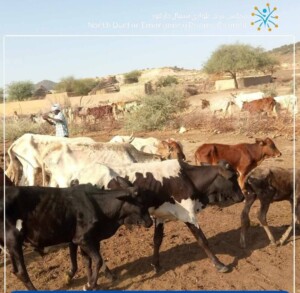
Drought Threatens Livestock in Darfur: Thousands of Cattle Die and Herds Sold
Kampala: October 15, 2026: Radio Dabanga Report by Abdelmonem Madibo. Livestock herders in large parts of the Darfur region are facing worsening conditions due to low rainfall, deteriorating pastures, and a shortage of water sources. The consequences range from declining agricultural production to the death of animals and the spread of disease among herds. Some herders have been forced to sell part of their livestock to provide food for their families or to purchase fodder to save the remainder of their herds. Fears are growing that the crisis will worsen in the coming months as grazing areas shrink and herds reach areas they usually inhabit later in the year, which themselves suffer from water and pasture shortages.
Radio Dabanga (Arabic) October 15, 2026Published 1 views
Kampala: October 15, 2026: Radio Dabanga Report by Abdelmonem Madibo. Livestock herders in large parts of the Darfur region are facing worsening conditions due to low rainfall, deteriorating pastures, and a shortage of water sources. The consequences range from declining agricultural production to the death of animals and the spread of disease among herds. Some herders have been forced to sell part of their livestock to provide food for their families or to purchase fodder to save the remainder of their herds. Fears are growing that the crisis will worsen in the coming months as grazing areas shrink and herds reach areas they usually inhabit later in the year, which themselves suffer from water and pasture shortages. Herders and livestock experts warn that the continuation of current conditions could lead to widespread losses in livestock and double the economic burdens on communities that depend on them for their livelihoods. In the Al-Serif area, located west of the Nitega locality in South Darfur, herder Mohamed Al-Fayiq describes the livestock situation as perilous due to scarce rainfall and the drying up of ponds, pools, and wadis that animals rely on for water, in addition to the absence of the vegetation cover necessary for their nutrition. Al-Fayiq told Radio Dabanga that the impact of the drought is not limited to livestock but extends to agriculture in both its plant and animal sectors, explaining that local communities rely primarily on rainfall to provide water and nurture pastures and crops. He adds that the lack of fodder is directly threatening the herds, saying: "From the rainy season until tonight, animals have not had their fill; they are hungry and have found no fodder to eat." According to Al-Fayiq, the situation in Nitega is becoming increasingly dangerous due to the nature of traditional grazing patterns in the region, as herds are used to moving to the northern and eastern areas in search of pasture, while they struggle to adapt to the conditions of the southern and western regions. He points out that previous drought experiences have shown the magnitude of the risks associated with changing grazing routes, citing cases where herders were forced to head south and west, only to return having lost their livestock. He says that those who managed to survive during those periods were the few who headed north and east. However, these same routes are facing a crisis this year, as the lack of rainfall has extended to the northern and eastern regions that were once sanctuaries for herds during drought seasons. Al-Fayiq adds that some areas that still have limited pasture areas are, in turn, suffering from a shortage of drinking water, with water pumps and water sources broken due to the war's repercussions. The repercussions of the drought are not limited to food and water shortages; herders and veterinary assistants report the emergence of diseases among livestock and an increase in reports of deaths, at a time when vaccination and veterinary care campaigns are declining. In the Al-Serif locality of North Darfur, herder Bashir Ibrahim told Radio Dabanga that rainfall occurred only a few times this year in the northern regions, and the effects have remained visible on the herds until the end of September. Bashir explains that a number of animals suffered from malnutrition to the point of being unable to stand after lying down, forcing herders to help them up. He says they lost more than ten head of cattle due to hunger and were forced to move their remaining livestock to the southern regions of the region, after learning that rainfall rates there were relatively better than in their areas. He warns that the situation portends more suffering in the coming period, given the continued lack of pasture and drinking water, and the resulting difficulty in keeping herds alive. In other parts of South Darfur, herders report respiratory diseases, diarrhea, and unusual cases of animal health deterioration, some of which end in death. Mohamed Al-Fayiq says that some cows show signs of bloating before dying, and that their owners have lost dozens of head in separate incidents. He quotes a veterinary assistant as suggesting that some of these cases are linked to consuming dry herbs or plants affected by drought conditions, but noted that the assistant mentioned that determining the causes of death requires veterinary examinations to confirm the nature of the diseases and associated factors. In the Ban Jadeed area, Al-Nazeer points to an increase in disease cases among livestock, noting that the area has not seen sufficient vaccination campaigns this year. He says that a campaign organized last year with the support of a German organization covered only about two thousand head of cattle, a number he considers limited compared to the scale of the needs. He adds that the area has seen the death of large numbers of horses and donkeys, in addition to losses among cattle, noting that his local estimates indicate that the number of dead cattle has exceeded five thousand head so far, with daily cases he says exceed thirty head. Al-Nazeer attributes part of these losses to what he describes as hemorrhagic septicemia, but does not provide independent veterinary data to confirm the causes of all deaths or the total toll. In the absence of comprehensive statistics, these figures remain local accounts that reflect the extent of the anxiety among livestock breeders. The veterinary assistant in Nitega locality, Siddiq Osman, says that the lack of rainfall this year has created significant needs for veterinary intervention, at a time when field personnel are facing difficulties in responding to the increasing reports. Siddiq adds to Radio Dabanga that herders inform them of the emergence of diseases among livestock, and they move to notify the Ministry of Livestock and attempt to provide vaccines and organize vaccination campaigns, but he points out that the ministry is not currently providing them with support or care. Siddiq says: "Now there are very many diseases, especially these days with cases of hemorrhagic septicemia, which need prevention. The cases of poisoning are very, very frequent and have affected the livestock in this locality." This statement by Siddiq Osman reveals a gap in preventive veterinary services, at a time when the combination of malnutrition, water shortages, and disease may increase the fragility of herds and raise the likelihood of losses for families who depend on livestock farming as a primary source of income and food. In the southern sectors of South Darfur, Mohamed Nasser, an observer of herder and livestock affairs, says that fluctuating rainfall has significantly affected pastures and herd movement, forcing herders to change the routes they usually followed during the season. He explained that herders used to start moving north during July and August toward the areas of Gereida, Al-Salam, and Hijeir Tono, and the outskirts of Nyala, before gradually returning to the southern regions. However, this route was not completed this year due to the lack of fodder and water. Nasser told Radio Dabanga that the herds did not go beyond the Gargaresh valley, on the outskirts of Buram and the Boli area, before the herders were forced to return without reaching the Gereida areas they were used to reaching previously during this period. Conversely, drought conditions in the northern regions have pushed some herders to move their herds toward the southern areas that have limited pasture space, leading to increased pressure on the remaining resources. Nasser explains that this overlap in grazing movement means that the areas that were once able to accommodate the region's herds are now required to receive additional numbers, while the pastures have not produced enough to compensate for the increased consumption. He adds that the fluctuation of rainfall, between limited downpours and long breaks, caused the grass to dry up before it could grow sufficiently, while the gathered herds consumed the remaining vegetation cover in areas that saw relatively better rainfall. The shortage of fodder is not limited to natural pastures; agricultural fodder production has also been damaged by the failure of the agricultural season in parts of the southern sector. Nasser points out that the millet crop, known locally as "Marik," did not produce the usual quantities, and crop residues used by herders as fodder for livestock, including corn stalks and cane, have also declined. He says that the lack of these alternatives pushed herders to rely more on commercial fodder, the prices of which have risen significantly. He adds that the price of a quintal of oil cake, which previously ranged between 3,000 and 7,000 Sudanese pounds, has reached about 30,000 pounds. This increase reflects the scale of the pressure on herders, who are simultaneously facing the declining ability of their livestock to obtain food from natural pastures and the high cost of the alternatives they need to maintain the herds. The crisis extends beyond the usual grazing areas in South and East Darfur to reach seasonal migration routes toward Bahr al-Arab, which is one of the important destinations for herds at the end of the rainy season. Journalist Mohamed Saleh Al-Bashir, who monitors grazing movement in the Darfur region, told Radio Dabanga that herders were used to gradually returning during October and November from northern grazing areas to the southern parts of South and East Darfur states, before continuing their movement toward Bahr al-Arab in November and December. However, Al-Bashir says that the lack of pastures this year accelerated the arrival of some herds to Bahr al-Arab at a time when water was not available at the usual levels. He adds: "The problem lies not only in the herds arriving early, but in the fact that Bahr al-Arab itself did not fill with water as usually happens at this time of year," which denies the animals one of the most important sources of drinking water during the grazing season. He continued: The majority of herds were heading south on seasonal trips, while other groups remained in areas such as Manawashi, Nitega, Khazan Jadeed, Barka, Bileil, east of Nyala, and Gereida, near water stations. However, these areas, in turn, suffer from a lack of pasture, according to Al-Bashir, who mentions that the areas extending from Sha'iriya to Nitega lack sufficient vegetation cover, while peanut production, which provided agricultural residues used as fodder for livestock, has declined. Al-Bashir warns that the arrival of herds to Bahr al-Arab early may lead to the depletion of the pastures surrounding it within a month or two, leaving herders with limited options in the period preceding the next rainy season. He pointed out that herders are demanding the provision of water sources in areas where pasture is available, but reaching quick solutions remains a challenge given the vastness of the affected areas and the high level of needs. With shrinking pastures and rising fodder costs, some herders have begun selling parts of their herds to reduce the numbers they need to feed or to provide the money needed to buy food for their families. Mohamed Nasser says that livestock breeders in the southern sector have begun offering their cows in the markets, including productive cows and dams, in an attempt to adapt to the decline in resources. Nasser points out that some herders rely on owning large numbers of livestock as a source of economic and social security, but the continued drought is pushing them to reduce the herds so they can support what remains. He adds that the increased supply of cows in the markets has contributed to a decline in livestock prices, putting herders in a difficult equation: sell animals at lower prices to get money, or keep them with the risk of them dying due to hunger and thirst. These pressures are inseparable from the deterioration of agricultural conditions and the rise in food prices, as some livestock breeders are forced to sell their animals to secure their families' basic needs, while others direct the proceeds to buy fodder in an attempt to save the herds. Thus, the drought turns into an overlapping crisis affecting both sources of income and food, at a time when the ability of families to compensate for their losses from agriculture or livestock farming is declining. The repercussions of the crisis do not stop at the direct losses incurred by herders, as Mohamed Nasser warns of potential environmental effects if the shortage of pastures and fodder continues during the coming months. He says that high fodder prices may push some herders to rely more heavily on cutting trees to feed the livestock, which may increase pressure on the vegetation cover in areas where herds congregate. He also warns that the lack of rainfall may affect groundwater recharge and lead to declining water levels in wells during the driest period of the year, especially in the months of March, April, May, and June of next year. He points out that the floods that contributed to surface and groundwater recharge did not flow at the usual levels this year, noting that some ponds and small water channels dry up shortly after the rain falls. Nasser says that the continuation of this situation may exacerbate competition for water and pasture, forcing herders to move longer distances to the south, and perhaps cross the borders into South Sudan or the Central African Republic in search of the resources needed to keep their animals alive. He emphasizes that herders need urgent interventions to provide alternative water sources, including drilling wells and building new water stations in areas that still retain patches of pasture. The testimonies of herders, livestock experts, and veterinary workers agree that the crisis has exceeded the limits of seasonal pasture shortages to become a direct threat to the livelihoods of thousands of families who depend on livestock farming in Darfur. The needs highlighted by these statements include providing drinking water for herds, making fodder available at prices herders can afford, expanding vaccination and veterinary care campaigns, and supporting communities affected by the failure of the agricultural season. Journalist Mohamed Saleh Al-Bashir warns that the depletion of pastures in Bahr al-Arab and surrounding areas within a short period may leave herds without sufficient food for the remaining months before the next rainy season, while Mohamed Nasser indicates that water shortages could become an additional factor in exacerbating the crisis as the dry season progresses. As herders continue to look for new grazing routes and alternatives to feed their animals, fears are mounting that the continued lack of rainfall, combined with limited veterinary services and high fodder costs, will lead to greater livestock losses and a decline in the resilience of pastoral communities, and worsen the historical conflict between herders and farmers in the southern and western regions of the Darfur region due to the crowding of livestock in these areas in search of fodder, turning the scarcity of pasture and water into a broader disaster affecting herds, their owners' livelihoods, and peaceful coexistence in the region.
Radio Dabanga (Arabic)الأخبارالحرب في السودانالصفحة الرئيسيةسياسةشريط الأخبار