
Supporting Voices
The name of the Egyptian billionaire Sawiris resonated in the current Sudanese tragedy, and I was reminded of another Sawiris.
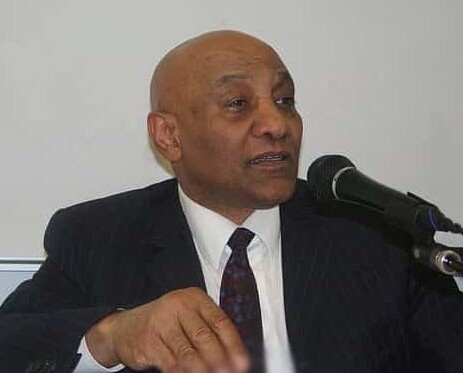
Shawqi Badri: In the good old days, souls were kind and happiness was at home. The first Sawiris was a resident of Gelhak, one of the strongholds of the greatest people, our Dinka Abiliang kin, who opened their arms to everyone and practiced the honesty and generosity that represent them. Sawiris attained great fortune in trade and became the most famous merchant in Gelhak. Money flowed through his hands. He was not envied for his success, and he was not mistreated for his Christian faith.
Sudanile October 15, 2026Published 1 views
Source:Sudanile
Shawqi Badri: In the good old days, souls were kind and happiness was at home. The first Sawiris was a resident of Gelhak, one of the strongholds of the greatest people, our Dinka Abiliang kin, who opened their arms to everyone and practiced the honesty and generosity that represent them. Sawiris attained great fortune in trade and became the most famous merchant in Gelhak. Money flowed through his hands. He was not envied for his success, and he was not mistreated for his Christian faith. Everyone was a brother. Sawiris loved joy and liquor. At one of the weddings, Sawiris was firing a shotgun to hunt bustards, valley chickens, and gazelles. Suddenly, the situation changed. While my beloved brother Muhammad Fadl Tiya, known as 'Kareel', was placing his hand on the shoulder of his friend, the surveyor, and the surveyor was raising his hand high while standing in front of the singer, the shotgun snatched the surveyor's hand, and a quantity of lead pellets settled in Kareel's back. The matter was not escalated, as everyone was kin embraced by the same region. Even though the surveyor brother earned a lot from his work, the compensation offered by Sawiris was not sufficient, as the amount of a thousand pounds could be earned by the surveyor in a year or two. However, the elders and everyone felt that fate had prevailed. Half a century since the departure of my beloved brother Kareel. By Shawqi Badri. When we returned to Omdurman to study in secondary schools, we were a beautiful group from Upper Nile. In the American school, there was Abdullah Khairy, the current director of Al-Baraka Bank, and our leader and our sun, Ajot Along Akol. Akol means the sun. I was with Faqouq Ngor, the crown of my head, and Muhammad Nur Babiker, Nimairi Hasab al-Rasul, and Hajam at the Al-Ahfad School. Since the Egyptian Irrigation School admitted Sudanese students, the brothers Sheikh, Muhammad Saeed, and another group joined the Egyptian secondary schools in Khartoum. The majority were from the north of Upper Nile, especially Malut, Renk, and Gelhak. Among the sons of Gelhak in Omdurman was my beloved brother Kareel, may God rest his soul. He was a little older than us and did not have much education because his father, Uncle Fadl Tiya, was a butcher in Gelhak and had 'plots' for growing cotton and sorghum. Muhammad Fadl Tiya, or Kareel, had been helping his father since childhood. Kareel was a painter in Omdurman. He lived with his relatives Abu Zeid and Al-Nile, both of whom were painters, living behind the famous Jaafar shop on Al-Arbaeen Street. Their house was elegant with beautiful colors. Abu Zeid was a painter and owned a Vespa scooter; he always went for repairs and had bought it from the Sudanese-Italian man who owned the company they worked for. Brother Al-Nile was the foreman who managed all the work and workers from several tribes. Kareel had some acquaintances and kin in the 'Fariq Taqali' neighborhood, which is east of the college or the Omdurman Model School, which graduated many of Sudan's famous figures. The neighborhood is attributed to the people of Taqali in the Nuba Mountains. The first head of the Ansar al-Sunnah al-Hamadiyah group was Sheikh al-Taqalawi, who was succeeded by Uncle Hassoun, then Al-Hadiyah, etc. Among the neighborhood's famous figures is the young, pleasant football player Sabaya. Despite Kareel's large size, he was gentle and kind, with a big heart that loved everyone. He hated violence and even shied away from verbal confrontations. He always urged me to stop carrying a knife, which was the badge of Sudanese Bedouinism at the time: 'The stick for the dog, the knife for robbery.' When he went with me to the Merrikh club for boxing training, he stopped, saying to me what I later came to advocate myself: 'What kind of sport is this? How can people beat each other and spill blood and call it a sport?' When he would go with me in the evenings to Al-Ahfad School, his appearance and age led others to think he was one of the tough guys of Abbasiya. But after minutes, the ice would melt. Kareel had an infectious laugh, a beautiful soul, and a tendency for humor. He once said to my mother, feigning seriousness: 'What is in this molokhia of yours? I washed my hands with soap and it wouldn't come off.' Panic appeared on my mother's face until my sister said to her, 'Nudayfa, what kind of greens are these? It's paint. Kareel must have bumped into wet paint.' Kareel let out his infectious laugh. That laugh would come out of his throat, 'Ha ha ha.' I only heard that laugh from the tough guy and cafe master, the stern Abdel Fattah and Amin Mubarak Mirghani. It made me fond of Amin, despite some disagreements, as he reminded me of Kareel, and I forgave him things. Despite that sweet soul, Kareel knew something that the strongest of men could not bear. He knew that a danger awaited him, and that monster might take him at any moment. He would mention it in passing, and we did not pay attention. That was beautiful Sudan, and everyone felt we were in happiness and security that would not end. Everyone continued to live in Gelhak. Sawiris left behind grandchildren in Gelhak, and his son became a specialist in repairing refrigerators and electrical appliances that were not available in the past. When I was in Barkat al-Ajab on vacation in 1963, we would go to Gelhak on foot. Although I do not drink tea, I would accompany the others to the cafe, and we would sit watching the Nile and the Nile weeds covering most of the water surface. We would pass by what was known as Sawiris's pits. Because Upper Nile is sticky clay land, people would look for sandy places or silt to build houses. The earth's entrails were extracted, becoming elongated furrows. One day, the Coptic merchant was with some of his friends driving a Land Rover and fell into one of those pits. However, they sat by the car lights and continued drinking and singing. One of the ridiculous Sudanese customs is firing shots at weddings. Sawiris, as one of the notables of Gelhak, would fire shots, and it is possible that the liquor had played with his head. Kareel and the surveyor brother were dancing and cheering over the singer's head. Kareel was placing his arm on the shoulder of the surveyor brother, who was raising his hand high. The shotgun snatched the surveyor brother's hand, and a quantity of pellets settled in the back of Kareel, may God rest his soul. Kareel's physical strength helped him recover, but there was no technology to remove the pellets from the body of my beloved brother Kareel, may God have mercy on him. It was said that this might cause complications in the future. Despite this, I never saw that knight except as joyful and cheerful. As soon as he entered the door of the house, which was never locked as was the custom of old Omdurman, he would let out his infectious laugh. We had two houses: one for the family and another for students. Living with us were the brother Abdel Majeed Muhammad Saeed al-Abbasi, Hamouda Abu Sinn, the son of the Minister and Sheikh of the Arabs, Mutasim, Badr al-Din Ahmed al-Haj, Salah Muhammad al-Tijani, my uncle Mirghani Abtar, and my cousin who was our teacher at Al-Ahfad, al-Tayyib Mirghani Shakkak, and visitors who never stopped coming, as was the custom of people long ago in Sudan. One day, Kareel's noise and clatter rose in the courtyard, which drew the attention of the rest of the family and my father in the adjacent house. Between the two houses was a large 'Nufaj' (passageway). When we came out of the rooms, leaving our Whist game, Kareel was lying on one of the beds, cackling and pretending he was going to take off his new shirt. On the nine beds that brother Ismail had lined up, there were new bed sheets with light blue and black squares. They were made of the same fabric as Kareel's new shirt. Kareel dreamed of saving enough money to get married in Gelhak, and he might bring his wife to Omdurman or settle in Gelhak. His daily wage was 65 piasters a day, and a kilo of meat was 14 piasters. They would often work a 'Sahra', meaning working until four or five, and the pay would be a pound. Kareel did not smoke or consume any drinks or stimulants. He was saving money despite knowing that the lead might betray him one day. I learned painting at the hands of Kareel. They were working on painting the entire mission hospital, which has now become the Tijani al-Mahi. The most difficult part of the work was painting the ceiling, because the human hand is in an uncomfortable position. Everyone would stop after a short while to rest, then continue, but Kareel was the most resilient among us. Kareel was an artist and open-minded. I learned from him what I came to apply in our house and the houses of relatives and friends. The lower part of the wall is known as the 'Asfal' (base). It is painted with black oil to protect the white made of sand and glue from water and dirt. Some make this strip wide, sometimes over half a meter, but Kareel would reduce that strip to a hand's breadth. He would make the 'Wazra' or the upper part, which is white from the 'izdibakh' (lead white), very wide, which makes the room look more spacious. He would paint the 'Kutouf' white as well. This gives an aesthetic image to the parlor or room. The 'Kutouf' are the inner sides of the windows. We would make the 'Wazra' embrace the 'Asfal' in all corners. We might make a trim for it from the 'Asfal' oil like a frame. Usually, the master craftsman 'strikes the thread,' which is placing a long thread in lime, then the thread is pulled from both ends, lifted slightly, then released, leaving a straight line that the painter follows. Kareel and brother Hassan al-Nimr were the only ones who did not use the thread, and the work would come out precise. Kareel turned me off from the yellow color that one sees in most Sudanese houses, and he insisted on beautiful colors. A four-by-four-meter room needs three kilograms of pure white 'izdibakh' to be mixed with the color. The 'Wazra' takes a whole kilo. The 'izdibakh' cost 20 piasters per kilo, and the color is one kilo, also costing 20 piasters. All of this is set with half a pound of glue, which costs 5 piasters. Kareel was against cheating because a painter does not buy 'izdibakh', but rather buys a sack with Omdurman lime (five kilograms) and soaks it in water for a full day, costing 6.5 piasters. We would crush it by hand and filter it through a mesh. Instead of the yellow color, which costs 20 piasters, one can buy a quarter pound of arsenic for 5 piasters. The result is similar to the 'izdibakh' and regular color. Only an experienced painter knows the difference. I used to do this work without pay to save some money for friends and relatives, which would be useful for the Eid that was around the corner. All of this was with the blessing and spirit of my beloved brother Kareel, who had gone to Upper Nile for a period exceeding a year. I applied his theories. The parlor of my soulmate Billa had a pink color, which was unusual. I changed the color of my brother Mustafa Kutba's parlor in Fariq Reid from yellow to turquoise. Chairs used to be painted with shellac before the Eid, but now 'izdibakh' began to be added to the shellac, which is a powder with some alcohol, giving it a beautiful light color. All of this I learned from Kareel, may God rest his soul. He was trying to teach me patience and composure in work. He insisted on filling cracks with sand mixed with glue a period before, so it would dry completely before painting; otherwise, there would be scars in the wall. I learned from Kareel not to panic or dread even death. I was waiting for his return from Gelhak to enjoy his beautiful company and to purify my soul as a skilled painter. In 1964, Kareel came for a short period and was planning to return permanently to Omdurman. We had moved from Abbasiya, Al-Rabee Square, to Al-Sardariya. When he saw me sitting on the sidewalk of the Riviera park near the Tabia, he let out his wonderful laugh and told me he was sure he would find me in that place where we used to sit and watch the Nile, which had kissed the brow of Gelhak weeks earlier. In that place, we parted ways on a Friday because the train was leaving for Kosti at six in the evening and would reach Kosti in the morning. After four days, on Wednesday, the local steamer 'Malakal' would arrive after having passed through Gelhak more than a day before. I think the steamer's name was 'Fashoda'. Before the steamer reached Gelhak, that great heart stopped, and that distinct laugh stopped. Someone came to tell me of Kareel's death before sunset while we were sitting near the Riviera. I was struck by a kind of silence. My soulmate Billa was sitting next to me; he respected my grief and did not speak. A person came who did not respect the occasion even after Billa told him the reason for my silence. When he did not desist, Billa took him away and told him that he might get hurt. I could not comprehend that Kareel had gone. Whenever I hold a brush to paint something, and this happens often, I remember Kareel, may God have mercy on him. Now, when I see what is happening to our people in the Nuba Mountains, I think for the first time that Kareel was Nuba. I remember when I was talking about the Burun in the Maban center in the east of Upper Nile, Kareel used to tell me that the Nuba say that the ancestor of the Burun is their brother whom the 'Khor' (stream) took. The streams come rushing from the mountains and may carry everything with them. He was referring to the similarity in appearance and many customs between the two peoples.
Sudanileمنبر الرأي
Share
Comments
No comments yet. Be the first to share your thoughts.
Subscribe to our newsletter
Get a summary of the latest news and analysis delivered to your inbox.