
Supporting Voices
EU: Hunger Crisis in Sudan Requires Political Action
Amsterdam – October 16, 2026 – Radio Dabanga: Ambassador Wolfram Vetter, Head of the European Union Delegation to the Republic of Sudan, stated in a release for World Food Day 2026 that Sudan's hunger crisis necessitates political action. The post EU: Hunger Crisis in Sudan Requires Political Action appeared first on Dabanga Radio TV Online.
Radio Dabanga (Arabic) October 16, 2026Published 1 views
Source:Radio Dabanga (Arabic)
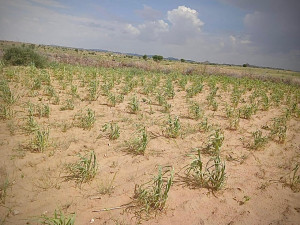
Amsterdam – October 16, 2026 – Radio Dabanga: Ambassador Wolfram Vetter, Head of the European Union Delegation to the Republic of Sudan, stated in a release for World Food Day 2026 that the hunger crisis in Sudan requires political action. In the statement, reviewed by Radio Dabanga, he emphasized that this year Sudan stands at the heart of one of the world's deadliest food crises. A country like Sudan, which possesses vast agricultural lands, abundant water resources, and immense potential to become a major agricultural nation, instead faces widespread challenges of hunger and food insecurity. He explained that the ongoing war between the Sudanese Armed Forces and the Rapid Support Forces, which began in April 2023, has destroyed Sudan's food systems, noting the displacement of millions from their homes and farms, the disruption of agricultural production and trade, and sharp increases in food prices due to currency collapse and the fragmentation of supply chains. He stated that conflict, displacement, economic collapse, disrupted agricultural seasons, and climate shocks are driving millions toward acute food insecurity. A Crisis of Food Access. Ambassador Wolfram Vetter affirmed that this crisis is not limited to a lack of food but is a crisis of access, production, and livelihoods. Farmers cannot safely cultivate their lands, livestock owners have lost their assets and pastures, markets and trade routes have been disrupted, and families have lost their purchasing power. Meanwhile, humanitarian operations face severe funding shortages and access restrictions, and in some cases, are deliberately targeted. The recent attack on a World Food Programme convoy in Dilling, South Kordofan, is a stark reminder that even life-saving aid is now threatened. The Ambassador highlighted expert warnings regarding a food crisis resulting from the dangerous intersection of climate change and armed conflict, increasing fears that the rainy season could fail entirely. This year, Sudan has experienced unprecedented delays and shortages in seasonal rainfall, exacerbated by a sharp drop in water levels in the Nile River and main irrigation canals. He pointed out that vast areas of fertile land have been affected, leading to the wilting of emerging crops during their critical early germination stages. This means that strategic staple crops like sorghum and sesame are suffering severe damage, with crop failures reported in key production hubs, including the Nierteti area and vital agricultural projects in Al-Qadarif State. Hyperinflation. The Ambassador emphasized that hyperinflation has caused food and commodity prices to skyrocket. An increasing number of Sudanese families are now unable to provide even the most basic meals. Essential community survival sources, such as local community kitchens and remittances from relatives abroad, are shrinking rapidly. Complicating the crisis further, severe funding shortages, coupled with delayed and weak rainfall, have damaged the current agricultural season. The Russian war of aggression against Ukraine and regional maritime trade disruptions in the Red Sea have led to delays and sharp reductions in agricultural imports, raising the prices of fuel, food, and essential fertilizers. These successive economic shocks have made farming increasingly unaffordable for Sudanese farmers, threatening the country's long-term food security. Preventing any challenge related to food shortages requires protecting civilians, humanitarian workers, agricultural assets, markets, and supply routes, as well as ensuring safe and sustainable humanitarian access. He added, "Food must not be used as a weapon of war." Pressuring the Parties. He called on the international community to pressure all parties to the conflict to respect international humanitarian law and to work toward an immediate cessation of hostilities. He continued, "Any humanitarian truce should allow food and life-saving aid to reach communities in need." He stressed that humanitarian aid alone is not enough to solve the food crisis in Sudan; Sudan needs a political solution that creates the necessary conditions to enable the population to produce their own food, earn a living, and begin rebuilding their economy. He affirmed that the European Union is working on two fronts: political advocacy to create conditions that make recovery possible, and direct investment in food security and strengthening resilience. These efforts aim not only to respond to today's food security risk but also to protect livelihoods, boost local food production, and build resilience against future shocks. European Projects. He stated that the EU is funding 30 million Euro projects in Al-Qadarif, Kassala, the Red Sea, and Northern State, providing vital aid to those affected by hunger and displacement. It is also investing 165 million Euro in food security projects in Sudan to support sustainable livelihoods, local food production, agricultural and livestock value chains, climate-resilient agriculture, inclusive markets, and local school feeding in Darfur, Blue Nile, White Nile, Sennar, Al-Qadarif, Kassala, Red Sea, River Nile, Northern State, and North, South, and West Kordofan. These projects aim not only to address hunger today but to protect livelihoods, boost local food production, and build resilience against future shocks. The European Union supports the population through three complementary programs worth 40 million Euro, targeting 12 states in Sudan and addressing education issues. Political Engagement. He added, "Our political engagement complements these recovery efforts. We advocate for the delivery of humanitarian aid, the protection of civilians and food systems, an end to the use of starvation as a weapon, and the establishment of a political path toward peace and civilian rule. We are working with Sudanese, European, and international partners to keep food security at the core of the crisis response." He emphasized that long-term recovery requires investment in rural infrastructure, irrigation and water systems, modern agricultural technologies, high-quality seeds, livestock, storage and market facilities, as well as providing financing for smallholder farmers. Recovery also requires the return of the private sector, support for financial institutions for productive investment, and the leadership of Sudanese farmers, companies, and communities in the recovery process. The European Union is fully prepared to support all these efforts in solidarity with the Sudanese people. He confirmed that Sudan possesses the land, people, and resources to feed itself and to become a major agricultural country in the region; what it lacks is peace and the environment conducive to turning this potential into food on people's tables. He added, "On World Food Day, let us unite in our message: Peace is not separate from food security; it is a prerequisite for it in Sudan."
Radio Dabanga (Arabic)الأخبارالخبر الرئيسيالصفحة الرئيسيةسياسةشريط الأخبارعناوين الأخبار
Share
Comments
No comments yet. Be the first to share your thoughts.
Subscribe to our newsletter
Get a summary of the latest news and analysis delivered to your inbox.