
Economy (Citizen's Condition)
Three loaves for a thousand pounds... El Obeid suffocates between war and high prices
El Obeid - October 5, 2026 - Dabanga Radio In the heart of Kordofan, a city carries the burden of war on its back and searches for a lifeline. The post Three loaves for a thousand pounds... El Obeid suffocates between war and high prices appeared first on Dabanga Radio TV Online.
Radio Dabanga (Arabic) October 5, 2026Published 1 views
Source:Radio Dabanga (Arabic)
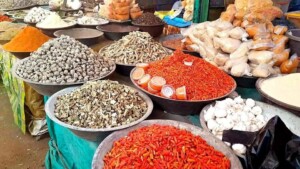
El Obeid - October 5, 2026 - Dabanga Radio In the heart of Kordofan, a city carries the burden of war on its back and searches for a lifeline. El Obeid was never an ordinary city in the Sudanese landscape. With its location in the center of the country, it has always been the bridge connecting eastern Sudan with its west, and a commercial artery through which goods, livestock, and crops flow. However, the war changed both the city’s function and its destiny; while it used to be a transit point, it found itself a destination for displaced persons fleeing the ravages of fighting, attempting to accommodate far beyond its capacity. The influx of displaced people led to a sharp increase in the population, which was directly reflected in basic services and doubled the demand for goods in a market no longer able to respond. In light of rising fuel prices day by day, transportation costs have inflated, passing the increase onto every commodity reaching the consumer. The scene has not been free from the greed of some merchants and the spread of speculation in essential goods, which has exacerbated the crisis and made it more than just a natural result of supply shortages. Prices reveal the scale of the suffering. The price of a sack of sugar has reached 345,000 pounds, lentils 180,000 pounds, onions 286,000 pounds, and flour 112,000 pounds. As for bread, the primary staple of the poor, the price of three loaves has reached 1,000 pounds, in addition to not adhering to the supposed official weight, meaning the citizen pays more to get less. In the meat market, the price of beef ranges between 34,000 and 40,000 pounds, and lamb between 56,000 and 60,000 pounds. House and shop rents have also risen in a way that residents described as terrifying, adding a new burden to families already exhausted by the war. The greatest burden falls on those with limited incomes, primarily public sector employees whose salaries have not seen an increase in a long time. They face a market whose prices move daily while their income remains fixed, eroding their purchasing power silently, and causing their families to abandon essential items one after another. The lack of vision and the deeper problem, according to what citizens perceive, lies in the absence of a clear vision or policy to regulate the market. Talk these days revolves around activating cooperatives, but people have not seen effective cooperatives or reduced-price markets that support the citizen on the ground. Promises remain without tangible impact, while the gap between official rhetoric and the reality of the streets widens. The crisis requires solutions that go beyond temporary painkillers, primarily thinking outside the box by establishing projects such as livestock farms and greenhouses for growing vegetables inside and around the city, with the aim of stabilizing prices and providing agricultural products locally. This approach is increasingly important because vegetables and livestock used to reach El Obeid from areas that were under the control of the Rapid Support Forces, which cut off traditional supply sources. Relying on local production is no longer just a development option, but a food necessity. Nature adds another concern to the list; rainfall has been delayed, and even after it began late, the majority of farmers had already left their villages, displaced by the war. Thus, the delay of rain intersects with the absence of labor, putting the agricultural season, and with it the food security of the region, in the danger zone. El Obeid stands today before a real test: either it transforms into a model of resilience supported by rational policies, local production, and effective market oversight, or it slides toward a deeper living crisis for which the simple citizen pays the price. What is needed today is not more statements, but urgent decisions that restore to the citizen their right to a fair loaf of bread, a regulated market, and hope that the war will not take everything from them.
Radio Dabanga (Arabic)الأخبارالخبر الرئيسيالصفحة الرئيسيةشريط الأخبارعناوين الأخبار
Share
Comments
No comments yet. Be the first to share your thoughts.
Subscribe to our newsletter
Get a summary of the latest news and analysis delivered to your inbox.