
Economy (Citizen's Condition)
Widespread opposition to implementing the "Eisali" system at seaports, with threats of strike
Port Sudan – October 6, 2026 – Radio Dabanga. The inclusion of the Sea Ports Corporation under the Sudanese government's unified revenue system via the "Eisali" platform has sparked labor protests and widespread mobilization across various ports.
Radio Dabanga (Arabic) October 6, 2026Published 1 views
Source:Radio Dabanga (Arabic)
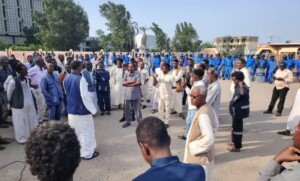
Port Sudan – October 6, 2026 – Radio Dabanga. The inclusion of the Sea Ports Corporation (SPC) in Sudan’s unified government revenue system via the "Eisali" platform has sparked labor protests, widespread mobilization, and formal communications across various ports. On Monday, dozens of employees and administrators organized a protest and briefing, during which they threatened to strike and stage sit-ins should the decision be implemented. The system aims to assert the Ministry of Finance's control over public funds and unify the electronic collection umbrella for government institutions to ensure financial transparency and oversight. The Deputy Director of Ports, Hamida Mahjoub Al-Haj, stated that implementing this decision would hinder port operations. He noted that they held meetings with Ministry of Finance representatives last week, informing them of the unique nature of the Sea Ports Corporation, explaining that the services provided by the SPC do not align with other institutions currently using the "Eisali" system. He explained that if the system experiences outages, it would lead to payment delays for clients, causing them to incur demurrage charges and subsequently damaging the port's reputation. He pointed out that they have submitted many requests to the Ministry of Finance to update the billing system, but have received no response, stressing that the system is incompatible with the nature of maritime port operations. He confirmed that they are prepared to escalate if the Ministry of Finance insists on implementing the decision. Unsuitable for ports: For his part, union leader Othman Tahir stated that the "Eisali" system—despite its general merits—is unsuitable for the Sea Ports Corporation and will hinder its operations, harming the national economy. Tahir argues that the SPC is an operational service provider, not merely a revenue collection agency like tax or customs authorities. He explained that "Eisali" is suitable for non-operational revenue bodies, such as vehicle licensing, taxes, and customs, which rely on collection without providing direct services requiring immediate operational expenses. He emphasized that the system does not fit operational revenue entities like the "Sea Ports Corporation," which requires immediate and continuous expenditure to provide services. Ports need urgent operational supplies and 24-hour readiness (electricity, fuel, spare parts, and maintenance for equipment like cranes and tugboats) to ensure vessel mooring, and the loading and unloading of goods without delay. Consequences of spending delays: Tahir said that delays in expenditure cause vessel delays, resulting in fines and damaging the port's reputation, which may drive shipping lines to avoid Sudanese ports in the future. It could also cause suppliers (such as fuel and tire providers) to refuse to deal with the corporation due to late payments. He warned that implementing the system could lead to an inability to pay employee incentives and dues on time, in addition to disrupting import and export traffic, potentially leading to a comprehensive economic crisis for the state. Regarding current audits and transparency, he said that the Sea Ports Corporation's accounts are currently held in national banks (such as Omdurman National Bank), and the Ministry of Finance can easily view financial flows without the need for the "Eisali" system. Other accounts (such as at Bank of Khartoum) also exist to facilitate transactions for clients and suppliers. He emphasized the necessity for the Sea Ports Corporation to enjoy full financial and administrative independence, with its revenues allocated to its own development and service improvement, while granting the Corporation’s General Manager the necessary powers to make rapid decisions. He called for transforming the corporation into a total service entity for the Sudanese economy, free from the bureaucratic government processes that hinder its work, noting that development will only be achieved through independence. Warnings and concerns: The union leader warned that applying "Eisali" to ports would lead the state into a "dark tunnel" and an economic crisis, asserting that the Ministry of Finance would eventually rescind the decision itself. He called on policymakers not to overburden the ports and the economy, and to grant the corporation its independence and resources, noting that the "Eisali" system would shackle the Sea Ports Corporation and the national economy rather than providing any benefit. Infrastructure deterioration and bureaucracy: Labor leader Othman Sana revealed that infrastructure in Sudan—especially the telecommunications and internet network—is not suitable for the "Eisali" system, noting that the previous failure of the "Bankak" application caused a total paralysis in the country. In the same context, leader Ali Samra said that implementing the decision means introducing the ports to financial bureaucracy, leading to a slow, sluggish port, increased operating costs, the flight of shipping lines to neighboring ports, and service degradation, which would destroy the port as a revenue-generating facility. Other workers considered the decision an encroachment on the Sea Ports Corporation and blamed the SPC management for being involved in expenditures outside their mandate, such as supporting university colleges, threatening strike or sit-in actions. Meanwhile, other union leaders emphasized that the Sea Ports Corporation is committed to depositing the planned revenue targets consistently.
Radio Dabanga (Arabic)الأخبارالخبر الرئيسيالصفحة الرئيسيةعناوين الأخبار
Share
Comments
No comments yet. Be the first to share your thoughts.
Subscribe to our newsletter
Get a summary of the latest news and analysis delivered to your inbox.