Humanitarian Crisis
Cholera in Sudan .. An Epidemic Following the Path of War and Conflict Routes
Khartoum – October 7, 2026 – Radio Dabanga The Federal Ministry of Health revealed in its report on Tuesday... The post Cholera in Sudan .. An Epidemic Following the Path of War and Conflict Routes appeared first on Dabanga Radio TV Online.
Radio Dabanga (Arabic) October 7, 2026Published 1 views
Source:Radio Dabanga (Arabic)
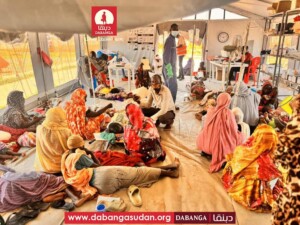
Khartoum – October 7, 2026 – Radio Dabanga The Federal Ministry of Health revealed in its report on Tuesday an increase in cholera cases compared to the two previous years, with the emergence of one case in Sodari locality in North Kordofan. Meanwhile, Médecins Sans Frontières (MSF) announced that Sudan suffered in 2024 and 2025 from the deadliest cholera outbreak in its recent history, as the disease reached all 18 states for the first time, with more than 124,000 cases and 3,500 deaths recorded, according to the World Health Organization. Michaela Serafini, head of MSF in Switzerland, stated: “Sudan has faced at least 16 cholera outbreaks since the 1960s, including large waves in 2006, from 2016 to 2018, and in 2019. Seasonal rains and weak infrastructure have exacerbated those outbreaks.” The prevalent pattern of the disease has changed. He added: “Over the past two years, the war has changed the prevailing pattern. Since the outbreak of fighting between the Sudanese Armed Forces and the Rapid Support Forces in April 2023, our teams have observed the spread of cholera along conflict routes and the deterioration of living conditions in displacement sites. Infection rates rose sharply in Port Sudan, Gedaref, Khartoum, and Kosti during the dry season, months before the rains that usually accelerate transmission.” He noted that the bombing of the power station feeding the city of Kosti in White Nile State in February 2025, and attacks on power stations in Khartoum, led to power cuts for pumps providing clean water, leading to a widespread cholera outbreak. By March 5, less than a month later, more than 3,000 cholera patients were admitted to Kosti Teaching Hospital, and more than 100 of them died. Ibrahim Mohammed, 73 years old and displaced from Al Jazirah State, is a patient in the MSF cholera treatment unit in Al Gedaref city. Cholera waves follow the pace of war. He believes that these waves followed the pace of war, not seasons or weather conditions, and the greatest burden fell on the least protected people: families displaced within Sudan, who often live in overcrowded camps or informal settlements lacking clean water, sanitation, and healthcare near their homes. In some areas, outbreaks began within days of the arrival of new arrivals. He explained that conflicts provided favorable conditions for cholera outbreaks and exacerbated them, pointing to damage to water and energy networks, mass displacement, interruption of humanitarian aid, and a lack of resources needed for the response. He said that this disease is preventable, and the repeated failure to prevent it in the past reflects political choices that included not protecting civilians, targeting civilian infrastructure and accepting the damage caused to it, preventing the arrival of urgent aid, and reducing the funding necessary for optimal preparation. He pointed to the containment of the largest outbreak of the disease by March 2026, but the danger has not ended; a new outbreak was announced in West Kordofan in June, after cases of acute watery diarrhea appeared in May, before the rainy season began in full. Cases also appeared in North Kordofan, although their numbers are in decline. Once again, conflict, the lack of clear surveillance data, and inadequate clean water contributed to creating conditions for the emergence of the disease. MSF’s cholera treatment centre, located in Kassala, was flooded after heavy rains the previous night. The centre, based in tents, provides urgent care to cholera patients. Available space within the hospital was quickly reorganized to welcome patients coming from the flooded tents. Despite the challenging conditions MSF teams continue their efforts to treat those affected by the outbreak, working to maintain operations and ensure that patients receive life-saving care. A call for urgent action. He called for action at the speed that this epidemic requires, addressing a message to the donor community, the Sudanese Federal Ministry of Health, and other humanitarian agencies that timing is no less important than the investment itself. He called for strengthening surveillance to detect cases early, and resorting to decentralized working methods that enhance surveillance and preempt transmission. This means urgent investment in preparedness, including vaccination plans and water and sanitation services. He emphasized that wherever a life can be saved from a preventable disease like cholera, we must do our utmost. He also called on the parties to the conflict, and those who have influence over them, to respect their obligations under international humanitarian law and the Geneva Conventions to protect civilian infrastructure, such as water and energy networks, which are essential for people’s survival. He added: “These are not optional guarantees. When a power plant or water treatment plant is attacked, the consequences go far beyond the destruction of infrastructure, as their effects appear in the adjacent cholera ward, overcrowded with patients, some of whom will die.”
Radio Dabanga (Arabic)الأخبارالخبر الرئيسيالصفحة الرئيسيةشريط الأخبارعناوين الأخبار
Share
Comments
No comments yet. Be the first to share your thoughts.
Subscribe to our newsletter
Get a summary of the latest news and analysis delivered to your inbox.