
Supporting Voices
From Anbar Judah to the Dahaba in Northern Sudan: Who Decides the Value of Sudanese Lives?
By: Abu-Hureira Abdelrahman Ibrahim, Researcher and Human Rights Defender. Sudanese poet Salah Ahmed Ibrahim immortalized the victims of Anbar Judah in his poem 'Twenty Dozen,' transforming the tragedy into a literary protest against a society where the value of a human being may be eclipsed by interests and privileges. In his poignant verses, he asks: 'If only they were a bundle of watercress, counted to be sold to the foreigners in the big city.' The poet was not merely lamenting...
Sudanile October 12, 2026Published 1 views
Source:Sudanile
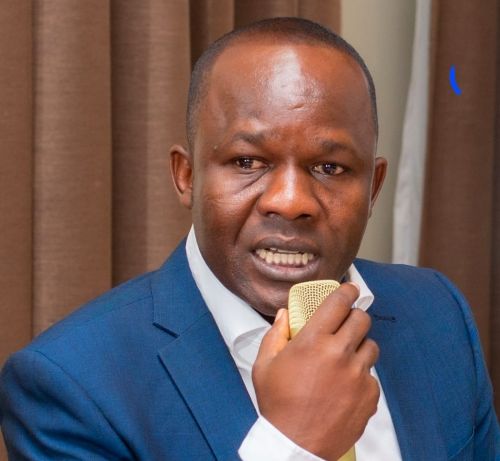
By: Abu-Hureira Abdelrahman Ibrahim, Researcher and Human Rights Defender. Sudanese poet Salah Ahmed Ibrahim immortalized the victims of Anbar Judah in his poem 'Twenty Dozen,' transforming the tragedy into a literary protest against a society where the value of a human being may be eclipsed by interests and privileges. In his poignant verses, he asks: 'If only they were a bundle of watercress, counted to be sold to the foreigners in the big city.' The poet was not merely lamenting the victims; he was exposing a harsh moral paradox: that the death of a poor person appears less worthy of attention than the loss of a commodity or a personal interest. From this paradox, poetry derives its power as a testimony to its time and a questioning of the conscience of a society where the capacity to protect life and make the voices of victims heard varies. Decades later, the question resurfaces as we follow reports regarding airstrikes on artisanal mining sites in northern Sudan, and the alleged deaths, injuries, and arrests. Some preliminary figures circulated have exceeded 500 casualties and detainees, though these could not be independently verified or confirmed as a final count. The absence of verification does not justify silence; rather, it necessitates an investigation. The issue is not just the number of victims, but the level of concern for their fate and the willingness of relevant institutions to uncover the truth and ensure justice. Why do some tragedies receive wide attention, while victims of others are left outside the circle of concern? Are Sudanese lives truly equal, or does their value vary in the public consciousness according to the influence and status of those who hold them? Class status does not forfeit the right to life. Those working in artisanal mining are not mere figures in a circulating tally; they are human beings seeking to provide for their families in a country exhausted by war and dwindling livelihoods. Their economic vulnerability must not become a pretext to neglect their safety or undermine their rights. The right to life and dignity does not depend on wealth, affiliation, or social status. Moreover, engaging in economic activity does not, in itself, nullify the protection afforded to civilians under International Humanitarian Law. This does not mean assuming all artisanal miners are civilians in all circumstances, or asserting the illegality of the raids without investigation. Rather, legal assessment requires determining the nature of the targeted sites, the status of the individuals present, the circumstances surrounding the attacks, and the extent to which rules protecting civilians were observed. The legitimacy of an attack is determined by evidence and law, not by the poverty or social status of the victims. From Anbar Judah to the April 15th War: A memory judging the present. Recalling Anbar Judah does not imply equivalence between that historical incident and the current events in northern Sudan; each has its own context and circumstances. However, it allows for questioning the present on a matter that has lost none of its urgency: has the protection of human life become a non-discriminatory principle? Since the October 25, 2021 coup, the civil-democratic transition faltered, and war broke out on April 15, 2023, between the Sudanese Armed Forces and the Rapid Support Forces. Since then, the circle of death, displacement, refuge, and hunger has widened, and property and livelihoods have suffered massive destruction. Estimates of human loss and displacement vary by monitoring sources and methodologies, given the difficulty of accessing conflict zones. Therefore, accuracy requires attributing figures to their sources and dates, and distinguishing between documented tolls and preliminary estimates. Yet, the variation in numbers does not change the reality that the war has placed the lives and fundamental rights of millions of Sudanese at grave risk. Recalling the victims of Anbar Judah is not meant to relive the past for its own sake, but to warn against the death of the marginalized becoming a routine occurrence, and their tragedies turning into fleeting news. Truth and Accountability: No premature condemnation and no justified silence. Reports regarding the raids on artisanal mining sites require specific answers: What was the nature of the targeted sites? How many were killed and wounded? Were there arrests, who carried them out, and what is the fate of the detainees? These questions necessitate an independent and transparent investigation that examines testimonies, field and medical evidence, and visual materials, establishes the sequence of events and the responsible parties, while protecting witnesses and sources from retaliation. The fate of detainees must also be revealed, and families must be granted access to information regarding their loved ones. If the investigation proves violations occurred, those responsible must be held accountable according to the law, and the right of victims and their families to remedy and reparation must be guaranteed. A responsible human rights position does not take unverified accounts as absolute truth, nor does it use the lack of evidence as an excuse to ignore them. Instead, it demands the truth and commits to accuracy in documenting events and determining responsibilities. Leaving serious reports without investigation undermines trust in the law and fuels impunity. The State's Responsibility and Protecting Citizens. The International Covenant on Civil and Political Rights guarantees the right to life under Article 6, obligating states to protect it and investigate cases of arbitrary deprivation. In the context of armed conflict, attacks must be assessed according to the rules of International Humanitarian Law, particularly the principles of distinction, proportionality, and taking feasible precautions to protect civilians. Acts may rise to the level of war crimes or crimes against humanity when the specific legal elements of each crime are met; the mere occurrence of killing or an attack is not, by itself, sufficient to prove either classification. The Sudanese state bears the responsibility of protecting the population under its jurisdiction, investigating reports of civilian casualties, ensuring respect for the law, and holding those responsible for proven violations accountable. It falls upon the leadership of the state, first and foremost Lieutenant General Abdel Fattah al-Burhan, to take political and institutional responsibility to clarify the measures taken to protect citizens, ensure the relevant institutions are subject to the law, and act through appropriate diplomatic and legal channels to uncover the truth and hold the responsible parties accountable. Preserving national sovereignty is inseparable from preserving the lives of citizens; the protection of the state is not complete unless human life and rights are at the heart of its responsibilities. We should not need a new poem. 'Twenty Dozen' remained alive because it transcended the Anbar Judah incident to a broader question about the value of human beings in a society where power and privilege are unequal. Salah Ahmed Ibrahim made poetry a memory that refuses to let the poor be reduced to numbers or their deaths buried in oblivion. What the 'Dahaba' (gold miners) victims need today is not a new elegy, but a truth that reveals what happened, justice that determines responsibilities, and fairness that upholds the rights of the victims and their families. The standard of justice is not its ability to protect only those with influence, but its reach to those who have no platform to make their voices heard or the power to prevent their being forgotten. Sudanese lives are equal in dignity, and their rights to protection, investigation, and fairness must be equal. From Anbar Judah to northern Sudan, the issue is not who deserves to be mourned more, but who has the right to life, protection, and justice. This right is not granted by wealth, nor is it preserved by influence. How many souls must be lost before we realize that the life of the poor is no less valuable, and that justice which does not reach the marginalized remains incomplete?
Sudanileمنبر الرأي
Share
Comments
No comments yet. Be the first to share your thoughts.
Subscribe to our newsletter
Get a summary of the latest news and analysis delivered to your inbox.