
Politics
Civil-Military: Unstable Foundations, Not Anchors
Abdullahi Ali Ibrahim notes that Haydar Ibrahim identified the core issue as a predilection for invective over intellectual depth among Sudan's elite. This is exemplified by the rhetoric regarding the dissolution of the Sudanese Armed Forces, which lacks a grounded reference framework. Bakri Al-Jak, spokesperson for the 'Sumoud' alliance, stated that the international community has lost faith in an internal solution to the Sudanese crisis.
Sudanile October 12, 2026Published 1 views
Source:Sudanile
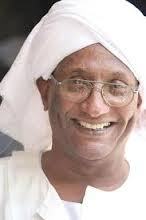
Haydar Ibrahim identified the core issue as a predilection for invective over intellectual depth among our elite. There is no greater absence of thought than that which leads some segments of this elite to propose the dissolution of the Sudanese Armed Forces. They arrived at this conclusion based purely on invective, devoid of critical analysis, lacking any reference framework to assess the institution. Bakri Al-Jak, spokesperson for the 'Sumoud' alliance, stated that the international community—both in appearance and reality—has abandoned hope for an internal solution to the Sudanese crisis. As the saying goes, this is the 'Mi Bishara' (the final word). The international community has repeatedly asserted that the solution lies solely in the hands of the Sudanese people, sooner or later, or what Lieutenant General Abdel Fattah al-Burhan calls 'national ownership of the solution.' It is unclear if the world's indifference to an internal solution stems from a lack of faith in the Sudanese civil elite's ability to forge such a path. Unfortunately, this disinterest arrives just as certain elites are rolling up their sleeves for a dialogue that addresses the 'roots of the crisis.' Perhaps this skepticism is justified, as the civil elite has produced little sign of a solution after four years of war. They are so consumed by mutual resentment that it has emptied them of the capacity for dialogue, not only among themselves but even within their own ranks. Between 'Sumoud' and the Islamists, there is an exceptional 'except'—meaning 'Sumoud' and the radical Communists do not object to talking to any group other than the Islamists. If this boycott were limited to these two factions, we might call it a remnant of the revolution's vengeful grievances. Yet the divide between 'Sumoud' and the radicals is deeper. Since their disagreement over the 2019 Constitutional Document and whether bargaining with the Military Council for a transitional government was valid, the radicals and 'Sumoud' (since some were part of the 'FFC') have not exchanged a civil word. Since then, 'Sumoud' is never mentioned by the radicals without being preceded by 'Soft Landing,' accusing them of colluding with the military and those behind them, and cursing them for it. For its part, 'Sumoud' accuses the radicals of placing obstacles in the path of the transition, even calling for its overthrow, and blames them for aligning with the 'Kizan' (Islamists). Hostility is not what prevents the elite from engaging in national ownership of solutions; rather, hostility is a symptom, not a cause, of the elite's inertia in forging a path to address the crisis together. Our elite lacks a culture of dialogue. Throughout the period when parts of this elite were in opposition to the 'Ingaz' (Salvation) regime, they failed to establish think tanks, intellectual journals, or cultural television channels to debate issues collectively. An exception was the Sudanese Studies Centre, founded in the 1990s by Dr. Haydar Ibrahim, who passed away weeks ago, bridging Khartoum and Cairo. I know no one else who was as disturbed by the wretched state of our knowledge following the 2018 revolution and the war as he was in a televised interview on the eve of Independence Day in January 2024. He appeared frustrated by the etiquette of oppositional activism, stating that we have ended up merely insulting the Islamic Movement, which he saw as still being a 'dark' force. He argued for the need for democratic political action to create a new Sudanese citizen through a process of radical political education. The 'Tagadum' coalition, which he was initially optimistic about, seemed to him elitist because he sought to restore the absent mass movement to the political arena. He aspired to see a grassroots movement that trusts the people's ability to build a modern democratic party system. Haydar put his finger on the ailment: the dominance of invective over intellect among our elite. There is no greater absence of thought than the solution proposed by some to dissolve the Sudanese Armed Forces. They reached this through mere invective without study, lacking a reference framework to evaluate them. On one hand, they had no issue with the military until the war broke out in April 2023, as evidenced by their January 2023 Framework Agreement, which asked only for the military to return to barracks to reform itself according to a military and security reform program. The irony is that in that agreement, they dissolved the 'Rapid Support Forces' into the army, while remaining silent on the matter today. On the other hand, for them, the history of the Armed Forces begins in 1989, when the Islamists staged their coup and ruled until 2019—a suspicious starting point that ignores Nimeiri’s 1969 coup executed by the same forces. We know of no other regime that enabled its Arab nationalist socialist ideology at one time, and its Islamic caliphate at another, within the Armed Forces, if indeed the 'ideologization' of the army was the fault of the Islamists and the military itself—which 'Sumoud' seeks to dissolve. In the absence of a reference framework to weigh their arguments, you find them snatching ideas to score points as they happen. If you warn them that dissolving the Armed Forces in our specific context is a recipe for the collapse of the state, not just the government, they cite the examples of Uganda, Ethiopia, and Rwanda, believing that the state remained intact there. 'Sumoud' plans for the army while looking at these experiences through the lens of civil-military relations, a field previously neglected by researchers. Most studies focused on military coups and the roles of armies in specific conflicts. Regardless, the prevailing view is that African armies are 'political armies'; they are guerrilla liberation armies that won national or civil wars according to Mao Zedong's 'People's War' model, becoming a government with strict discipline where leadership is held by a group not necessarily from one ethnicity, but bonded by years of fighting the regime they set out to topple. Examples include Eritrea, Ethiopia, Uganda, and Rwanda. Consequently, the civil-military relationship only recently entered the sphere of research to analyze post-conflict societies where 'guerrilla' forces replaced the national or colonial army. Researchers examining the 'Rwanda Defence Force,' which emerged from the Rwandan Patriotic Front, conclude it is a 'political army' inseparable from the political structure that governs Rwanda. These forces are so politicized they have been described as the 'Prussia of Africa'—a state with an army, rather than the other way around. The Rwandan Patriotic Front’s military pedigree is high; its pioneers fought shoulder-to-shoulder with Museveni’s Ugandan Resistance Movement until victory in 1986. Tutsi soldiers made up a quarter of Museveni’s army and held top command for long. The Front then hardened through its war against the Habyarimana regime (1979-1994) in Rwanda, which committed the genocide against 800,000 Tutsis. It grew even stronger after establishing its state, fighting wars in the Congo against Hutu resistance groups. All efforts to make the Rwandan army objectively separate from the state have failed. It is no secret to the Tutsis—the nation of the new order—that they are an island in a sea of Hutu hostility. They court the Hutus with the government as the carrot, but hold tight to security, where the army is a party, as the stick. Thus, the civil-military relationship in contemporary Rwanda rests on two elements: a highly efficient, militarized army that is also a politicized tool of repression when needed. This military encroachment into politics is what researchers found regarding the 'Ethiopian National Defense Force' (1996), which emerged from the 'Ethiopian People's Revolutionary Democratic Front' (1988-2019). This front comprised ethnic-based armies under its leadership, which fought and toppled the Derg regime in 1991. They disbanded the Derg's army and unified these ethnic armies into the Ethiopian Defense Force, dominated by the Tigray People's Liberation Front (TPLF). The Ethiopian leadership did not fail to project the army as professional and national. In 1996, a decree mandated ethnic diversity, appointed a civilian Minister of Defense, and stipulated the army's role was to protect the country and constitution, declaring it non-partisan. This objectivity was unrealistic due to two factors: the 'Revolutionary Democracy' doctrine—the 'Red Book' authored by Meles Zenawi—which taught soldiers to equate the nation with the EPRDF regime, stating the army was the 'last fortress of revolutionary democracy,' branding dissenters as 'chauvinists.' The second factor was the Tigray group's aspiration for hegemony. Despite being only 6% of the population, they controlled the military, intelligence, and economy, using a deceptive facade of multi-ethnic rule. Tigrayan clinginess to power led to rigged elections in 2005 and 2015, the arrest of opposition and journalists, and the suppression of Amhara and Oromo uprisings. After 2010, simmering tensions led to the TPLF's fall following 2018 protests, leading to the election of Abiy Ahmed. He moved to purge Tigrayan officials and dismantle the EPRDF in 2019 to form the 'Prosperity Party.' The TPLF refused to join, withdrawing to its region and accusing Abiy of centralizing power. In 2020, they held unauthorized elections despite Covid restrictions. The army itself polarized, becoming a battlefield of political struggle. There is no escaping the need for a reference framework, as we have attempted here, for arguments about the army and state to hold water; otherwise, they are mere hysteria. Ethiopia and Rwanda did not experience state collapse; they replaced one oppressive system with another. Ethiopians spent two decades ridding themselves of the Tigrayan system, with effects that still loom over the Ethiopian state today. The argument that dissolving our Armed Forces will not cause state collapse is flawed for two reasons: In Ethiopia, what kept the state intact after the fall of the Derg was that it fell into the hands of a liberation movement backed by ideological vision and solidarity. No one can claim this about the 'Rapid Support Forces,' which—allied with the SPLM—would cause the Sudanese state to collapse into their lap. The RSF is not a liberation movement by any definition; their first mission was to suppress liberation movements in Darfur. Furthermore, their conduct during this war, destroying the state and violating people's honor, wealth, and property, proves that their second role would be a disaster. In any case, discussing our issues based on a reference framework is the cultured path to dialogue; otherwise, we remain trapped in the cycle of insulting 'Ingaz,' as Haydar said. We will not achieve national ownership of the solution while improvising as we currently do. Honing the discussion based on a reference framework is the ladder to the second front.
Sudanileمنبر الرأي
Share
Comments
No comments yet. Be the first to share your thoughts.
Subscribe to our newsletter
Get a summary of the latest news and analysis delivered to your inbox.