
Politics
Is Hemedti Still Dead?
Wagdi Kamel: Wars usually generate their own need for news. In this, the public does not always look for the truth as much as it looks for news that explains what is happening or offers hope. This is why rumors find a fertile and typical environment, especially when information is scarce and sources are almost non-existent. But where is the problem with that? One of many things [...]
Sudanile October 12, 2026Published 1 views
Source:Sudanile
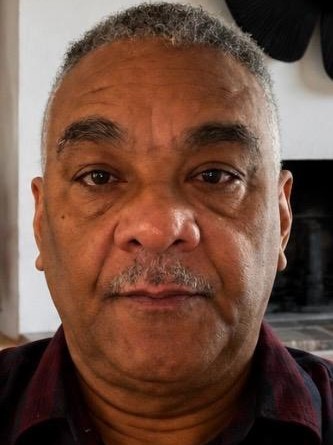
Wagdi Kamel: Wars usually generate their own need for news. In this, the public does not always look for the truth as much as it looks for news that explains what is happening or offers hope. This is why rumors find a fertile and typical environment, especially when information is scarce and sources are almost non-existent. But where is the problem with that? One of many things, which almost forms an integrated system of our habits or flaws in thinking, is our susceptibility to believing rumors. We do not describe phenomena; we content ourselves with commenting on them, then wait for appreciation from others as a result of inputting false information. Instead, we accumulate mistakes without subsequent review or offering an apology, to the point that our dictionary of knowledge or political knowledge has become almost devoid of the word 'sorry,' 'we apologize,' 'we were wrong,' or 'we have erred.' These observations, if true, do not help in building or producing the truth as much as they help in building misinformation with sophisticated authenticity, without correcting the information. We find ourselves insistent on declaring the possession of the truth and defending it in itself. You find men swearing divorce if something, for example, is so. But we do not, in most cases, witness any movement of absolute or hidden divorces as a result of those 'oaths.' Nor does any apology occur for making them. Women go even further in 'swearing,' vowing to 'cut their own limbs' if such and such happens. Yet, we do not see a single woman who did so after what she feared occurred, or apologized for the hyperbole in punishing herself. Sometimes the story takes on symbolic dimensions, with a father or mother swearing that they will not be a father or mother to so-and-so if such is the case. But the matter is indeed so, without any severance of their relationship with their children. All this is done as if we are exaggerating in certainty, without bearing the consequences when we discover we were wrong. Thus, since the beginning of this war, we fell into believing the information that 'Mohamed Hamdan Hemedti' had died and was 'fully' dead, and that what we are seeing is nothing more than a robot, or a creature manufactured by artificial intelligence. The 'Yes to War' media battalion brought this out to us, supported by an army of fabricators from politicians and diplomats advocating for the continuation of the war, in support of the validity of the information. They mocked us and our 'small minds,' and even the media outlets that did not want to accept that 'bare truth.' However, as time passed and the 'real Hemedti' appeared in the media repeatedly, the voices of those people faded. Now, when he makes a statement or threatens something, they write responses to the 'dead man' with expressions overflowing with indignation. They no longer return to their old strategy of killing him while he is alive. Instead, they struggle to re-engineer our memory and erase the fact that they said that before, or at one time. That was not just the problem of the citizen who believes rumors on social media, but the problem of the expert or journalist promoting them with confidence, so they acquire the character of knowledge. Here, a phrase like 'Hemedti is dead' becomes more than a rumor; it becomes circulated political information. The irony lies in Hemedti’s later appearance without finding apologies or broad reviews from those who announced his death. Instead, the discourse moved to a new stage: responding to Hemedti, analyzing his statements, and predicting his future death or trial, for instance. This happens as if nothing had happened. They do not correct the old information; they erase it from memory. They do not admit by saying: We were wrong, and what we did was a mistake. For admission does not only mean saying 'I was wrong.' Admission also means the collapse of part or an aspect of the authority the opinion holder gained as being knowledgeable and informed. Therefore, silence becomes more comfortable than apologizing, and reformulating the discourse is easier than reviewing the past. What we witnessed in that dramatic media show, and after a long time has passed, was not in reality a show about killing Hemedti with media weaponry, but rather a substitution for killing the truth. We killed the truth, then refused to admit that it was alive one day.
Sudanileمنبر الرأي
Share
Comments
No comments yet. Be the first to share your thoughts.
Subscribe to our newsletter
Get a summary of the latest news and analysis delivered to your inbox.