
Politics
Khartoum and Cairo .. Borders of Blood and Sovereignty
The Truth Perspective by Dr. Ibrahim Shglawi. The incident involving Sudanese miners on the Sudanese-Egyptian border puts relations between the two countries to a difficult test, linked to the responsibility of protecting citizens, securing borders, and the effectiveness of security coordination. Strategic interests and a common destiny dictate an urgent resolution that cannot tolerate silence or political impulsiveness. Borders between nations are spaces where sovereignty, security, and shared interests intersect, testing the state's capacity to […]
Sudanile October 15, 2026Published 1 views
Source:Sudanile
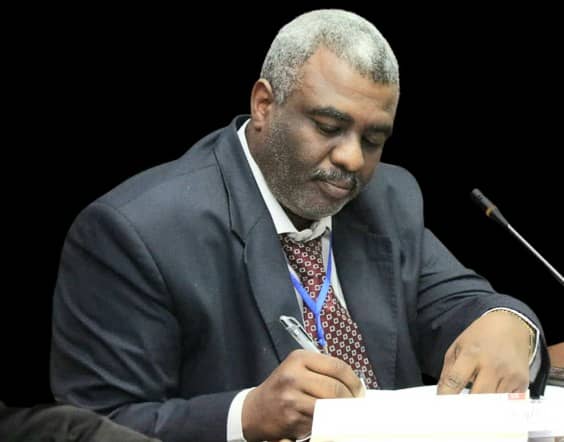
The Truth Perspective by Dr. Ibrahim Shglawi. The incident involving Sudanese miners on the Sudanese-Egyptian border puts relations between the two countries to a difficult test, linked to the responsibility of protecting citizens, securing borders, and the effectiveness of security coordination. Strategic interests and a common destiny dictate an urgent resolution that cannot tolerate silence or political impulsiveness. Borders between nations are spaces where sovereignty, security, and shared interests intersect, testing the state's capacity to protect its citizens and manage its relations with neighbors. Consequently, the death of Sudanese nationals in a border zone under ambiguous circumstances necessitates safeguarding citizens' lives and protecting national sovereignty, ensuring rights without damaging the relations between the two countries. In the face of this reality, the state's responsibility to reveal the truth and protect its citizens' rights emerges. Thus, the Sovereignty Council's immediate announcement upon the incident to form a fact-finding committee—including the Public Prosecution and judicial and security authorities—to investigate and determine the circumstances, is a necessary first step. However, its true value depends on reaching the full facts, announcing the findings to the public, and assigning responsibilities based on any violations the investigation proves. The value of the investigation is not complete with merely documenting the incident, but by revealing the logic behind the use of force and the limits of responsibility: Where did the incident occur, what was the nature of the miners' activity, was there a threat that justified the act, was the excessive force used proportional to the situation, and were civilian lives considered? More importantly, was there prior security coordination and information exchange between the two countries, or did communication occur only later to contain the repercussions? Answering these aspects will define the legal responsibility while revealing the effectiveness of border management and the ability of joint coordination to prevent individual incidents from escalating into crises that affect the trust and the security, political, and social relationship between the two countries. The issue should not be settled by emotion or pre-emptive justification, but by the facts uncovered by the investigation. Communication after an incident does not necessarily mean there was coordination before it, and combating illegal mining does not justify putting lives at risk. The law protects borders, but it also protects humans; if it is proven that force was used disproportionately, accountability becomes an unavoidable duty so that security protection does not turn into a reason for loss of life. However, limiting the issue to only the other side may obscure a part of the Sudanese state's responsibility. Mining, when operating outside regulation and oversight, turns into a risky economy where the need for gold intermingles with smuggling, extortion, and the potential for violence. The war, which has entered its fourth year, has pushed large sectors of Sudanese to seek harsh livelihoods in light of declining job opportunities and mounting living pressures. Yet, poverty should not be a justification for leaving citizens to face their fate in remote areas, just as combating artisanal mining does not exempt the state from its duty to regulate the activity, designate its zones, provide information and warnings, pursue smuggling networks, and protect workers from potential risks. Hence, the investigation must lead to a resolution that goes beyond determining responsibility for the incident to reviewing mining management in border areas. A state that lacks accurate data on workers and their activity locations, and does not impose effective oversight on the movement of miners, finds itself facing recurring crises that are difficult to contain. Conversely, the Sudanese-Egyptian relationship remains greater than a single incident and too deep to be managed by reactions. Geography, history, and the interests of security, water, trade, and the movement of citizens make the stability of both countries a mutual interest. However, preserving this relationship does not mean overlooking rights or delaying the demand for the truth, just as demanding an investigation and accountability does not mean hostility toward Egypt or targeting its people. It is the established relationship between Khartoum and Cairo that allows for addressing differences transparently, away from impulsiveness, subjecting facts to the law, and preventing individual incidents or security operations from turning into crises between the two states. This balance becomes increasingly important with reports of a separate shooting incident in Khartoum that claimed the lives of two Egyptian drivers, where it was said the suspect linked his actions to a desire for revenge for the killing of his brother in the miners' incident. These two events should not be merged or one justified by the other, but their concurrence reveals the danger of anger shifting from demanding justice to individual revenge, which threatens innocent lives and opens the door for mutual escalation. Here, governments and media in both countries bear a double responsibility to verify information, reject hate speech, and not turn tragedy into fuel for political mobilization or spoiling relations. The borders of blood and sovereignty, according to #The_Truth_Perspective, are not preserved by silence or escalation, but by truth, accountability, and responsible coordination. Sudan must secure the rights of the victims through the law, not through emotion, and both countries must make the protection of human life the foundation of border security. Strategic relations are not weakened by accountability but protected by justice, and sovereignty is upheld when the lives of Sudanese are a red line. Stay well and safe. Wednesday, October 14, 2026. Shglawi55@gmail.com
Sudanileمنبر الرأي
Share
Comments
No comments yet. Be the first to share your thoughts.
Subscribe to our newsletter
Get a summary of the latest news and analysis delivered to your inbox.