
Politics
Egyptian movements inside Sudanese territory: Did Al-Burhan concede mining areas in exchange for political and military support from Egypt?
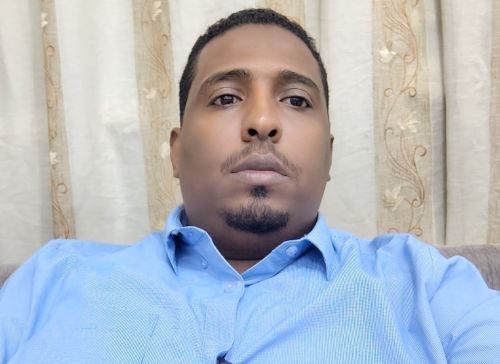
Awab Azzam Al-Bushi: On the morning of October 10, 2026, it was not only the civilians who were struck by bombs; the illusions that Sudanese people clung to throughout the years of war and collapse also fell. The illusion that the state, no matter how weak, would remain instinctively biased toward its citizens when their blood is shed. Miners who went to the desert seeking a livelihood returned, some as corpses, some wounded, and some never returned at all.
Sudanile October 15, 2026Published 1 views
Source:Sudanile
Awab Azzam Al-Bushi: On the morning of October 10, 2026, it was not only the civilians who were struck by bombs. With them, many illusions that the Sudanese people have held onto despite everything that happened during the years of war and collapse also fell. The illusion that the state, no matter how weak, would remain instinctively biased toward its citizens when their blood is shed has crumbled. Miners who went to the desert in search of a livelihood returned, some as corpses, some wounded, and others never returned at all. However, the tragedy did not stop at the bloodshed, but extended to something more dangerous: the narrative. From Halayeb to North Wadi: A Repeating Pattern? In August 2025, the French website 'Réseau International' revealed an official document from the Sudanese Sovereignty Council, showing that Khartoum had issued an official directive to adopt a new map that includes the Halayeb, Shalateen, and Abu Ramad triangle within Egypt's borders. According to the report, this letter came after a high-level meeting between Egyptian President Abdel Fattah el-Sisi and Sovereignty Council Chairman Abdel Fattah al-Burhan, where both parties agreed to consider the triangle part of Egyptian territory, while pledging not to raise the issue before international bodies. The document, dated May 11, 2025, instructed the National Borders Commission to adopt a map placing the triangle within Egyptian territory during maritime border demarcation negotiations with Saudi Arabia. According to political sources, this concession was made in exchange for Egyptian military support for Al-Burhan in his war against the Rapid Support Forces (RSF). But the leak planted a seed of a question that has not subsided: Why is Al-Burhan granting Cairo recognition of the sovereignty of disputed Sudanese land? Egyptian movements in mining areas: What is actually happening? Today, nearly a year later, the same question returns, but this time from the heart of the North Wadi mines. In June 2026, artisanal mining areas in North Wadi, near the Sudanese-Egyptian border, were subjected to intensive aerial bombardment. Eyewitnesses and local sources reported to the BBC that more than 60 artisanal miners were killed and about 150 others were injured. Witnesses said warplanes bombed mining sites in Jabal Al-Ahmar, known as 'Al-Aqidat' mountain, near the 'Al-Ansari' market. The attack was not limited to air power. The bombardment coincided with a rapid ground incursion by Egyptian security forces into Sudanese territory, through which military vehicles pushed to overrun the 'North Wadi Mine,' located about an hour from the famous 'Al-Ansari Mine.' Miners in the North Wadi area said the Egyptian army deployed more ground troops on armored vehicles and combat vehicles, occupied more Sudanese land, and expelled the miners. In the latest incident days ago, at least 200 miners were killed in airstrikes targeting the North Wadi area, according to the Sudanese rights group 'Emergency Lawyers.' The group accused Egyptian authorities of seeking to expand and impose control over Sudanese natural resources in the border regions rich in gold and minerals. Strategic underground wealth: What makes this area so important? According to engineer Sadiq Ahmed, the areas of Northern Sudan are among the richest in the country in precious and rare minerals that are used in many modern and advanced industries. Sadiq pointed out that the area contains large quantities of high-purity quartz, with silica content reaching about 99.9%, making it a raw material with high industrial value. High-purity quartz is used in multiple industries, most notably glass, electronics, semiconductors, and solar energy, making it a globally rare strategic material. These riches raise questions about whether the Egyptian moves are driven by this enormous economic value, rather than just security considerations. The stony silence: What does it mean? However, what was striking was not the bombing itself, but what followed: a complete official silence from the Port Sudan authorities. The Sudanese army did not issue any statement condemning, denouncing, or even commenting on the targeting of Sudanese citizens on Sudanese soil. In fact, the army went further, disabling the comments feature on its Facebook pages after a wave of massive popular anger. What connects Al-Burhan to Egypt? The answer lies in the nature of the relationship between Al-Burhan and Cairo. Egypt is considered one of the most prominent military and political supporters of Al-Burhan in his war against the RSF. In January 2026, Egyptian intelligence chief Major General Hassan Rashad delivered a written message from Sisi to Al-Burhan regarding Egyptian support for the Sudanese army. According to an Egyptian source, Rashad discussed with Al-Burhan supporting the Sudanese army and protecting the security of the Red Sea. In December 2025, the Egyptian presidency issued a statement on the Sudanese war that included three points it described as 'red lines,' stating it would not allow them to be crossed because they touch upon Egyptian national security. Egyptian Foreign Minister Badr Abdelatty said that any threat to Sudan's sovereignty and territorial integrity represents a red line for Egypt. This support is not free. It seems Al-Burhan is paying the price for this support with pieces of Sudanese sovereignty. This possibility has been openly revealed: Has the de facto authority in Port Sudan, led by Al-Burhan and Kamil Idris, granted mining concessions in these Sudanese areas to Egypt in exchange for Egypt's support for the Islamic Movement's army in the Sudan war? The question remains hanging without an official answer. Support for sovereignty: A troubling hypothesis: According to political sources, what was offered to Egypt was not limited to Halayeb and Shalateen. Reports indicated that Al-Burhan granted millions of acres to Egyptians in 'Northern, River Nile, and Gedaref' states. In September 2025, an investment agreement worth $277.3 million was signed between the Sudanese Ministry of Minerals and 'Deep Metals Mining,' in partnership with Egyptian businessman Mohamed El-Garhy, covering exploration and production of gold and iron in the states of Northern, Red Sea, River Nile, and Gedaref. While Egypt later denied allegations of establishing 108 gold mines in Northern Sudan, the announced agreements and field movements remain indicators of a broader pattern of Egyptian economic and military penetration into Northern Sudan. Pressures on Al-Burhan: Does he have the option to object? Al-Burhan realizes that he faces massive pressure on more than one front: militarily against the RSF, politically against internal and external criticism, and popularly against the economic situation. At such a moment, the choice of losing allies may not be feasible. Egypt is not just a military supporter, but also a diplomatic ally in international forums and an economic partner in vital sectors. But this calculation raises a deeper question: If Cairo is moving with increasing confidence in strategic mining areas, targeting Sudanese miners, and pushing ground forces to occupy new locations without facing any objection from the Port Sudan authority, can this silence be read as a new tacit recognition—not on official paper, but by the absence of any objection? Analysts say that Port Sudan's continued disregard for repeated Egyptian violations may be the price of continued Egyptian support at a moment when Al-Burhan is facing existential pressures. In this equation, the option of losing the Egyptian ally may not be on the table, even if the price is strategic mining areas rich in quartz and gold. Sovereignty when it becomes a burden: What is happening today in North Wadi may be the latest chapter in a series that began in Halayeb and did not end at the borders of the mines. If the leaked document revealed by the French website 'Réseau International' showed that Al-Burhan agreed to adopt a map placing Halayeb within Egyptian borders in exchange for military support, the current field data indicates that the same pattern may be repeating in the North Wadi mining areas. But the difference this time is that the price is not just land, but the lives of Sudanese citizens who were looking for a livelihood in a barren desert. The question that forces itself is: If Al-Burhan has indeed conceded Halayeb behind the scenes in exchange for political and military support, what prevents him from repeating the same scenario in the North Wadi mines? And if Egyptian support is the condition for his authority's survival, does he even have the option to object?
Sudanilefactcheck:reviewمنبر الرأي
Share
Comments
No comments yet. Be the first to share your thoughts.
Subscribe to our newsletter
Get a summary of the latest news and analysis delivered to your inbox.