The Library
Damn it, October Revolution
Abdullah Ali Ibrahim (October 26, 2012) - Whenever I hear our elite call for dialogue, I reach for my gun. Dialogue is something restricted by terminology, otherwise it turns into the kind of prattle that 'tires our heads out,' as my late mother Hajja Gamal used to say. Just yesterday, I found the English equivalent: 'talk your head off.' Our elite abuses and mangles terminology, as seen in the concept of 'revolution' as understood by Mansour Khalid, that [...] The post Damn it, October Revolution appeared first on Sudanaile.
Sudanile October 23, 2026Published 1 views
Source:Sudanile
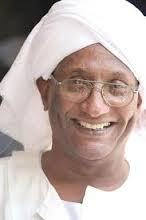
Abdullah Ali Ibrahim (October 26, 2012) - Whenever I hear our elite call for dialogue, I reach for my gun. Dialogue is something restricted by terminology, otherwise it turns into the kind of prattle that 'tires our heads out,' as my late mother Hajja Gamal used to say. Just yesterday, I found the English equivalent: 'talk your head off.' Our elite abuses and mangles terminology, as seen in the concept of 'revolution' as understood by Mansour Khalid. That our confusion regarding the October 1964 revolution is in its clearest manifestation occurred in my meeting with Al-Tahir Hassan Al-Tom on Blue Nile TV. Al-Tahir read to me a passage from Mansour Khalid’s book 'The Sudanese Elite and the Addiction to Failure, Part One' in his signature style of unsettling those he interviews about their fixed ideas or those they think need rethinking. It is a method misunderstood by leftists, who thought he was 'targeting' them. Al-Tahir chose a passage from page 42 of this book, in which Mansour says he calls October a 'revolution' for the sake of simplification, nothing more. The irony revealing our confusion regarding that historical event is that I had originally planned to talk about it as a revolution based on a text from the same book on page 75 and onwards. In Al-Tahir’s version, Mansour denied that October was a 'revolution.' He called it as such (a revolution) for the sake of simplification. For in Mansour’s view, a revolution is a maker of history and possesses prerequisites that were not present in October. We will set aside his statement that 'revolution' (the word we use to translate the European 'revolution') is derived in the Arabic language from agitation, so we say, for example, that 'strife' erupted. This is contrary to the term 'revolution.' We do not know whether Mansour denied the character of 'revolution' to October in 'Arabic or English.' As for Mansour on page 75, he is the most elegant analyst I have seen of October as a revolution in its English connotation, if he wished. He stated that nothing equals October in historical significance except for the Graduates' Congress (1938). Its foundation was the street, led by modern forces determined to break free from the shackles of the old into the realm of the new, which is a shift to the core of politics. Its slogan, 'No leadership for the old guard,' was a cry to reject the tattered past and a prelude to a broad agenda for rebuilding Sudanese politics by modern forces invited to sharpen their thought and methodology. He enumerated the new things that October brought. In his view, it highlighted the Southern issue as the foremost issue of governance and politics with the convening of the Round Table Conference in 1965. It generally shifted the conflict from fighting over chairs to a conflict over the essence of governance. It imposed what he called the 'contagion of change' on traditional forces, which began to talk about socialism, for example, even if only as lip service. If he had paid attention to gender, he would have said that it was the one that granted citizenship to women. And if he had looked at the youth, he would have said that it granted them that citizenship from the age of eighteen. What troubled Mansour on page 42 about October is its consequence, not its reality. He is also one of the most distinguished and incisive critics of the revolution. He blames it for the weakness of its revolutionary ceiling. Its charter did not carry the agenda of change that plagued the periphery, which then took up arms to draw attention to its suffering. What came in the charter was identical to the desires of the elite of the National Front, the center of the revolution's leadership, such as launching public freedoms and the independence of the judiciary and the university. Mansour saved his sarcasm for the elite’s reminder in their charter that Sudan's foreign policy should be based on neutrality and opposition to colonialism, while forgetting the social issue of the Sudanese commoners. Of course, we would not imagine, except by way of exaggeration, that launching freedoms and the independence of the judiciary is a distraction from the commoners or does not serve their cause. Mansour might be surprised here that he matched in his criticism of the revolution the communists, whom he may have meant by the 'gurgling of slogans' and the like. If he had read 'Marxism and Issues of the Sudanese Revolution,' he would have found it analyzing the revolution from the side of its petty-bourgeois leadership that gathered in the National Front. In their analysis, what Mansour criticized the revolution’s leadership for—the lack of vision, the oversimplification of change, and many other things—applied to them. However, I am suspicious of Mansour’s training in historical research, yet I did not believe that it reached the point that we, Al-Tahir and I, disputed it on television: Al-Tahir saw an opinion on page 42, and I saw an opinion on page 75. You say this is how they get you out of the country, 'The ones who shunned you and wanted your downfall.' From my book 'Spring of the October Revolution: Part Two,' under preparation. ibrahima@missouri.edu The post Damn it, October Revolution appeared first on Sudanaile.
Sudanileمنبر الرأي
Share
Comments
No comments yet. Be the first to share your thoughts.
Subscribe to our newsletter
Get a summary of the latest news and analysis delivered to your inbox.