Politics
Sudan Between Netanyahu’s Maps and Geneva Meetings: National Unity or the Reproduction of the “Hamdi Triangle”?
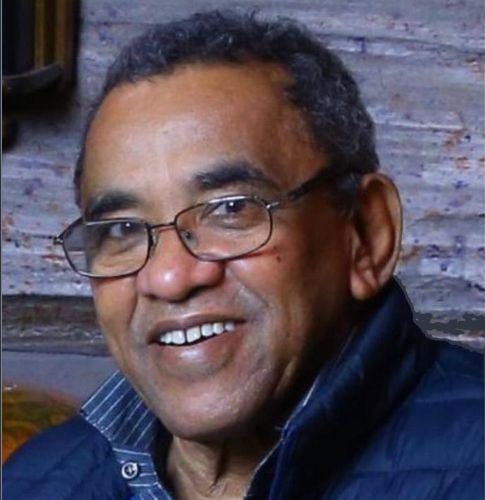
Dr. Ahmed Al-Tijani Sid Ahmed, a founding leader of the Sudanese Founding Alliance (Tasees). Rome, Italy — October 21, 2026. The question we must not evade is no longer who will win the war, or which regional axis one should join; rather, it has become a more dangerous inquiry: what settlement will preserve Sudan's unity and sovereignty, end the Islamic Movement's monopoly on power, and prevent the partitioning of the country into zones of influence shared by armies, militias, and external axes?
Sudanile October 24, 2026Published 1 views
Source:Sudanile
Dr. Ahmed Al-Tijani Sid Ahmed, a founding leader of the Sudanese Founding Alliance (Tasees). Rome, Italy — October 21, 2026. The question we must not evade is no longer who will win the war, or which regional axis one should join; rather, it has become a more dangerous inquiry: what settlement will preserve Sudan's unity and sovereignty, end the Islamic Movement's monopoly on power, and prevent the partitioning of the country into zones of influence shared by armies, militias, and external axes? Sudan's interest is not measured by the amount of external support a party gains, nor by a military leader's ability to persuade Washington, Cairo, or Abu Dhabi of their position. The true criterion is whether the outcome will establish a unified, civil, and democratic Sudanese state based on equal citizenship, or if it will reproduce the old state with new lines of influence and different names. Recent developments make this question urgent: Benjamin Netanyahu’s map of regional alliances, the Geneva meeting on peace in Sudan, and Massad Boulos’s statements regarding Abdel Fattah al-Burhan’s letter to U.S. President Donald Trump. Beyond this, the Sudanese crisis imposes a necessity to reconsider the project known as the “Hamdi Triangle” and the extent to which the Sudanese Founding Alliance (Tasees) can translate the principle of voluntary unity into a political and constitutional reality. First: Netanyahu’s Map — Sudan in the Calculus of Axes. On October 19, 2026, according to media reports, Israeli Prime Minister Benjamin Netanyahu presented a map of regional alliances in the context of his vision for Israeli national security. According to Al Jazeera’s coverage, the Rapid Support Forces were included in the circle of powers friendly to the Israeli-Emirati axis, while Sudan was placed in a regional circle including Saudi Arabia, Egypt, Turkey, and Pakistan. The significance of this map, as presented in reports, exceeds mere geographical classification. It raises a question about how Sudan is included in the calculations of regional and international powers, and about the possibility of treating the parties to the Sudanese war as elements in competing influence networks. However, it is essential to distinguish between a classification appearing on a map and a proven political or military agreement. A map alone does not prove the existence of a declared agreement between Israel, the UAE, and the Rapid Support Forces, nor does it prove a joint plan to partition Sudan. Nevertheless, the appearance of the Sudanese state and the Rapid Support Forces in two different circles raises a legitimate question: do external powers view Sudan as a nation-state whose unity must be preserved, or as a field competed over by axes through local proxies? The most dangerous development would be Sudan transforming from a sovereign state into a terrain for external powers, with the future of its regions held hostage to understandings in which its citizens have no say. Second: The Geneva Meeting — Humanitarian Steps or a Path to a National Settlement? The sixth consultative meeting to coordinate peace initiatives in Sudan was held in Geneva on October 21, 2026. The United Nations described it as a meeting to coordinate efforts, discuss de-escalation, and create conditions for a comprehensive ceasefire and a Sudanese-led political path. The official statement did not announce a joint ceasefire agreement. Media reports discussed confidence-building proposals, including the exchange of prisoners and detainees and the facilitation of high school examinations; therefore, these should be viewed as proposals rather than finalized agreements. These are humanitarian steps that deserve support, but they alone do not address the roots of the war. Sudan needs a settlement that ends the multiplicity of armies and decision-making centers, dismantles the war economy, and ensures a transition to comprehensive civil rule. Furthermore, the Geneva meeting does not prove that participating powers have agreed on a unified vision for Sudan's future; it is an effort to coordinate initiatives, not a final agreement between warring parties. Peace that stops the fighting while leaving the causes of the war intact is merely a truce prone to exploding again. Third: Al-Burhan’s Letter to Trump — Is Washington Changing its Stance? A Radio Dabanga report published on October 20, 2026, stated that Massad Boulos, the U.S. President’s advisor for Arab and African affairs, said that Al-Burhan’s letter to Trump would not change the main U.S. path to ending the war, and that Washington would continue to push for an urgent humanitarian truce. One must distinguish between the letter failing to change U.S. strategy and claims that Trump personally rejected the letter or everything in it; that would require an explicit official text. But the political implication is clear: it is not enough for Al-Burhan to declare his readiness to cooperate with Washington for the terms of the settlement to change. The real criterion is whether U.S. policy will contribute to stopping the war, protecting civilians, preventing the flow of weapons, and opening the path for a civil political process not monopolized by military leaders, the Islamic Movement, or any armed organization. It is in Sudan's interest that the stance of any state be measured by what it practically achieves, not by the slogans it announces. Fourth: The “Hamdi Triangle” — The Islamic Movement’s Project and the Problem of the Center and Periphery. The future of Sudan's unity cannot be discussed without returning to the political and intellectual background that made the concentration of power and wealth within a specific geographical range one of the fundamental issues in the national crisis. What became known as the “Hamdi Triangle” was associated with Abdel Rahim Hamdi, one of the most prominent economic policymakers in the National Congress Party system. A study published by Cambridge University Press addresses this vision in the context of the Bashir regime’s project to consolidate power through exclusive interest networks with cultural and geographical dimensions. It clarifies that Hamdi’s thesis, presented at the ruling party’s conference in 2006, called for focusing on an Arab-Islamic base in the Nile Valley north, in light of the possibility of the country’s partition. The objection to the “Hamdi Triangle” was not an objection to the development of the North, Center, or East per se; these regions deserve development just as Darfur, Kordofan, Blue Nile, and all parts of Sudan do. Rather, the objection centered on the potential to turn the geography of investment and development into a basis for rearranging power and political loyalty, so that specific regions would enjoy a larger share of resources and opportunities while others remained in a cycle of marginalization and conflict. Here, the link to the Islamist “Kizan” movement emerges. This vision was formed within the context of the National Congress regime, which used state institutions and economic and political interest networks to consolidate its hold on power. Therefore, the discussion on the “Hamdi Triangle” cannot be separated from the critique of the centralist model that has ruled Sudan for decades, and from the question of who controls the state and who benefits from its resources. However, we must not reduce the people of the North or Center to the Islamic Movement’s project, nor make geography itself a subject of accusation. The citizen in the Northern State, River Nile, or Kassala is not responsible for the policies of their ruling regime. The issue is the structure of power and the distribution of resources, not the identity of the inhabitants or their place of residence. The problem is not in developing the North, but in building a state that develops some regions and marginalizes others, then demands that everyone defend a unity they do not feel is fair. If the war ends in a “Kizan” authority centered in the North and East, reproducing the networks of empowerment and monopolizing resources and decision-making, then Sudan remaining unified on the map will not be sufficient evidence of achieving national unity. Official borders may remain, while trust between regions erodes, and actual division becomes latent within the state. Resisting the return of the Kizan regime is not an antagonism toward the North or East, but a defense of all Sudanese people's right to a state not monopolized by a party, organization, or region. Fifth: The Rapid Support Forces and the “Tasees” Alliance — Voluntary Unity Between Constitutional Text and Reality. An objective discussion requires examining the Sudanese Founding Alliance (Tasees), its charter, and its transitional constitution, rather than merely classifying the alliance as a military extension of the Rapid Support Forces, or assuming that the principles in its documents have automatically been realized on the ground. The “Tasees” alliance includes political forces, armed movements, and civil components, with the participation of the Rapid Support Forces. Its founding charter, signed in Nairobi on February 22, 2025, announced a commitment to building a secular, democratic, decentralized state based on freedom, equality, and justice—unbiased toward any cultural, ethnic, religious, or regional identity, and based on the principle of voluntary unity of Sudan's peoples and regions. The charter also emphasizes pluralistic democratic governance, the inherent right of regions to manage their own political, economic, and cultural affairs, balanced development, fair distribution of power and wealth, and equal citizenship. It also stipulates building a unified, professional, and national army that is subject to civilian oversight and control, independent of ideological, partisan, regional, and tribal loyalties. Here appears the fundamental political difference between the project of the exclusionary central state—which makes unity synonymous with the retention of power and wealth in the hands of a specific political center—and the project of voluntary unity, which makes the regions' stay in one state based on justice, equal participation, and constitutional guarantees that prevent hegemony and exclusion. However, the presence of these principles in the “Tasees” documents does not exempt the alliance or the Rapid Support Forces from accountability. Declaring a commitment to voluntary unity is not enough to prove that political and military practice achieves it. Furthermore, the creation of a parallel authority, the continuation of the war, and the violations attributed to its parties are all matters requiring examination, accountability, and practical commitment to the constitution and citizens' rights. The real test for “Tasees” is its ability to prove that voluntary unity is not just a constitutional phrasing, but a principle that governs the alliance's behavior and its institutions in all regions, and that it does not seek to replace a dominant center with new military centers. Defending unity must not be a cover for “Tamkeen” (empowerment), just as voluntary unity must not be a slogan that is not reflected in the practice of power and the protection of civilians. What is required of “Tasees” is to translate the principles of the charter and constitution into measurable commitments: real participation of regions, transparency in resource management, subordination of armed forces to civil authority, guarantee of judicial independence, protection of rights and freedoms, and rejection of any border changes or imposition of power by force. Similarly, Al-Burhan’s camp must be demanded to provide clear guarantees that prevent the Islamic Movement from returning to control the state. Sixth: Kassala, the Northern State, River Nile, and the East — Unity is Not Imposed by Fear. The future of Sudan must not be decided by Al-Burhan, Hemedti, the Islamic Movement, or any political and military alliance on behalf of the citizens. The citizens of Kassala, the Northern State, River Nile, and Eastern Sudan must be heard, as well as the residents of Darfur, Kordofan, Blue Nile, and all other regions. It is everyone’s right to refuse the conversion of their areas into bases for partisan or military projects, or into zones of influence shared by external powers. It is not correct to assume that all residents of these areas adopt a single position without reliable surveys or clear political expressions. But it is our right to confirm that any project to partition Sudan or exclude its regions will not gain legitimacy simply because a military force or political leadership announced it. Sustainable unity for Sudan is not built on fear of separation, but on making unity a fair and beneficial choice for all citizens. If the citizens of the East or North feel they will be used to cement the Islamic Movement’s power, and if the citizens of Darfur or Kordofan feel they will remain under a military authority that does not allow them equal participation, then slogans alone will not build a common homeland. Voluntary unity means that Sudanese people choose to remain together because the state guarantees their rights, not because weapons impose political borders on them. Seventh: What Serves Sudan’s Supreme Interests? First, a voluntary and fair unity: rejecting the partition of Sudan by force or through external understandings, while addressing historical marginalization and ensuring equal participation for all regions. Second, ending the state monopoly: preventing the return of Kizan empowerment, ending military rule, the multiplicity of armies and decision-making centers, and not turning any parallel authority into a permanent fait accompli. Third, a comprehensive civil transition: building democratic constitutional institutions, with fair representation for regions and civil and social components, and ensuring the political process is not monopolized by armed leaders. Fourth, justice in power and wealth: distributing investments, resources, and public services based on need and equity, not political loyalty or geographical affiliation. Fifth, an independent foreign policy: dealing with the United States, UAE, Saudi Arabia, Egypt, Israel, Turkey, and others according to Sudanese interests, not according to loyalty to any regional axis. Eighth: What is Required of Sudanese Forces? The current stage requires building a broad national civil front that agrees on the minimum that cannot be conceded: stopping the war, the country's unity, rejecting the return of Islamic empowerment, rejecting the partition of Sudan, and establishing a democratic civil government. Voluntary unity must also be translated into a practical constitutional program, including true decentralization, fair resource sharing, guarantees for regional rights, rebuilding national institutions on professional foundations, and reforming the security and military sector under civilian authority. In this context, “Tasees” has a special responsibility to prove that the principles in its charter and constitution are not merely a political response to the war, but a project to build a state that transcends military and regional polarization. Anti-Islamic Movement forces have a similar responsibility not to allow the rejection of empowerment to become a pretext for legitimizing any violations or a new monopoly on power. The international community must also place Sudan’s unity, the protection of civilians, and the civil transition at the heart of any settlement, and not treat the country’s regions as negotiating quotas between axes. Conclusion: Neither a Mini-Kizan State Nor a Sudan Divided by Militias. Netanyahu’s map, the Geneva deliberations, and Massad Boulos’s statements all reveal, in their own way, that Sudan's future is influenced by intertwined regional and international calculations. But the responsibility of the Sudanese people is to define the national project they want to defend. The real choice is not between a Kizan authority in the North and East and competing armed authorities in the rest of the country. And it is not between being beholden to one external axis or another. The choice is between a fair, unified, civil, and democratic state of citizenship, and reproducing the crisis in a new form. The “Hamdi Triangle,” as a symbol of concentrating development and power in a specific geographical area, reminds us that unity is incompatible with marginalization. As for the voluntary unity project adopted by “Tasees” in its documents, it only gains credibility to the extent that it transforms into a reality that respects rights, prevents hegemony, subjects weapons to civil authority, and ensures the participation of all regions. Sudan's unity will not be sustainable if used to protect empowerment, and peace will not be real if dedicated to dividing the country into zones of influence. Sudan does not belong to Al-Burhan, Hemedti, the Islamic Movement, or any foreign capital. It is the homeland of all its citizens, from Kassala to Darfur, and from the Northern State and River Nile to the Blue Nile, Nuba Mountains, and all other regions of the country. The standard that should govern any settlement is one question: will it preserve Sudan as a unified entity, return decision-making to its people, and prevent the monopoly of the state, wealth, and weapons? If it does not, it will not be a settlement that serves Sudan's supreme interests, no matter how much it is promoted in the name of peace, sovereignty, or unity.
Sudanileمنبر الرأي
Share
Comments
No comments yet. Be the first to share your thoughts.
Subscribe to our newsletter
Get a summary of the latest news and analysis delivered to your inbox.