
Economy (Citizen's Condition)
Minister of Agriculture: Current Agricultural Season is Successful, Production Equal to Previous Season
Khartoum - October 8, 2026 - Radio Dabanga. The Federal Minister of Agriculture, Professor Ismat Qureshi, denied that the current agricultural season had failed, anticipating that the production of the current summer season would be equal to the previous one. The post Minister of Agriculture: Current Agricultural Season is Successful, Production Equal to Previous Season appeared first on Dabanga Radio TV Online.
Radio Dabanga (Arabic) October 8, 2026Published 1 views
Source:Radio Dabanga (Arabic)
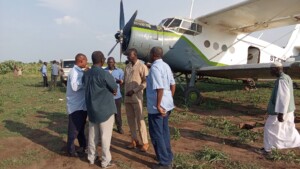
Khartoum - October 8, 2026 - Radio Dabanga. The Federal Minister of Agriculture, Professor Ismat Qureshi, denied that the current agricultural season had failed, anticipating that the production of the current summer season would be equal to the previous one. He explained that the final cultivated area is 21 million feddans, an increase estimated at about 3 to 4 million feddans over the previous year. In a press conference in Omdurman, monitored by Radio Dabanga, he pointed out that the most prominent challenges during the season were the uneven distribution of rainfall and the prevention and control of pests. He stated that despite the harsh climate forecasts, the agricultural sector successfully navigated the phase, and production is expected to be at least at the same level as the previous season. He confirmed that the target area for cultivation during the winter season is estimated at 3 million and 248 thousand feddans, with wheat occupying one million feddans distributed across several states and agricultural projects. At a press conference on Thursday, he said that safe areas in Sudan have not suffered from any food problems, unlike areas controlled by the Rapid Support Forces. He explained that Sudan’s grain production last season, according to final estimates by the Food and Agriculture Organization (FAO), reached 8.2 million tons, noting that production exceeds need, which prompted calls to open the door for sorghum exports. Challenges He pointed to challenges that faced the season, most notably the variation in rainfall distribution, which affected success rates in some areas; however, rain-fed production areas achieved good success rates ranging between 77% and 88%. He stated that pest prevention and control are among the challenges, which is a federal responsibility, and contracts have been made for aerial spraying and the provision of pesticides and aviation fuel. He confirmed that aircraft are available in Gezira and Gedaref to combat bird swarms. Regarding Agricultural Bank loans, he confirmed financing in the first phase with 700 billion pounds, with the possibility of rescheduling debts owed by farmers due to war conditions, to ensure they remain in the production cycle. He emphasized the importance of crop diversification to reduce risks and using drought-resistant varieties, such as sorghum in Gedaref. Ismat paid tribute to the Agricultural Research Corporation, which was able to produce 22 new varieties for eight basic crops under these conditions, and recover 70% of genetic assets lost due to the war, adding that the ministry's strategy is to localize seeds. Regarding the Gezira Scheme, he said it is witnessing a noticeable recovery, with more than 800 thousand feddans planted after it had been in a state of destruction. Professor Ismat Qureshi, Minister of Agriculture and Irrigation, emphasized that Sudan is a destination for investors to provide food security and has the potential to become a center for agricultural industrialization. Increase in Cultivated Areas in Gedaref On the other hand, the Higher Committee for the Success of the Agricultural Season in Gedaref State revealed an increase in the areas planted in the state during the current 2026-2027 agricultural season to 6,337,670 feddans with various agricultural crops, out of a total indicative plan of 7.6 million feddans. Planting operations are still ongoing throughout the state, reaching 83%. The weekly report of the Higher Committee for the Success of the Agricultural Season revealed an increase in the area planted with sorghum to 4,168,930 feddans, sesame to 568,100 feddans, millet to 318,660 feddans, peanuts to 255,750 feddans, rain-fed cotton to 120 thousand feddans, sunflowers to 24,050 feddans, and watermelon seeds to 875,480 feddans, while watermelon seed planting operations continue. The report noted that agricultural financing in Gedaref State in all forms rose this week to 552,853,769,831 pounds, compared to 129 billion pounds last year in the same period. The financed areas this year reached 4,954,034 feddans, compared to 2,645,179 feddans last year in the same period, with 6,976 farmers benefiting from the financing, compared to 2,549 farmers last year in the same period. 17 Challenges Facing the Agricultural Sector in Gedaref For his part, the Minister of Production and Economic Resources in the state, Engineer Ammar Abdullah Suleiman, revealed at a forum in Gedaref 17 challenges facing the agricultural sector in the state. The most prominent are climate changes that resulted in a wave of drought and scarcity and fluctuations in rainfall during the current season, in addition to the effects of indiscriminate logging and encroachment on more than 105 thousand feddans in the pastoral sector in Butana. He also pointed to the deterioration of cultivated crop seed varieties, poor productivity, declining soil fertility, and climate variables that changed the behavior of insects and pests, citing the spread of mice as an example, confirming that agricultural extension remains the basis for avoiding these threats. He appealed to the federal government to adapt more quickly to the continuation of these challenges. Decline in Rainfall For his part, former Governor of Gedaref and farmer, Karamallah Abbas Al-Sheikh, confirmed that reports from various centers coincide regarding the decline in rainfall rates during the current season and its impact on productivity. He warned against continuing the extensive encroachments on vegetation cover and the removal of shelterbelts in forests, noting that this cast negative shadows on the season. He drew attention to the removal of all forests in the "Basinda" area, noting that 50 "Battah" trucks exit daily to transport charcoal out of the area, demanding the return of the Farmers' Union. Signs of Failure In the same context, the head of the authorized Farmers' Committee, Yasser Ali Al-Saab, said that the signs of failure of the current agricultural season appear greater than the chances of its success, due to the reluctance of large numbers of farmers to cultivate this season and the absence of the bank's intervention with the necessary financing. He added that the scarcity and fluctuation of rainfall represent a great danger that will reflect negatively on production, expressing his hope for rainfall during the remaining ten days of autumn to save the season in some areas, while warning at the same time that other areas will fail completely in the absence of rain.
Radio Dabanga (Arabic)الأخبارالخبر الرئيسيالصفحة الرئيسيةسياسةعناوين الأخبار
Share
Comments
No comments yet. Be the first to share your thoughts.
Subscribe to our newsletter
Get a summary of the latest news and analysis delivered to your inbox.