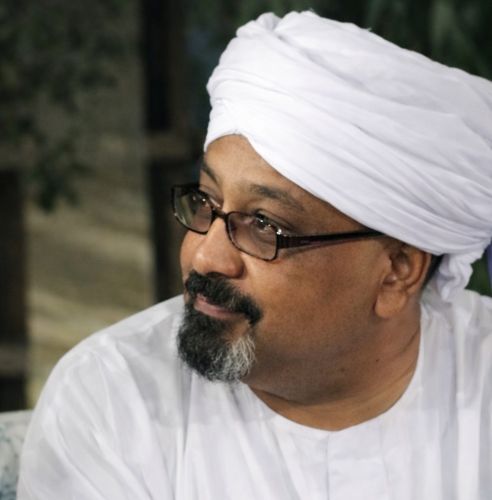
Alaa Khirawi explores a persistent question: Why does Egypt treat Sudan with a degree of political guardianship and disregard for its people's dignity that it would not dare demonstrate toward its other neighbors? Following the bloody tragedy involving Sudanese miners in the country's north, this question has become increasingly urgent. This analysis investigates whether the problem lies in the Egyptian ruling establishment's view of Sudan, the weakness of the Sudanese state, or a dysfunctional historical relationship that keeps Sudan from fully exercising its independence. […] The post Egypt Despises Only the Sudanese People!! appeared first on Sudanile.
Alaa Khirawi explores a persistent question that has haunted me whenever I contemplate the behavior of the Egyptian state in its regional environment—a question that became more urgent after the bloody tragedy suffered by Sudanese miners in the north of the country: Why does Sudan appear, among Egypt's neighbors, to be the country in which Cairo finds the widest space to practice political guardianship, and the least need to respect the dignity of its people and the independence of their national decision-making? Why does Egypt know how to moderate its official, political, and media language before other countries, and how to calculate the consequences of its positions and steps, only for its relationship with Sudan to turn into an endless series of red lines, dictates, and interventions that exceed the limits of legitimate interests between two independent states? The irony is that Cairo, which knows well the limits of its influence before others, appears most ready to cross those limits when it comes to Sudan. Is the problem in the Egyptian ruling establishment’s view of Sudan, in the weakness of the Sudanese state and the subservience of some of its rulers to Cairo, or in a distorted historical relationship that has made both parties behave as if Sudan's independence is not yet complete?! ■ Let us start with Ethiopia, a country Cairo has long considered the Grand Ethiopian Renaissance Dam (GERD) project a direct threat to its water security, one of the most dangerous files of Egyptian national security. Egypt spent many long years talking about its historical rights to the Nile waters, drawing red lines, issuing warnings, and brandishing available options, while Addis Ababa continued to build and operate the dam according to its vision of its national interests. Cairo resorted to negotiations, international mediation, and the Security Council, but it could not impose a binding agreement on Ethiopia, nor did its warnings succeed in preventing it from moving forward with its strategic project. The issue here is not about supporting the Ethiopian position or denying Egypt's water rights, but about comparing the ability of states to protect the independence of their decisions. Ethiopia acted as a state that possesses the right to make its own decisions and bore the responsibility for its choices and their consequences, while Cairo was forced to deal with a reality it could not change according to its own terms. As for Sudan, whose water and strategic interests are no less important, internal divisions, military coups, and the weakness of institutions have made it more vulnerable to external influence. Here, the contradiction arises; Cairo, which could not turn its red lines into enforceable orders in Addis Ababa, speaks of red lines inside Sudan and acts as if it has the right to determine the nature of its institutions and its political future! What gives Egypt the right to decide what is permissible for the Sudanese to do in their homeland, while it refuses for others to decide on its behalf what is permissible for it to do within its own borders? ■ Consider also Gaza and Palestine, the file that for decades has been at the heart of Egyptian national security, directly connected to Egypt's eastern borders, its regional standing, and its historical responsibilities toward the Palestinian cause. What has Cairo been able to do in the face of decades of Israeli occupation, wars, and massacres suffered by the Palestinian people? It condemned, protested, mediated, hosted conferences, and launched warnings, but it could not stop the Israeli war machine or impose its will on Tel Aviv, even during the humanitarian catastrophe witnessed in the Gaza Strip in the recent war. The Rafah crossing did not turn into an open and stable humanitarian corridor that ensures saving civilians from death and hunger, amidst Israeli control, restrictions, and disputes over the management of the crossing, and the inability of regional and international efforts to ensure the arrival of sufficient aid. So where did the Egyptian red lines go in the face of scenes of children dying of hunger, hospitals being destroyed, and neighborhoods turning into rubble?! Why did all those warnings not turn into an actual ability to stop the massacres or impose sustainable protection for civilians?! The matter is no different in terms of the submission of Egyptian policy to the calculations of power and interests in its relations with the Gulf states, or in its dealing with the Yemeni and Libyan crises, despite the differing circumstances of each; in those files, Cairo realizes that its decisions collide with regional and international powers and overlapping interests that it cannot overcome by simply declaring red lines. In Sudan, however, this warning language turns into a permanent tool for interference in the choices of an independent state, as if the weakness of its institutions and the division of its elites grant Cairo political rights it does not possess in the face of others. This is the paradox that Egypt must face before it continues to talk about respecting Sudan's sovereignty and independence. ■ This behavior is not a product of the current war, but has deep roots in the history of the relationship between the two countries. Since the Turco-Egyptian invasion of 1821, through the Anglo-Egyptian Condominium, and then the conflict over the future of Sudan prior to independence, segments of the Egyptian ruling elite have held perceptions viewing Sudan as part of their natural strategic sphere, not just an independent state linked to Egypt by common interests. Sudan's independence in 1956 did not lead to the end of all manifestations of this view; disputes over borders and the Nile waters continued, and the issue of Halayeb and Shalateen remained one of the most prominent testimonies to the depth of the dispute over sovereignty. Then came the successive Sudanese military coups to open wide doors for Cairo to influence the Sudanese decision, by building close relationships with rulers and generals, instead of consolidating an equal institutional relationship between two states and two peoples. This approach gained new dimensions during the current war, when Egypt announced its support for Sudanese state institutions, led by the army, and redrew what it calls its red lines regarding the unity of Sudan and the future of its institutions. In December 2025, Cairo publicly confirmed those lines, raising once again the question that some refuse to face: Who has the right to determine the future of Sudan, its institutions, and its system of government—the Sudanese people or the Egyptian leadership? Supporting the unity and stability of Sudan is a legitimate matter, but turning this support into guardianship over the will of its citizens is something entirely different. Sudan is not an Egyptian province, nor is it a strategic depth devoid of population, nor is it open land whose future can be decided from Cairo under the banner of Egyptian national security. If Egypt sees Sudan as an extension of its security, it must remember that Sudan is a sovereign state before it is a strategic depth for any other country. ■ Then came the tragedy of the Sudanese miners to put this dysfunctional relationship to a cruel moral and political test, revealing the difference between talk of brotherhood and a common destiny, and the reality of dealing with the lives of the Sudanese. In October 2026, artisanal mining sites in the North Valley region were subjected to bloody airstrikes, which survivors and human rights organizations accused the Egyptian air force of carrying out inside Sudanese territory. The announced death tolls began with an initial estimate by the 'Emergency Lawyers' group of 72 dead, then 'Sudanile' published estimates of 158 dead and over 100 injured, while survivors spoke of the death toll exceeding 200, and more recent testimonies circulated estimates reaching 400 dead—disparate figures that have not yet been settled by a comprehensive independent count. 'Radio Dabanga' also conveyed details of an investigation attributed to the 'New York Times' newspaper, which addressed photographic evidence and technical analysis of ammunition believed to be an Egyptian 'Nasr 400' bomb, with information identifying the bombing site about 40 kilometers inside Sudanese territory; these are clues that require an independent technical and legal investigation into the source of the ammunition and the identity of the aircraft. In contrast, the Egyptian authorities spoke of operations to combat illegal mining in areas they consider to be within their borders. But since when did searching for gold become a crime punishable by death? And by what law can a state turn its warplanes into tools to punish civilians looking for their livelihood?! Violating borders, if it happened, does not grant the right to kill civilians, just as protecting natural resources does not justify targeting human gatherings with lethal force without legal justification. ■ As for the Egyptian media, especially government platforms and newspapers close to the authorities, it presented in its handling of this tragedy a provocative model of how to prioritize the security narrative over the human tragedy. On October 12, 2026, the newspapers 'Al-Ahram' and 'Youm7' published the statement of the Egyptian military spokesperson regarding the continuation of the third phase of the campaign against illegal gold mining, highlighting the description of 'criminal elements' and talking about imposing Egyptian sovereignty and protecting national wealth, without the statement including a clear explanation of the accusations regarding the killing of the Sudanese miners. The following day, 'Al-Ahram Business' presented the campaign under the title 'Gold Wealth in the Grip of the Law,' reviewing what it described as the achievements of security measures; as if the issue deserving attention is protecting the gold, not the fate of the humans who fell in the areas of its extraction! This discourse was not born of the moment; on August 18th last, 'Al-Ahram' published an article titled 'The Dahaba... and Egypt's Strong Hand,' which celebrated the military campaigns against prospectors and linked their activities to sabotage, chaos, and crime. Here, the moral paradox is evident; when protecting natural wealth tops the news headlines, while questions about the fall of civilians recede, we are facing a media discourse that grants security measures prior legitimacy and places human rights in a secondary rank. Even more disappointing is that the Egyptian military statement warned against what it described as rumors and foreign agendas that target the brotherly relations between the two peoples; here we have the right to ask: Has demanding to uncover the truth about the fall of the Sudanese become a rumor, and asking about those responsible for their killing a foreign agenda, while the military narrative has the sole right to define the truth?! And what kind of brotherhood is it that is wide enough to celebrate sovereignty and wealth, yet too narrow to demand a transparent investigation into the fall of civilians?! The media that talks morning and evening about Egyptian national security is required to realize that the life of a Sudanese human is no less valuable than the gold extracted from the bowels of the earth, and that the dignity of nations is not maintained by phrases of brotherhood before the cameras, while the rights of victims are left outside the circle of accountability. ■ However, placing the entire burden of the imbalance in the relationship between the two countries on Cairo alone would be an escape from half the truth; Egypt did not alone create the weakness of the Sudanese state, and it did not impose on the Sudanese all the coups, wars, and divisions that tore their institutions apart. Sudanese ruling elites, both military and civilian, have contributed in varying degrees to perpetuating an unequal relationship with the northern neighbor; either by relying on its political support, fearing its anger, or using the relationship with it as a card in the internal struggle for power. In the era of Al-Burhan, this problem is more clearly evident; the man who never stops talking about national sovereignty is required to explain how his slogans align with the absence of announced results for the investigation into the accusations of the previous June raids, and with the public's lack of clear information about the official measures his authority took regarding the recent raids. Here, the issue exceeds the person of Al-Burhan to the nature of the Sudanese political system itself; a system that made foreign relations, for long periods of its history, hostage to the calculations of rulers and their alliances, instead of subjecting them to the interests of the state, its institutions, and the will of its people. Therefore, the most dangerous thing Sudan can be exposed to is not merely a foreign state's interference in its affairs, but that the needs of its rulers for external support become a reason for weakening their ability to defend the independence of its national decision-making. Dependency does not always begin with the entry of foreign armies; it may begin when the satisfaction of the foreign ally becomes more important to the ruler than the trust of his people. ■ From here, I arrive at the truth that I see as the core of this article; Egypt will not deal with Sudan as a fully sovereign state just because the Sudanese ask it to, but when the Sudanese state becomes capable of protecting the independence of its decision-making with legitimate and strong institutions that are subject to the will of its people. International relations are not based on emotions, nor are they created by slogans, but are formed according to interests, law, and the balances of political, economic, and institutional power. If we want Sudan to be liberated from the logic of external guardianship, we must first liberate it from the internal structure that made it susceptible to it; from military rule, from the encroachment of security agencies, from the monopoly of power and wealth, and from turning foreign policy into personal relationships between generals. Sudan needs a democratic civil state that possesses an independent foreign policy, a unified professional army subject to an elected constitutional authority, and institutions capable of managing border and economic disputes with Egypt and others without fear or subservience. It also needs a new political elite that does not derive its legitimacy from the satisfaction of Cairo or other capitals, but from the Sudanese people alone. And I say it clearly: the dignity of Sudan will not be protected by Al-Burhan, who made sovereignty a slogan in his internal struggles, and Cairo will not grant it to the Sudanese out of good neighborliness; rather, it is safeguarded by a people who own their state, their decision, and their future. Sudan is not anyone's backyard, and the Sudanese are not a minor people who need someone to decide their fate on their behalf. As for the relationship we want with Egypt, it is a relationship of equality and mutual respect, with no guardianship or dependency, where Sudanese blood is not less sacred than Egyptian blood, and where the sovereignty of Sudan does not become negotiable whenever it conflicts with the interests of Cairo. When the Sudanese reclaim their state and their national decision, Cairo will find itself compelled to address Sudan in the same language it uses to regulate its discourse before other countries; the language of mutual interests and the precise calculation of consequences, not the language of arrogance and dictates that it has become accustomed to using toward it. ■ And this nightmare, however long its night, will not be an eternal fate for Sudan and its people; liberation from the grip of tyranny, guardianship, and subservience to the outside is inevitably coming, and the homeland will not remain a prisoner forever to those who confiscated its will and insulted its dignity. When the Sudanese reclaim their state, files that their owners thought silence had buried will be opened, rights that the powerful believed time had extinguished will be restored, and all policies and practices that violated the sovereignty of Sudan or touched the dignity of its citizens will be reviewed. And then every incident will have its talk, every time its tools, and everyone who belittled Sudanese blood and their rights will be held accountable before truth, history, and justice. Peoples may be patient, but they do not forget, and history grants no one eternal immunity from accountability. As for the Sudan we want, it will not be subservient to Cairo or anyone else, and its foreign relations will not be managed from the palaces of generals or the rooms of security agencies, but by institutions of a free state that knows its interests and protects its citizens, and imposes respect because it respects its people first. khirawi@hotmail.com The post Egypt Despises Only the Sudanese People!! appeared first on Sudanile.