
The Sudanese War: Between the First and Last Shot
A strategic analysis of the war in Sudan in its second year: from a fleeting skirmish to an existential battle, the resilience of the Sudanese Army, the regional and international dimensions, and the approach of the final phases of the decisive battle.

✍️ Written by/ Hassan Al-Basir
▪️ Events cascade and visions intertwine as the curtain falls on major turning points in the history of nations. The initial moments of explosion remain a testament to the magnitude of the conspiracy that targeted the throne of the national state in Sudan. As the war in Sudan enters its second year since the Rapid Support Forces (RSF) pounced on the heart of the Sudanese capital on April 15, 2023, what was viewed in its early days as a fleeting military skirmish between two parties born from the same security apparatus has, over time, revealed itself to be an extremely dangerous and complex war. Internal, regional, and international dimensions are intertwined; today, Sudan is not merely fighting a battle for sovereignty over its soil, but stands in the face of a scheme whose threads extend beyond its borders.
▪️ The key to understanding the resilience of the Sudanese Army lies in its very nature; it is an institution with a deep legacy in managing resources and analyzing battles. Its leadership realized early on that this rebellion was fundamentally different because it emerged from within the state's military system and pitched its tents at its center, not on its fringes. Therefore, it initially chose a defensive battle based on protecting command and control centers, relying on the tactical principle that places the defender in a better position than the attacker. The result was a gradual attrition of the Rapid Support Forces, which wasted their momentum in assaulting fortified barricades.
The first year for the Army was a year of absorbing the shock and maintaining solid power by continuing training, modernizing military manufacturing, and importing new technologies—foremost among them drones—and building multi-layered defenses with electronic jamming and early detection, while maintaining Port Sudan as a vital logistical gateway. When this preparation was completed, the organized momentum of the second year arrived. The Army severed the RSF's lifelines in Gezira, Sennar, Jebel Moya, and inside Khartoum itself, adopting a strategy of siege, followed by cutting off supply lines, and then liquidating concentrations. This led to a major collapse, forcing the RSF to withdraw and redeploy in Kordofan and Darfur, thus ending the existential threat to the state.
▪️ However, this war is not binary. Behind the Rapid Support Forces lies an external support system flowing through Libya, Chad, and other borders, within the framework of a global geopolitical conflict where the interests of major powers and regional agendas intersect, seeking to redraw the map of influence. Its plan was based on clear geographic and resource-based logic: control the gold of Darfur, then march towards the center to control oil and agriculture, and reach the east for water resources.
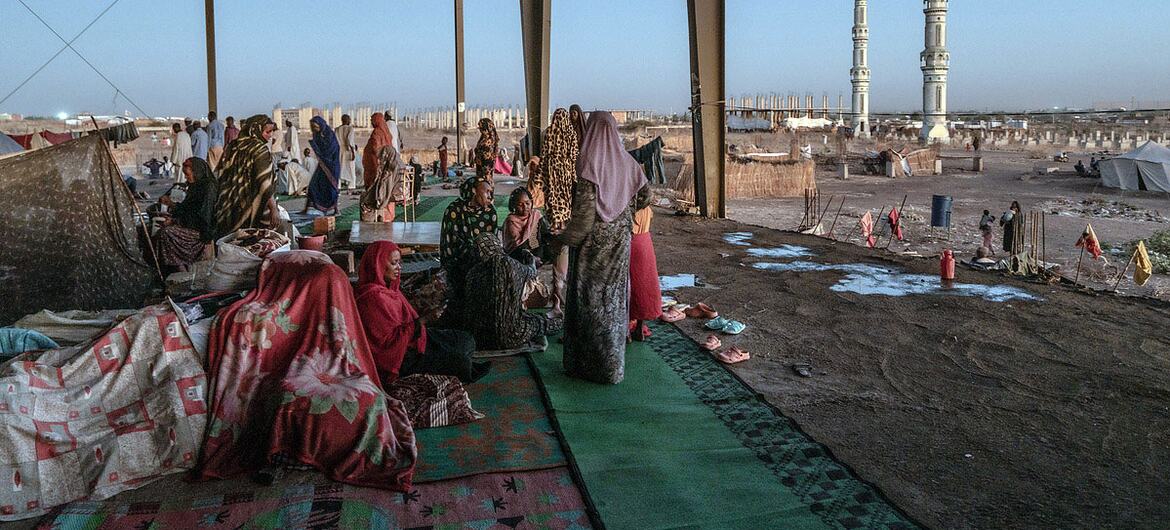
▪️ There is no doubt that the cost of this war has been staggering. Sudan has witnessed the largest displacement crisis in the world, with about ten million internally displaced persons and more than four million refugees, and more than twenty-one million people under the burden of food insecurity. However, society was not a silent witness; rather, it formed a strategic depth for the Army, absorbing the displaced without official camps, and its youth flowed into mobilization camps following the formation of the Popular Resistance, which has become the strongest political and defensive incubator for the Armed Forces. The most prominent slogan was: No voice rises above the voice of the battle.
▪️ Today, with the acceleration of developments on the ground and the clearing of the dust of fierce gambles, military calculations indicate with precision the approach of the final junctures of this war. The Sudanese Army has come close to decisively settling the battle and turning the page on the rebellion once and for all, having succeeded through systematic stages of attrition in destroying the solid power of the RSF militia, cutting its main supply lines, and dismantling its command structure.
Bright evidence manifests from the heart of the field to confirm the end of this military and political system, starting from the collapse of first-line commanders—either killed or fleeing the scene—and the militia's shift from attack and expansion to a state of haphazard defense and dispersal in wilderness areas and remote villages. This is accompanied by the phenomenon of mass desertion, rising rates of defections and the handover of heavy weapons to field commanders, and finally, the militia's loss of its social incubator and both its internal and external political cover, as well as its diminishing ability to control or manage any geographical area.
Ultimately, this war will stand as the greatest historical witness to the solidity of the Sudanese military institution and its ability to transform existential challenges into a victory taking shape between the whistle of the first shot and its final echo.
Comments
No comments yet. Be the first to share your thoughts.
Subscribe to our newsletter
Get a summary of the latest news and analysis delivered to your inbox.