
The Library
Whispers of Memory... On the Anniversary of October 21, 1964
Whispers of Memory... On the anniversary of October 21, 1964. By Jamal Mohamed Ibrahim. You are in your first year of secondary school, your steps wavering between a departing childhood and an adolescence trying to dawn upon you. Questions remain stagnant in your young mind, their confusion almost weighing down your shoulders. Changing schools was not merely a transition from one stage to another...
Sudanile October 20, 2026Published 1 views
Source:Sudanile
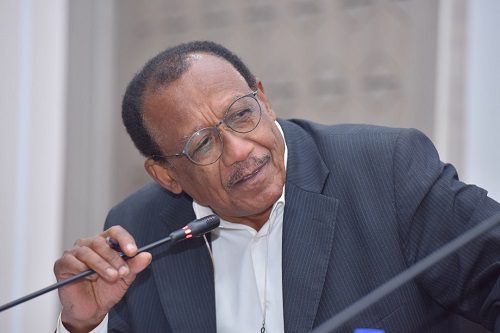
Whispers of Memory... On the anniversary of October 21, 1964. By Jamal Mohamed Ibrahim. You are in your first year of secondary school, your steps wavering between a departing childhood and an adolescence trying to dawn upon you. There are questions that linger in your young mind, the confusion of which almost weighs down your shoulders. Changing your school was not merely moving from one stage to another. You had been at the "Al-Nahda Intermediate School" south of the "Khalifa Mosque," and across from a site with a remarkable history, where during the Mahdist era, "Slatin" Pasha resided, then in the national rule era, it became the site of the "Abu Ela" Saraya, and finally, the headquarters of the Umma Party. But now, you have come to the secondary level at Al-Mo'tamar School, opposite the mouth of "Khor Abu Anja" on the banks of the Nile, between the "Al-Morada" neighborhood and an island whose charm was sung of by "Al-Tijani Yousif Bashir," which is "Tuti." Oh, what a naive person you were; you thought your transfer was just a geography lesson, and your memory failed to grasp that your move was a journey through time, just as it was an excursion into history. In your transition from the "intermediate stage" to secondary school, meanings came to you that your mind had not yet processed regarding the complexity of the interplay between history and geography. The most important things that knocked on the doors of your mind then were words that carried two meanings: the meaning of authority and the meaning of freedom. The principal of that school was the imposing Professor "Al-Tayeb Shubeika," its director and sultan. Authority rested in his hands, to which everyone—teachers, students, administrators, and the school’s security guards—bowed. As for freedom, it was the feeling of unleashing hidden and overt desires. Those things that are said and those that are not. At that time, the distance began to appear to you between a reality you could touch with your hands and another world that emerged from the stories you heard with your ears and read with your eyes, lines written in magazines and children's books. The small circle you had been revolving around as a naive child and a budding, green youth began to grow and widen, taking your hands and initiating you into the cultivation of the mind and the maturation of the body. In those early years, things reached your ears about a tyrannical authority that was different from your school principal’s, so you wondered what this tyranny was that they used to describe the rule of a leader named "Ibrahim Abboud," who governed the country, and the people around you rose up to oppose his rule, for they saw him as a tyrannical ruler. You also heard then that a student at the University of Khartoum had been killed by soldiers belonging to that ruler, who did not like a political seminar at the university regarding the problem of South Sudan. The name "Abboud" rang out years earlier, when you were in primary school. That day, when you climbed the low school wall and saw a crowd of people in white galabiyas carrying a coffin wrapped in white, hurrying their steps heading west to the "Hamad Al-Nil" cemetery. Students from the "Al-Morada" neighborhood told you that the coffin being carried was for an officer named "Ali Hamid," who had been sentenced to death by a military judge. Perhaps you realized later that he was a relative of your friend Abdulwahab Al-Sawi in secondary school. Do you think it crossed your minds—you and your friend—that you would meet years later as diplomats for your country? I return your memory to that military regime that executed "Ali Hamid," and which also had its soldiers kill the university student. You knew his name: "Ahmed Al-Qurashi." Older students in your school in their final years urged you to go out in a demonstration that erupted roaring in "Al-Morada" street, heading toward Khartoum. Today is Thursday. This is your first experience participating in a demonstration whose organizers chant for the fall of the regime, then the roaring wave takes you with the marchers as they cross the White Nile bridge heading toward Khartoum. You reached, by that afternoon with exhausted feet, the vicinity of the Presidential Palace, where you imagined "General Abboud" was holed up in his offices, guarded by angry sentries who fired tear gas at the demonstrators. You ran terrified to take shelter in buildings under construction; it was the first time your noses had been stung by tear gas. Between water barrels and bricks that filled the place, you slipped into those buildings under construction. You knew years later it was the "Sahara" building standing in the center of Khartoum, and then its workers, who were from the southern part of the country, invited you to wash your faces and eyes, as water removes the effects of tear gas, as you understood. How does your memory retrieve the details of what happened to you nearly sixty years ago, and that memory which was once young and active in an era is now fading and being entrusted, unless I revive it for you, through self-effort? Do not ask the one who does not answer you, for you are writing with a flow you do not know the source of, nor from what well it descended to you; or have you become absent from yourself, or has a dream consumed you while you were in deep sleep? Then came Saturday, October 24, and you had arrived at your school at the usual time. The class monitor had nothing to say to you. "Ali Yousif Al-Sharif" was your age, but the oldest among you in his distinct character, so the class teacher chose him to be the student supervisor. When the school principal, the educator "Al-Tayeb Shubeika," gathered you, surrounded by the school's security guards: the sergeant "Al-Asha" and his assistant your uncle "Al-Amin," you were overcome with awe, for the security guards were poised with their lashes to execute the punishment of flogging for anyone who had left their classrooms and participated in the Thursday demonstration. You were surprised by the educator "Al-Tayeb Shubeika" saying to you: "Return to your homes, you are free..!" That was your first lesson in tolerance between generations, and a stance from a capable educator. Oh, the greatness of the principal and educator "Al-Tayeb Shubeika." You looked at each other in disbelief. Some of your teachers were absent.. Professor "Al-Aqli," the religious teacher, was not present, nor was Mr. "Cook," the English language teacher, nor "Shakkak," the geography teacher, nor the teacher "Babiker Ahmed Musa," your favorite history teacher; they were there. You may not remember who was with you from your classmates. I remind you that among them were your friend Ali Hassan Najeela, Abdul Halim Jawish, the late Abu Al-Qasim Abdul-Wahid, Abdulwahab Al-Sawi, Mohamed Adam Osman, the late Abdul-Muttalib Babiker Hallawi, Ahmed Yaji, and Taha Sadiq Ahmed. Absent from the gathering were your "Tuti" friends: the students of "Tuti," including Abdul-Adheem Nur al-Jalil, Taj al-Din al-Mansour, and Al-Amin al-Tayeb. You left for "Abu Kadouk," accompanied by your colleagues Taha Al-Amin and Taha Sadiq Ahmed. As for Ali Yousif Al-Sharif—the class monitor—he left on foot to Al-Arba'een Street, and from there to "Abu Sa'id," where your friend resides. A day or so later, you came to listen on a radio at your grandfather "Ibrahim Al-Ahmar's" shop to a statement from General "Ibrahim Abboud" stepping down from ruling the country, so the people regained their will. And you never imagined that a day would come when that will would be trampled, not by the hooves of the Tartar horses, but by drones thrown at you from Sijil. I am your memory, oh you. I whisper to you. Have you forgotten—after more than sixty years—the first days of the October Revolution in 1964? Cairo, October 21, 2026.
Sudanileمنبر الرأي
Share
Comments
No comments yet. Be the first to share your thoughts.
Subscribe to our newsletter
Get a summary of the latest news and analysis delivered to your inbox.