
Economy (Citizen's Condition)
Sudan: Between the Hammer of Sanctions and the Anvil of Liquidity Paralysis
An article by writer Hassan Al-Basir analyzing the compound pressure on the Sudanese economy, trapped between external sanctions, a liquidity crisis, and disruptions in digital banking services, and their repercussions on purchasing power and the movement of merchants and the market.

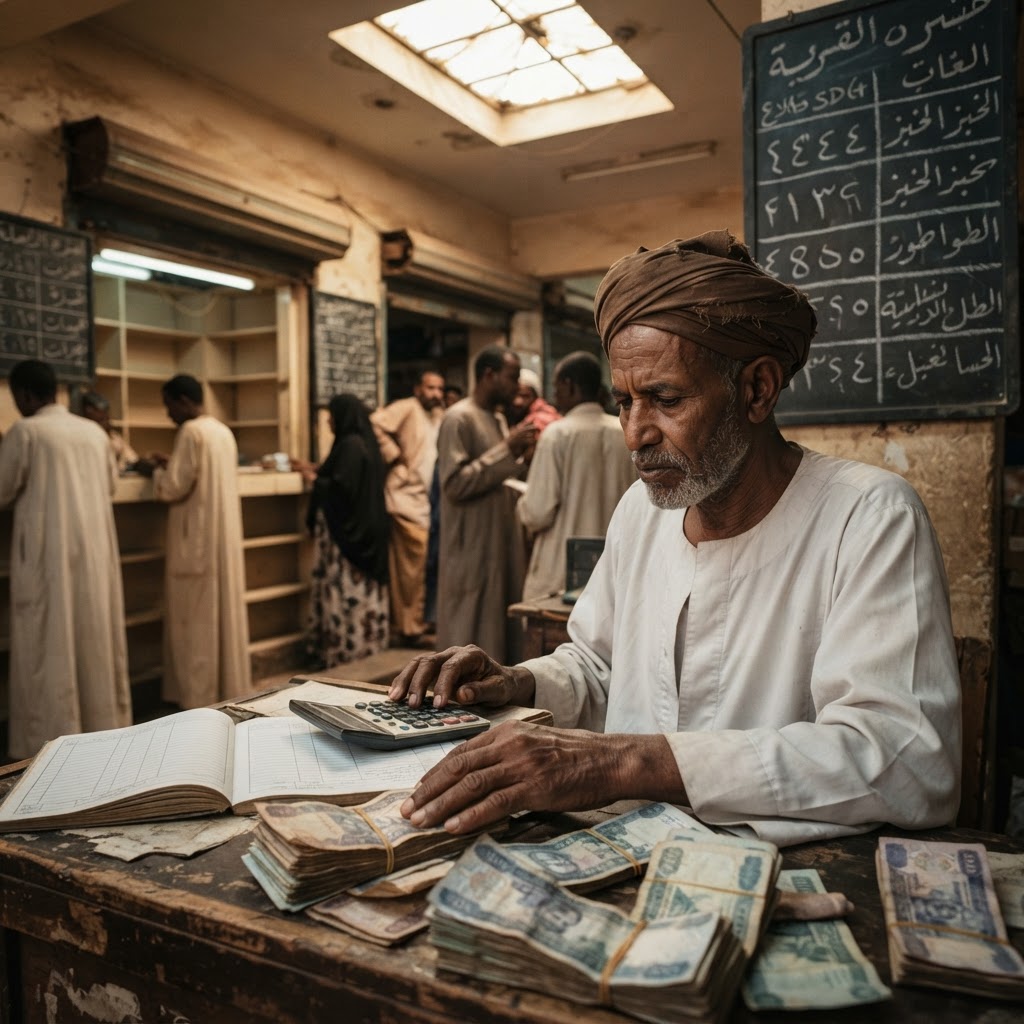
✍️ Written by/ Hassan Al-Basir. ▪️ The Sudanese economy has entered a new phase of compound pressure, as the tightening of external pressures and sanctions coincides with an exacerbating liquidity crisis and disruptions to digital banking services, which have become an essential part of the movement of funds and daily transactions during the years of war. Recent reports indicate that frequent outages have affected electronic payment applications, including 'Bankak,' impacting transfers, purchases, and the payment of obligations, thereby increasing the demand for paper currency. ▪️ As for the US sanctions related to the use of chemical weapons, they are legally based on the Chemical and Biological Weapons Control and Warfare Elimination Act of 1991, a law that allows for the imposition of restrictions on aid, financing, and certain exports and technologies when its conditions are met. The details of any specific measures remain tied to the texts and official decisions issued regarding Sudan. ▪️ Domestically, the liquidity crisis is taking on a harsher form. Reports from western Sudan have shown that converting electronic balances into cash has become extremely costly; the commission circulating in Geneina has reached about 46%, which weakens the purchasing power of digital funds and disrupts trade, especially in areas that rely heavily on electronic transfers. ▪️ The repercussions do not stop at the borders of the banking sector, as the liquidity crisis and exchange rate fluctuations reflect on commodity prices and the costs of transport and imports, while the disruption of supply chains in a war economy leads to increased risks, profit margins, and monopolies. In contrast, the Central Bank of Sudan has taken measures over the past months to provide foreign currency to banks and finance imports, in an attempt to reduce exchange market disturbances and meet basic needs. ▪️ Thus, the Sudanese economy finds itself facing simultaneous pressures: external ones that limit financing opportunities and access to certain markets and technologies, and internal ones that strike at the regularity of liquidity and the smoothness of trade movement. In such circumstances, restoring confidence in the banking system, providing cash, regulating markets, narrowing the gap between digital and cash values, and protecting the most affected groups become essential elements for any economic remedy capable of alleviating the burden of the crisis on citizens.
رأيالاقتصادالعقوباتالسيولةبنك السودانالصرف
Share
Comments
No comments yet. Be the first to share your thoughts.
Subscribe to our newsletter
Get a summary of the latest news and analysis delivered to your inbox.