
Economy (Citizen's Condition)
People’s Livelihood..
The Face of Truth, Dr. Ibrahim Shaglawi: What does the citizen expect from the government while the economic crisis strikes from every direction? Today, the citizen lives on a limited income and unstable sources of livelihood, facing not just the rising price of one commodity, but an entire system of pressures starting with food, medicine, fuel, and transportation, extending to education, housing, and basic services. With the academic year approaching and universities resuming operations, the circle of family obligations widens at a time when the ability to meet them is declining.
Sudanile October 6, 2026Published 1 views
Source:Sudanile
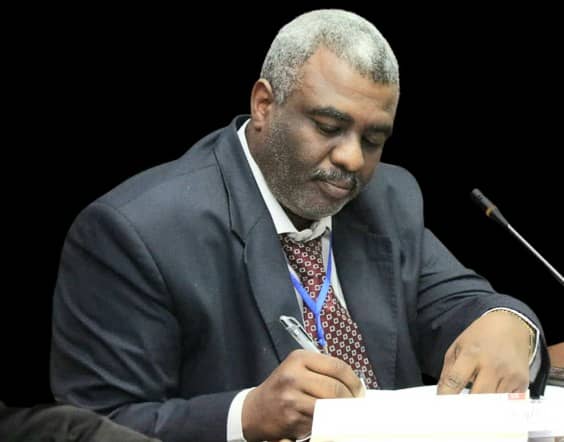
The Face of Truth, Dr. Ibrahim Shaglawi: What does the citizen expect from the government while the economic crisis strikes from every direction? Today, the citizen lives on a limited income and unstable sources of livelihood, facing not just the rising price of one commodity, but an entire system of pressures starting with food, medicine, fuel, and transportation, extending to education, housing, and basic services. With the academic year approaching and universities resuming their activities, the circle of family obligations widens at a time when the ability to meet them is declining. The extraordinary Council of Ministers session, attended by regional governors and state walis, discussed issues of the economy and people's livelihoods at a time when the crisis has become a test of the state's ability to protect the citizen. The session decided to halt levies, cancel fuel fees, ban collections on roads and goods, and expand discounted sales, cooperatives, and electronic collection. These are steps that could alleviate the burden, but the real challenge lies in the responsibility of implementation and accountability. Decisions alone do not protect the citizen; they are protected by clear laws and procedures, the entities responsible for implementing them, the oversight that monitors compliance, and the accountability that reaches those who violate them. Therefore, the success of these directives is not measured by the decisions issued, but by what we see in the market, fuel stations, roads, bakeries, and transportation, and by what the citizen feels in their daily life. Here is where the government's test begins; the citizen does not live on statements, but on the impact of decisions on their life. They want to see a decrease in fees and levies, and stability in transportation and prices. Fuel does not concern car owners alone; its rise increases the costs of transport, food, production, agriculture, and services, and ultimately, the citizen pays for it from their limited income. Thus, the criterion is not the number of government decisions, but what has actually changed in people's lives after they were issued. The government's exam regarding 'people's livelihood' extends to healthcare, services, and bread. The rising cost of treatment and the shortage of medicine, alongside the rising price of bread and its declining quality, double the burdens on Sudanese families and reveal the need for interventions alongside controlling the market and protecting the quality of basic goods and services. At the same time, the file of state employees returning to their positions emerges as another aspect of people's livelihood. The Council of Ministers has directed employees to return to their workplaces within 45 days, as part of restarting state institutions after years of war. In principle, the return of the administrative apparatus to normal work is part of the state's return, for ministries and institutions cannot continue operating indefinitely under emergency systems or from temporary headquarters. However, the return is not just an administrative decision. Thousands of employees were displaced during the war; some established new lives in other cities or countries, their children enrolled in schools and universities, and the years of displacement drained their savings, while the real value of wages declined. There are institutions that have not yet fully reclaimed their headquarters, and others work from alternative buildings or with limited functional capacity. Therefore, the success of the return requires its prerequisites: suitable headquarters, increased wages, transportation means, basic services, and clear arrangements for those unable to return. With the academic year approaching next week, the family's burdens multiply between food, fuel, transportation, study fees, books, uniforms, and commuting, while new numbers of students move to universities alongside the return of universities to their activities. Here, the government's responsibility becomes clearer: to make education a priority in the policies of people's livelihoods and to reduce its cost for families, because protecting the education of children is not an extra service, but a protection for the future of the new state. However, people's livelihood will not stabilize by price management alone; market stability requires production that compensates for what the country consumes. Here, agriculture becomes the starting point—more food, more work, and activity that stirs transport, trade, industry, education, and health. Therefore, the government's responsibility does not end with controlling prices and reducing levies, but begins with restarting the wheel of production and linking it to the market, income, and job opportunities. The citizen does not just want to know how the government will face the high cost of living today, but how it will create an economy that reduces their need for support tomorrow. Therefore, people's livelihood should turn from a title for meetings into a government performance indicator. The government is measured not only by its ability to manage state institutions but also by its ability to make the citizen's life possible in the most difficult circumstances. In conclusion, according to #The_Face_of_Truth, the question that must remain present before the government is not: What did we discuss in the session on people's livelihoods? But rather: What has changed in people's livelihoods after the session? For there is a distance between the decision and its effect, and this distance is what the citizen traverses every day between the fuel station, the market, the school, the university, the workplace, and the hospital. And when this distance narrows, the state begins to regain people's trust; and when it widens, talking about people's livelihood becomes just another title for the crisis. Stay well and healthy. Monday, October 6, 2026. Shglawi55@gmail.com
Sudanileمنبر الرأي
Share
Comments
No comments yet. Be the first to share your thoughts.
Subscribe to our newsletter
Get a summary of the latest news and analysis delivered to your inbox.