
Society
Children Struck by the Responsibility of 'Just Shell It'!!
Children struck by the responsibility of 'Just Shell It'!! ('This is a year where they spill the grain, oh Suleiman'!!) First scene: Two children, no older than ten, whose complexions and vocabulary suggest they are from central Sudan. A small amount of sorghum was 'spilled' by one of them, and they cooperated to gather the scattered remains amidst spontaneous words of reproach from the […] The post Children Struck by the Responsibility of 'Just Shell It'!! appeared first on Sudanaile.
Sudanile October 10, 2026Published 1 views
Source:Sudanile
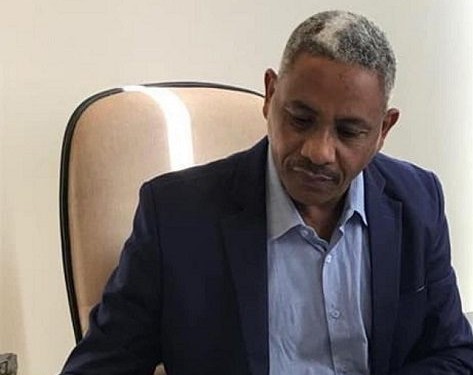
'This is a year where they spill the grain, oh Suleiman'!! First scene: Two children, no older than ten, whose complexions and vocabulary suggest they are from central Sudan. A small amount of sorghum was 'spilled' by one of them, and they cooperated to gather the scattered remains amidst spontaneous words of reproach from the 'cooperative' child to the one who caused the household's grain to spill. ('This is a year where they spill the grain, oh Suleiman' – 'A kela of grain is sixty thousand, oh Suleiman'). Second scene: An official visit by the Prime Minister of the 'Sixty-Thousand-Kela-of-Grain State' to a gas station with a retinue of luxury cars. The Prime Minister stood with the gas station workers with complete comfort and narcissism, his eyes watching the queue of citizens' cars extending to the horizon of his gaze, while they waited to claim their right to life. 'Give me the gasoline gauge,' he said, and a worker handed it to him. The Prime Minister inserted it himself into the tank opening, then shouted gleefully and chanted 'Allahu Akbar,' 'The gasoline is abundant, there is no gasoline crisis,' and behind him a 'chorus' of hired mourners, whom you would mistake for citizens, shouted in jubilation. The motorcade of the Prime Minister of the 'Sixty-Thousand-Kela-of-Grain State' left the station, while the queue of cars waiting for their share did not budge, hoping to obtain their right to life: the gas station. Third scene: Suleiman and his friend are more concerned about the 'sixty-thousand kela of grain' than they are about their lost future, and they are more regretful over its loss than they are over the loss of their school years, assuming one is optimistic enough to say Suleiman and his friend have schools, books, notebooks, and boxes of crayons. Fourth scene: The most descriptive expressions of suffering and the cruelty of life come from the mouths of children who never knew the path to kindergarten and for whom the way to reach a primary school desk was cut off. Children who found themselves at the station of the household's need for the 'sixty-thousand kela of grain,' with a father in his forties who looks like a septuagenarian, a mother who left behind her youth after her first wedding night, and a group of siblings struggling to provide the sum of the 'sixty thousand for the kela of grain' that Suleiman 'spilled.' Fifth scene: How can the state of the 'sixty-thousand kela of grain' be right when the state's promises in the Jebel Aulia locality are crooked, and its citizens are forced to deposit waste collection fees into personal accounts belonging to the director, Abdel Hamid, and his wife, Awadia, who works as a fee collector in the locality by order, knowledge, and coercion from the Jebel Aulia Prosecution? The state's judicial institutions encourage people to break the law and force them to deposit fees for services that should benefit them into personal accounts far from the eyes of financial and accounting oversight. Citizens see the effect of their waste fees on the lives of Abdel Hamid and his wife as they ride a luxury pickup truck, a model no older than 2026, instead of seeing that return to Suleiman and the rest of Sudan's children. Sixth scene: 'This is a year where they spill the grain, oh Suleiman'—a spontaneous reproach stemming from the fear of famine, the absence of the state, and ignorance of the consequences of the absurd war that humiliated the people of Sudan and bequeathed to 'Suleiman and his friend' the burdens of neglect and the lack of caution that led to the 'spilling of the sixty-thousand kela of grain.' The worries of daily life reached them at an age that cannot bear burdens, let alone the toxins of chemicals, the blood of loved ones, family, and neighbors. Seventh scene: When a child bears the responsibility of a state leader who loves the 'trends' of drinking coffee on the roadside in a tragic scene, surrounded by the watchful eyes of his guards—who pretend to be passing citizens who happened upon their leader by sudden chance—and when regulatory institutions are absent and the personal bank accounts of some officials become the substitute accounts for depositing state fees, and when personal interests mobilize hired mourners and the 'Bankak' press to describe the government's urine to people as if it were the rains of Harun al-Rashid that benefit them, whether poured into the Ministry of Finance's accounts or the accounts of Abdel Hamid and his wife Awadia... surely the night of Suleiman and his friend's worries will be long as they regret the 'sixty-thousand kela of grain' that fell from Suleiman, whose body cannot bear it, let alone bear the 'burden' of its loss. Final scene: A group of white dove flocks longs for the olive branch and almost captures it, while in contrast, a group of wild, bloodthirsty, and flesh-craving birds of darkness exists, and Suleiman and his friend watch the scene, the burden of the 'sixty-thousand kela of grain' on their shoulders, as they spontaneously reproach: 'This is a year where they spill the grain, oh Suleiman.'
Sudanileمنبر الرأي
Share
Comments
No comments yet. Be the first to share your thoughts.
Subscribe to our newsletter
Get a summary of the latest news and analysis delivered to your inbox.