
Supporting Voices
Egyptian Initiative Demands Cairo and Khartoum Reveal Circumstances of Bombing Mining Areas Near the Border
Amsterdam: Cairo: Kampala/ Tuesday, October 13, 2026: Radio Dabanga - The founder and executive director of the Egyptian Madad Initiative, Shaimaa Sami, has demanded that the Egyptian and Sudanese governments... The post Egyptian Initiative Demands Cairo and Khartoum Reveal Circumstances of Bombing Mining Areas Near the Border appeared first on Dabanga Radio TV Online.
Radio Dabanga (Arabic) October 13, 2026Published 1 views
Source:Radio Dabanga (Arabic)
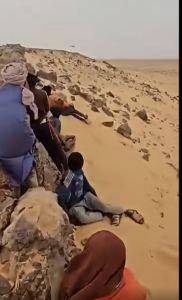
Amsterdam: Cairo: Kampala/ Tuesday, October 13, 2026: Radio Dabanga - The founder and executive director of the Egyptian Madad Initiative, Shaimaa Sami, has demanded that the Egyptian and Sudanese governments provide transparent explanations to the public and civil society regarding the truth of what occurred in the artisanal mining areas near the border between the two countries, and to reveal the circumstances of the airstrikes and the resulting deaths and injuries among Sudanese miners. In a statement to (Dabanga), Sami called for ensuring that journalists, human rights organizations, and humanitarian agencies have access to the affected areas, and for providing safe passages and actual protection for those fleeing the war, especially women and children, in addition to providing medical treatment to the injured and reparations to the victims' families. She expressed the initiative's grave concern regarding the reported bombing, noting that the border region is witnessing a complex entanglement between mining activities, the entities benefiting from them, and the parties funding them, as well as smuggling and human trafficking networks active on the same routes. She explained that this entanglement makes it difficult to distinguish between those involved in the war economy and civilians who find themselves in those areas with no connection to the conflict. Sami stressed that the protection of the lives of civilians not involved in the war remains a fundamental principle, regardless of the party conducting military operations. She emphasized that the right of states to secure their borders and combat smuggling, human trafficking, and illegal mining is limited by the principles of necessity and proportionality, and civilians must not pay for it with their lives. Warnings do not waive protection for civilians: Sami confirmed that dropping warning leaflets before carrying out strikes is a basic measure to protect civilians, but it does not remove the protection guaranteed to them by international law, nor does it exempt the executing parties from the duty to distinguish between civilians and others and to take all possible precautions to avoid harming them. She added that the effectiveness of these warnings remains questionable in a remote desert region where many miners work in harsh conditions, without transport or alternative shelter allowing them to move away from danger zones. She asserted that a warning is only effective if it allows civilians sufficient time and a safe route to leave. Concerns for those fleeing the war: During her conversation with (Dabanga), Sami pointed out that the initiative's primary concern centers on those crossing the border to escape the war in Sudan, especially women and children, as they are the most vulnerable to exploitation by smuggling and human trafficking networks, in addition to the risks arising from military and security operations in the region. She emphasized that these refugees are not parties to the conflict, but rather victims searching for a safe haven, stressing the necessity of respecting their right to seek asylum and adhering to the principle of non-refoulement. She called for strengthening the presence of international and humanitarian organizations and international civil society groups near the Egyptian-Sudanese border, foremost among them the UN High Commissioner for Refugees (UNHCR), the International Organization for Migration (IOM), and the International Committee of the Red Cross (ICRC). She explained that the presence of these organizations is essential to ensure the protection of civilians, provide necessary support to those fleeing the war, and limit their exposure to exploitation, especially victims of human trafficking. In concluding her statement, Sami emphasized that securing borders and combating illegal activities must not come at the expense of civilian lives, stressing that protecting those fleeing the war is a shared responsibility that requires cooperation between governments, international organizations, and humanitarian actors.
Radio Dabanga (Arabic)الأخبارالخبر الرئيسيالصفحة الرئيسيةسياسةعناوين الأخبار
Share
Comments
No comments yet. Be the first to share your thoughts.
Subscribe to our newsletter
Get a summary of the latest news and analysis delivered to your inbox.