
Politics
When People's Lives Become Commodities for Posturing!
By Hassan Abuzainab Omar: It is difficult for you to tell the truth when you are a beneficiary of falsehood. Seeing the corpses of miners scattered on the desert floor like swarms of locusts after an aerial spraying campaign, or like cockroaches exterminated by pesticide, is the fate of human beings searching for a livelihood who met their end at the hands of Egyptian air force missiles in horrific, repulsive raids. The post When People's Lives Become Commodities for Posturing! appeared first on Sudanaile.
Sudanile October 14, 2026Published 1 views
Source:Sudanile
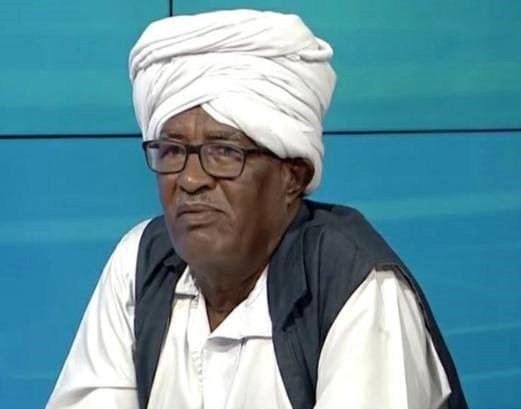
By: Hassan Abuzainab Omar. It is difficult for you to tell the truth when you are a beneficiary of falsehood. Seeing the corpses of miners scattered on the desert floor like swarms of desert locusts after an aerial spraying campaign, or like household cockroaches exterminated by pesticide, is the fate of human beings searching for a livelihood who met their end at the hands of Egyptian air force missiles in horrific, repulsive raids. The sight of them lying torn and scattered on the open land breaks the heart and brings to mind the tragedy of Nagasaki and Hiroshima. The most bitter aspect of this mass killing of miners is that the defenseless victims, who have no power or support, have no one to mourn them, and this crime of mass murder has stirred nothing but faint storms of rejection and condemnation that vanished into thin air. Meanwhile, the Egyptian justifications remained shallow and overly naive, having no leg to stand on, for it was a crime committed by a killer blinded by arrogance. (2) The first raid took place about two months ago, and the blood of its victims had not yet dried before it was followed by a second, more destructive one, carried out with premeditation to confirm beyond doubt that the indiscriminate attack by the air force targeted humans searching for a living, not an invading army threatening national sovereignty. But as long as the Sudanese reactions remain trapped within the confines of posturing and political maneuvering—mere cries without an echo—the trend will continue. The logic of Egypt, which would make even mourning women laugh at its naivety, is to defend its borders, which it claims are being breached by these groups. But the question here is: does this right, even if it were clear, justify committing a massacre of this magnitude, snuffing out human lives in the blink of an eye? Even if they were animals, it would have sparked a massive wave of outrage from animal rights groups. Why, then, did Egypt, the sister country of my homeland, resort to capital punishment for a mere border crossing that is considered a natural occurrence across the length and breadth of the continent? Why did it not escalate the penalties as required in such cases, through imprisonment, fines, and then deportation? Are there clear markers indicating where Egypt’s borders begin? Many questions, flowing blood, and scarce answers. (3) I say this even though the situation has become muddled and unrecognizable. We no longer know where the Sudanese borders end and where the Egyptian borders begin. As everyone knows, the triangle (Hala'ib) has been a dispute between the two countries since the late fifties, and there is a Sudanese complaint filed in the archives of the Security Council that is renewed annually. Despite this, relations were calm until the earthquake that turned everything upside down at the Addis Ababa airport on June 26, 1995, after the Ingaz (Salvation) regime implicated Sudan and its people in an assassination attempt that does not reflect our morals. Afterward, Egypt entered the triangle by force and occupied it under direct instructions from Mubarak, while Sudan entered the list of state sponsors of terrorism through the front door, courtesy of a plot woven by Ali Osman Mohamed Taha, Al-Bashir’s deputy. (4) Reactions to the human massacre vary, but they all share the fact that they are like someone who destroys his own land—achieving nothing and leaving nothing behind; everyone cries for their own cause. The government, which is drowning up to its knees in an existential war, clings to a straw to liberate the land from the filth of the criminal militia and needs any support, even from Egypt, and is not prepared to open a second front, even if the blood of its citizens is shed in broad daylight. Egypt knows this well and knows exactly how to play with contradictions and fish in murky waters. Perhaps this explains how Al-Burhan let the bloody events pass by without consequence, reacting only with cold, superficial directives to the victims not to penetrate the borders of others. As for Hemedti, whose forces have committed every abomination—looting, killing children, and raping women—without batting an eye after being unleashed, he is the same Hemedti who now denounces the killing of the miners. The Masalit people, whose lives he snuffed out in cold blood and whose bodies he mutilated, and the Shayqiya, whose women he threatened, are Sudanese, not Indians coming from the Amazon jungles. Yet, he pushed all these massacres, which would turn the hair of the unborn grey, behind his back and came to invest in the miners' crisis to settle scores with Egypt, whom he accuses of favoring Al-Burhan's government, considering the planes coming from the neighboring state—not those coming from the Gulf state—as a legitimate target. Entrance to the Exit: The conclusion and the final word here is that four days have passed since the mass murder of the miners. If they had known their fate and the dark end awaiting them at the border—on Sudanese lands occupied by force, over which Egypt refuses even to negotiate as per the regulations of the International Court of Justice—they would have thought more than once about searching for other sources of livelihood that would preserve their lives before their dignity. And because we have yet to hear of any responsible entity going to save what can be saved or to cover the bodies with a burial so that they do not turn into food for jackals and hungry desert vultures, one is reminded of the ancient poet Al-Mutanabbi: 'He who accepts humiliation finds it easy; for the dead, there is no pain in being wounded.'
Sudanilefactcheck:reviewمنبر الرأي
Share
Comments
No comments yet. Be the first to share your thoughts.
Subscribe to our newsletter
Get a summary of the latest news and analysis delivered to your inbox.