Politics
The Preparatory Committee.. Towards Managing the Dialogue?
In 'The Truth Face,' Ibrahim Shglawi writes: Through my monitoring of the Sudanese Dialogue Preparatory Committee’s work, it is clear that the committee has accumulated a significant record of contacts with political and societal forces, and has broadened its openness to regional and international parties. This progress puts the committee before the necessity of transitioning from the preparation stage to managing the dialogue by transforming what has been achieved into a political track with clear stages and timelines, based on a roadmap [...]
Sudanile October 16, 2026Published 1 views
Source:Sudanile
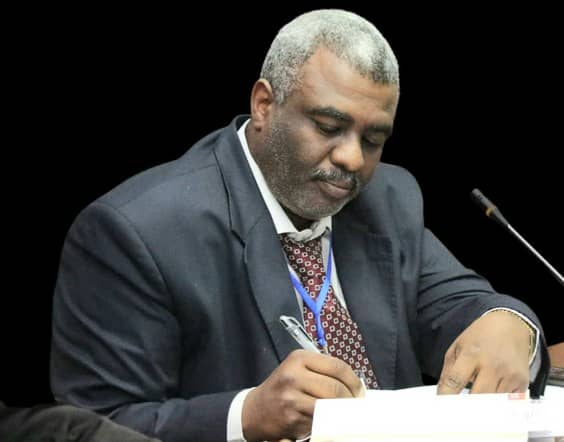
In 'The Truth Face,' Ibrahim Shglawi writes: Through my monitoring of the Sudanese Dialogue Preparatory Committee’s work, it is clear that the committee has accumulated a significant record of contacts with political and societal forces, and has broadened its openness to regional and international parties. This progress puts the committee before the necessity of transitioning from the preparation stage to managing the dialogue by transforming what has been achieved into a political track with clear stages and timelines, based on a roadmap that moves the dialogue from intentions to action, and from contacts to results. The committee succeeded in its contacts with the African Union, the European Union, the United States, and the Quintet group, alongside a number of Arab and European countries. The invitation from the President of Burundi, the current Chairperson of the African Union, for the committee to visit his country, coinciding with his proposal of a political solution initiative, represents an opportunity to strengthen consultation. However, the importance of this success remains contingent on its ability to support a national path owned by the Sudanese, where they determine its priorities, stages, and outcomes, while utilizing external support without compromising the country’s independent decision-making. External support is necessary but it does not create consensus on behalf of the Sudanese, just as the frequency of meetings does not necessarily mean moving closer to a dialogue. Therefore, the real challenge is transforming the outcome of the consultations into common ground between parties and entities that allows for the transition to managing differences and building consensus. From my point of view, this does not require abolishing the existing committee or bypassing its mandate, but rather developing it through a time-bound preparatory phase, during which the necessary political and organizational arrangements are completed, while utilizing independent and trusted figures with experience in managing conflicts who enjoy respect and acceptance. The framework should then expand when managing the dialogue to include representatives of political blocs, societal forces, and entities, according to announced criteria that ensure the seriousness of participation and the balance of representation. In my assessment, one of the most prominent challenges is the potential for some political forces currently abroad to join the dialogue individually, which may lead to divisions within their components, or reproduce the polarizations that weakened previous experiences. Therefore, the committee’s keenness to accommodate everyone and provide them with space for understanding represents a political necessity; inclusion does not mean only the number of participants, but the integrity of their representation and their ability to express the components without dismantling them. What is required is to reconcile the expansion of participation with not leaving the process hostage to an indefinite wait. To achieve this, I suggest that the committee adopt an executive roadmap starting with completing the preparation within a announced timeframe, by inventorying the positions of political and societal forces, identifying points of agreement and disagreement, and opening communication channels with parties that have not yet confirmed their participation. This will be followed by a transition to a preparatory phase that undertakes setting representation criteria, the dialogue agenda, session management rules, decision-making mechanisms, and guarantees for participation, provided these arrangements are completed by a specific date, not turning it into a new phase of consultations. Then, the dialogue would commence according to a announced timeline, with an agenda that arranges priorities—addressing the humanitarian crisis through issues of peace, justice, the return of displaced persons and refugees, reconstruction, and the future of the state. It is not enough for the dialogue to end with a political statement; its outputs must be translated into an agreement that includes specific commitments, responsible parties for implementation, timelines, and an independent mechanism for follow-up and evaluation, with the publication of periodic reports to enhance transparency and accountability. The committee is keen to prepare the conditions for the participation of all political forces together, to avoid divisions that may affect the chances of the dialogue’s success. But this keenness should not turn into a condition for obstructing its start or making it contingent on the return of those who refuse to participate, as the participation of some forces could form a start that gradually expands, while keeping the door open to others according to announced rules. Inclusion is a desired goal, but it does not justify an open-ended wait, in light of conditions that cannot withstand delay. What is required is to balance the breadth of participation with a commitment to a timeframe for the dialogue and its results. Likewise, the dialogue should not remain confined to political elites; youth, women, displaced persons, refugees, and local components are authentic parties to the future of Sudan, and their needs should be reflected in the agenda. The ownership of the dialogue is achieved by the ability of citizens and their components to influence its issues and outcomes. Furthermore, holding the dialogue within the country strengthens its national ownership and its connection to the citizens. Preparation that does not lead to dialogue loses its purpose, and dialogue whose outputs are not combined with implementation loses its meaning. Our country needs today a political process that brings together all its parties without exclusion, establishes peace on the basis of inclusion and national ownership, and transforms consensus from a political promise into a commitment capable of implementation and accountability. According to #The_Truth_Face, the Preparatory Committee stands today before an opportunity to transition from managing contacts to managing the political track and from preparation to managing the dialogue. Therefore, what is required now is not a new committee, but a roadmap that defines stages, responsibilities, and timelines, and links every step to a tangible result. The citizen, exhausted by the war since April 15, 2023, is not waiting for structures to be completed, but wants to see a clear path towards restoring security and peace. Wishing you well and health. Thursday, October 15, 2026. Shglawi55@gmail.com
Sudanileمنبر الرأي
Share
Comments
No comments yet. Be the first to share your thoughts.
Subscribe to our newsletter
Get a summary of the latest news and analysis delivered to your inbox.