
The Library
Why did Abd al-Khaliq bet on weakening capitalism?
Zain al-Abidin Salih Abd al-Rahman. Dr. Muhammad Saeed al-Qadal writes in his book, 'Landmarks in the History of the Sudanese Communist Party, p. 184': (Abd al-Khaliq Mahjub commented on the discussions that took place in the Central Committee, saying that our understanding of the status of local capitalism, in both its national and non-national forms, determines the Communist Party's leadership of the revolutionary movement. If [...])
Sudanile October 5, 2026Published 1 views
Source:Sudanile
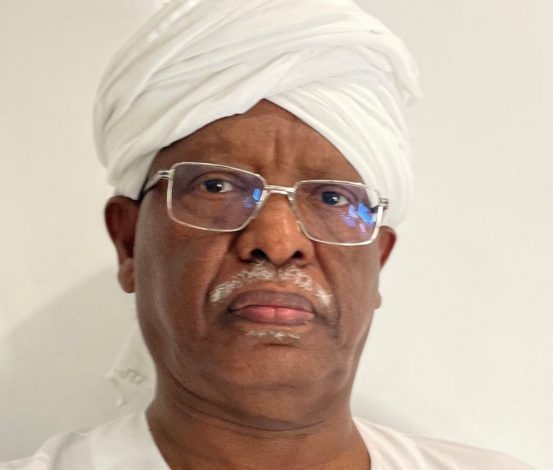
Zain al-Abidin Salih Abd al-Rahman writes. Dr. Muhammad Saeed al-Qadal states in his book, 'Landmarks in the History of the Sudanese Communist Party, p. 184': (Abd al-Khaliq Mahjub commented on the discussions that took place in the Central Committee, saying that our understanding of the status of local capitalism, in both its national and non-national forms, determines the Communist Party's leadership of the revolutionary movement. If we conclude that the bourgeoisie allied with traditional forces is strong, the country will remain under their rule for some time; but if it is weak, the transition to national rule will happen in the near future through a broad, fully capable mass movement.) As al-Qadal noted on the same page, commenting that Abd al-Khaliq was pointing to certain leaders in the Central Committee who were courting the National Unionist Party. Abd al-Khaliq’s statement is not merely a descriptive assessment of capitalism in its 'weakness and strength,' but rather entails specific positions. It is an implicit reference to the role of the middle class, which gains strength and becomes an effective force producing enlightenment and knowledge when the economy prospers and development expands. This is because the effective role of capitalism and the expansion of its activity and production serve the interests of the middle class. Whenever capitalism weakens and the economy and development decline, the middle class weakens, and its enlightened output in society decreases, which in turn weakens political consciousness. This creates room for empty slogans and the false consciousness that the Left attempts to create in society. Abd al-Khaliq’s stance led to real actions to weaken capitalist forces. It is confirmed that the nationalization and confiscation carried out by the Communist Party in 1970 aimed to weaken capitalism and, consequently, the middle class's role in producing enlightenment and democratic culture in the country. From that period, the role of the middle class declined. Abd al-Khaliq's premise has a historical legacy in the conflict with middle-class parties, as he argued that the strength or weakness of parties is rooted in capitalism. Capitalism is not a party, but its rising role in society lies in the emergence of the middle class, which is born from the womb of capitalism. Ahmad Sulaiman writes in his book, 'We Walked It Step by Step, p. 219': (Arrogance possessed the Communists; they were misled by the expansion of their popular influence in cities, especially in the capital and Atbara, and thought they could snatch the leadership of the popular movement from the traditional parties. They began to excessively criticize the leaders of the Unionist parties and exaggerate the manifestations of secondary contradictions, inflating them within the national camp to the point where they overshadowed the primary struggle against colonialism and its institutions.) This confirms that the issues of 'confiscation and nationalization in 1970' were driven by Abd al-Khaliq Mahjub personally, aiming to weaken national capitalism and thwart the political role of the middle class, allowing the Communist Party to expand in society unchallenged by other political forces. The nationalization process in 1970 actually weakened the country's economy; foreign investment withdrew its balances from Sudanese banks, and the cycle of the Sudanese Pound's decline against other currencies began. The role of industry retreated due to the lack of hard currency to import spare parts, which automatically affected services—health, education, energy, and others—in the country. This led to a rise in commodity prices, eventually triggering displacement from producing regions to the outskirts of cities. The role of the middle class weakened completely, its democratic balance and enlightened production in the country declined, and parties—led by the Communist Party—relied on slogans as a substitute for intellectual and cognitive production. The struggle for power shifted from a political conflict that increases public awareness to an armed conflict between the May Regime and the 'National Front,' which consisted of the Unionists, the Umma Party, and the Islamic Movement, which weakened the middle class and left all parties debilitated. The 1977 Port Sudan reconciliation between the 'May Regime and the National Front' benefited the Islamic Movement, because it read the transformations occurring in society and the reasons for the weakening of political forces. Therefore, it moved, unlike others, toward establishing banks and financial institutions, becoming the only one capable of attracting the new middle class. It transformed from an elite party into one extending its roots into the popular base. The result of this shift in the political equation appeared in the 1986 elections, which led the Front to overthrow democracy and attempt to implement its project through state institutions. Thus came the idea of the 'Social Planning' ministry, with the goal of weakening capitalist forces that had other loyalties and replacing them with new capitalist forces affiliated with the organization to be controlled. However, its problem was failing to realize that the middle class grows and evolves its ideas through dialogues with others, and this state of closure triggered internal conflict within the ruling system, leading to the 1999 'Split.' This split led to the failure of the project, and the forces holding the reins of the state focused entirely on maintaining power. Leaders wanted only to preserve their own gains under the slogan of an 'Islamic Movement' that had no real political project, with the whole matter hanging on a 'superficial Islamic slogan' unrelated to practices within the system or personal interests. Since the 1999 split, the Islamic Movement in power has been preoccupied with day-to-day events. When the split occurred within the Islamic Movement system, the group in power rushed to protect its interests and the system by absorbing leaders from other parties, especially the Unionists, the National Umma Party, and armed movements, aiming to broaden the circle of participation and interests to ensure the regime's survival. The arrival of oil as an economic supporter began to strengthen the middle-class base, creating a new space of freedom that led to the emergence of many newspapers, creating new awareness in the country. The problem remains that the middle class has not been able to restore its role in a way that presents a new political project around which political forces can converge, and this can only return through a political compromise that brings together forces capable of producing thought in the political arena. There is a big difference between slogans, which will not create consciousness, and ideas, which cause changes in consciousness and strengthen the role of effective forces in society. The question that must be answered is: Should we wait for the economy to rise and create capitalist forces to restore the middle class's enlightening role, or can we bypass this stage with the existing intellectual capabilities in society? We ask God for good insight.
Sudanileمنبر الرأي
Share
Comments
No comments yet. Be the first to share your thoughts.
Subscribe to our newsletter
Get a summary of the latest news and analysis delivered to your inbox.