
The Library
"They Are Human" . . A Novel in the Absence of History
Gamal Mohamed Ibrahim writes about a novel by one of the pioneers of Sudanese fiction. Published in 1960, the work was written by the late author Khalil Abdullah Al-Haj around 1954, two years before Sudan's independence. In his introduction, the author mentions sharing the manuscript with friends, including the late poet Salah Ahmed Ibrahim, and publishing parts of it in the daily newspaper "Al-Nas" in the early 1950s, though the newspaper's owner, Mohamed Mekki Mohamed, lacked enthusiasm for completing its publication.
Sudanile October 6, 2026Published 1 views
Source:Sudanile
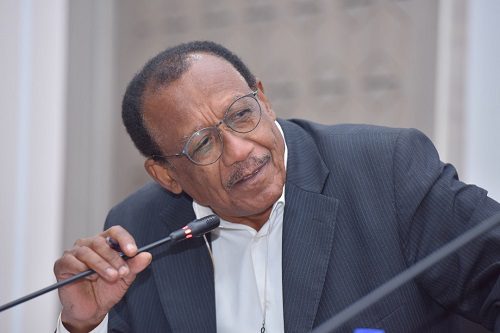
Gamal Mohamed Ibrahim writes about a novel by one of the pioneers of Sudanese fiction. Published in 1960, the work was written by the late author Khalil Abdullah Al-Haj around 1954, two years before Sudan's independence. In his introduction, the author mentions sharing the manuscript with friends, including the late poet Salah Ahmed Ibrahim, and publishing parts of it in the daily newspaper "Al-Nas" in the early 1950s, though the newspaper's owner, Mohamed Mekki Mohamed, lacked enthusiasm for completing its publication. It is a remarkable novel, and is considered one of the first Sudanese fictional experiments written and published in the years following World War II, just before Sudan gained its independence. At the time, it represented a leap into a phase of narrative prose that many critics identified as the closest to the school of realism. If an opportunity had arisen for me to prepare a second edition, the story itself would be worthy of telling due to its intrigue.
My acquaintance with this novel dates back to the 1960s, when I was twelve years old and in middle school. Since primary school, I had developed a deep passion for reading "Al-Sibyan" magazine, which was published in Khartoum by the Ministry of Education’s publications bureau. As primary school students, every Thursday we would look forward to the arrival of the government truck carrying copies of the magazine to be distributed to primary schools in the Tri-Capital: Omdurman, Khartoum, and Khartoum North. "Abu Anja Primary School," our school in the southern area of Omdurman, received its share. Getting this magazine at such an early age, and keeping it neatly with my clothes in the room I shared with my younger brother Abdullah, was my primary obsession. That was the beginning that inspired me to start a small library, which grew with me as I moved from one grade to the next.
When we reached middle school, I began chasing after Egyptian magazines, then small, affordable Egyptian books like the "Iqra'" series and the booklets by Kamel Kilani for children and youth. My cousin and friend Kamal El-Din Saleh, who was a few months older than me, and I competed in acquiring books and exchanging them. We raced to own the most exciting and knowledgeable titles. While I outpaced him in acquiring books by Al-Aqqad and Mahmoud Taymour, I would find him collecting books by Taha Hussein and Tawfiq al-Hakim. At that early age, we read the novels of Jurji Zaidan, then those of Naguib Mahfouz, and we secretly read poetry collections by Nizar Qabbani, Al-Sayyab, Abd al-Mu'ti Hijazi, and Al-Bayati, which differed from the poems we studied in school.
In those years, we discovered a novel by a Sudanese author that dealt with life in the Al-Abbasiya neighborhood in Omdurman: the novel "They Are Human." Its events revolve around "Fariq Al-Amaya" in Al-Abbasiya, a neighborhood not far from the places that witnessed our childhood and youth south of "Khawr Abu Anja." Perhaps that is what spurred us to read it with extra pleasure. My cousin and I often sat discussing the content of that strange, amazing novel. Yes, we saw it as extremely strange. Was it real events? Was it a story from the writer's imagination? Was it tales he picked up from the people living around him in that ancient neighborhood of Omdurman? We didn't dwell too much on finding answers to those questions.
Our admiration for the novel continued for years, and we did not part with the two copies of "They Are Human." When our awareness grew and we read Naguib Mahfouz's novel "Midaq Alley," "They Are Human" seemed to us like a version similar to Mahfouz's. In truth, Professor Khalil did not hide in his introduction that he seemed to be inspired by Mahfouz's "Midaq Alley," which in the 1950s was considered an unprecedented breakthrough in narrative prose that approached the dynamics of society—a realist literature that formed a testimony to what is real rather than imagined.
Days and years passed, and we were taken by the preoccupations of high school and then university, followed by careers, which led our interests in different directions. My library and my cousin Kamal's grew, but the abundance of books tempted those around us to borrow them, and kind hands would take them—sometimes returning them, and sometimes callous hands would take them, and they would disappear forever. I lost my copy of "They Are Human" in my early years at the Ministry of Foreign Affairs in the 1970s, as my profession took me on travels and long residences abroad. The book was lost from my library. I kept asking about it years later, but I never found a copy. Libraries were completely empty of it, as it was originally published by a publisher in Egypt at the author's expense, and he was not able to reprint it after it sold out.
For many years, I searched for "They Are Human" in old bookshops in vain. I know most of the "Uzbakiyyin" in Khartoum—a term coined after Cairo's "Ezbekiya" bookstalls—they are the people who display old books in the alleys of the Tri-Capital's markets. My efforts went up in dust in Omdurman and both Khartoums, with no trace of the novel. Some even denied that there was a Sudanese novel with that title.
Despite my passion for reading novels and later writing them, that nagging obsession with obtaining a copy never left my memory. With the passage of time, I felt it was a lost part of my childhood and youth. It was a part that lived in my soul and contributed to shaping my literary formation; it might even be what strengthened my taste for literature and the novel specifically, prompting me to practice writing novels.
After more than forty years since we lost that novel, my cousin, Professor Kamal Saleh, called me on a bright day in late 2013, jubilant: "Eureka! Eureka! I found it, I found it: the novel 'They Are Human'!"
Yes, he found it among a pile of old books that were once part of his home library in Omdurman. I almost didn't believe him. After all these years, I finally saw Professor Khalil Abdullah Al-Haj's novel. I touched it with my fingers like someone holding a precious jewel. The cover was the same one designed by the artist Sharhabil Ahmed, featuring authentic Sudanese faces. The pages were aged by time, turning yellowish, but they were in very good condition.
As soon as I proposed the idea of reprinting this novel to the officials at the "Khartoum Authority for Press and Publishing," I found them more prepared and enthusiastic than I was to accomplish the work, as they knew that "They Are Human" is one of the first Sudanese fictional works. When I approached the family of the late Khalil Abdullah Al-Haj with the project of republishing the novel, their welcome was filled with astonishment. One of his sons mentioned that it was the first time he had been able to see an original copy of the novel his father had written and published, which had been out of print for a long time—even before he was born. His son, Marwan Khalil Abdullah Al-Haj, told me that they had completely despaired of ever finding a copy.
In all my critical and analytical readings of Sudanese novels, I have not encountered a deep or lengthy analysis of "They Are Human." Instead, I have only encountered mere references to it as a pioneering work in this genre. The novel is often grouped with "Tajuj" by the late Osman Hashim, "The Wide Void" by the late Malikat al-Dar Muhammad, and "Crying on the Coffin" by the late Fuad Ahmed Abdel-Azim, followed by the novels of the late Abu Bakr Khalid Mahdi in a later era.
There is a problem and confusion here regarding the classification and definition of pioneering in novel writing. Is it by the precedence of publication, such as saying these are pre-independence novels or those published after? Or do we track that pioneering status by its technical references in terms of form and writing style? (See the article by the late Professor Ahmed Abdel-Mukarram: 'The Narrative Process Among Pioneers,' with special reference to Abu Bakr Khalid, p. 320 in 'Research on the Sudanese Novel'—Abdel-Karim Mirghani Cultural Center, 2010). The late critic Ahmed Abdel-Mukarram cites an opinion by the late writer Al-Nour Osman Abkar, who dates the beginning of the true Sudanese novel to the novels "The Beginning of Spring" by Abu Bakr Khalid and "They Are Human" by Khalil Abdullah Al-Haj, attributing both to the school of Socialist Realism (see Abdel-Mukarram, 2010, the same reference mentioned above). Professor Mahjoub Eidaroos adds that both novels are considered among the first attempts by the generation of pioneers to write the Sudanese novel (M. Eidaroos: 'Concerns of the Transition Phase: A Reading of the Novel 'Jumping Over the Short Wall' by Abu Bakr Khalid,' in 'Research on the Sudanese Novel,' 2010).
My joy at finding a rare copy of "They Are Human" after many years of loss is what prompted me to suggest reprinting it to the "Khartoum Authority for Press and Publishing" so that a rising generation of novelists can become acquainted with this amazing novel and the Sudanese reading public can learn about this beautiful work. We must place this novel in its true place in the history of novel writing in Sudan, considering it a precise observation of a stage in the social history of the Sudanese urban community during independence and just before it.
The late Professor Khalil Abdullah Al-Haj traveled across many parts of Sudan, moving from one school to another, teaching the Arabic language, and the manuscript of his novel "They Are Human" traveled with him from one place to another. Despite the difficulties of publishing in those years, the late author bore the cost of printing his novel in Cairo in 1960. It was a high cost, and he was not able to find a publisher to reissue it after the first edition sold out. The writer passed away in 2007, and the novel did not get anyone to take on the task of republishing it.
The "Khartoum Authority for Press and Publishing" was destined to undertake the publication of the second edition as part of its "One Hundred Books in Sudanese Culture" project, which works to bring out important manuscripts that have not yet seen the light of day. It also works to provide a number of books that are out of print by reprinting them with high professionalism and standards that can competently break into the Arab book market.
In 2013, I was tasked by the new publisher—the Khartoum Authority—with reviewing the manuscript they had prepared in a soft copy, and I was assigned to edit and verify the text in preparation for printing. I devoted myself to a careful review of the soft copy, strictly adhering to presenting the text as the author intended, without intervention except for correcting some typographical errors or adjusting the colloquial language that the author chose to adopt, instead of the classical dialogue in which the novel was originally written. I worked to refine the colloquial dialogue and correct some typographical errors from the first edition, especially since the Egyptian publisher was not fully familiar with the style of Sudanese spoken dialect. An example is the use of the "ha" pronoun in classical Arabic being changed to the colloquial "waw," such as writing "bayto" instead of "baytuhu" (his house), to match the spoken pronunciation. Some expressions that appeared in the story, which might have been understood in the 1950s, seemed to me to require correction by providing notes as footnotes at the bottom of the page, accurately explaining the intended meaning, such as the expression "Dhal al-shati," meaning "the shadow cast by the wall in the winter afternoon." We believed this would help the reader achieve a correct understanding of the spoken language prevalent in that era.
I did not stop there; I decided to meet with the famous plastic artist, singer, and musician Sharhabil Ahmed. He received me in his house in the Riyadh neighborhood south of Khartoum, and I told him the story of the novel. I found unparalleled enthusiasm from him, as he held a copy of "They Are Human" for the first time after all the years that had passed since it was printed in Cairo. He was enthusiastic about the idea of reprinting it and pledged to prepare the same cover for the proposed new edition. Here, I must express my appreciation for the cooperation of the family of the late Khalil Abdullah Al-Haj, as well as my full appreciation for the effort made by the workers at the Khartoum Authority for Press and Publishing for their commitment to completing this work in a satisfactory and desired manner in record time. As for Professor Sharhabil Ahmed, he has all my gratitude for kindly renewing and reviewing the novel's cover.
The date of writing this article was in 1913... then the project was delayed... and after that, what happened, happened. Cairo – 5/10/2026 jamalim@yahoo.com
Sudanileمنبر الرأي
Share
Comments
No comments yet. Be the first to share your thoughts.
Subscribe to our newsletter
Get a summary of the latest news and analysis delivered to your inbox.