
Sudan in the World
The Sudanese Miner Has No Human Value to Egypt and Al-Burhan
Salah Shoaib: The Egyptian army has no security or moral justification for bombing unarmed Sudanese miners with such brutality, whether they were prospecting within Egypt's borders or Sudan's. Both the first and the most recent incidents demonstrate Cairo’s clear disregard for Sudanese lives—a disregard that requires little interpretation or twisted diplomatic statements. Even if the Sudanese miners were accompanied by Nigerians or...
Sudanile October 13, 2026Published 1 views
Source:Sudanile
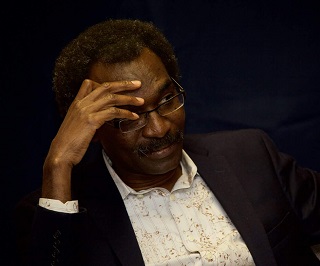
Salah Shoaib: The Egyptian army has no security or moral justification for bombing unarmed Sudanese miners with such brutality, whether they were prospecting within Egypt's borders or Sudan's. Both the first and the most recent incidents demonstrate Cairo’s clear disregard for Sudanese lives—a disregard that requires little interpretation or twisted diplomatic statements. Even if the Sudanese miners were accompanied by Nigerians or Malians, a human life is a human life, whether Arab or African. Here, those Sudanese loyal to Al-Burhan, and those who minimized the significance of this brutal event and justified it with flimsy excuses, should be silenced. Defending the killing of unarmed civilians is not a political position, but a blatant bias against the value of life itself.
This incident is not an exception, but a new link in a long chain in which Sudanese blood is cheapened and their dire situation in foreign lands is ignored. Many of these incidents that have afflicted Sudanese abroad failed to elicit any real intervention from the previously dominant Islamic Movement government, nor the current Port Sudan government. Aside from the bombing that the miners were subjected to within their own country—or rather, within what lies beyond the borders—by the Egyptian army, events involving the arrest and beating of Sudanese in Libya occurred a few weeks ago without any notable Sudanese response, neither at the level of the Port Sudan leadership nor its ambassador in Tripoli. Thousands of families and individuals are still looking for a way home by land, sea, or air. They are torn between fear and desperation, while the de facto government finds no priority in their suffering. It is as if the Sudanese citizen outside the borders has fallen out of the state’s account, or as if their exile has exempted the authorities from any moral or political duty toward them.
Now, this new incident brings to mind the killing of Sudanese in Mustafa Mahmoud Square in the first half of the last decade. Back then, the Bashir government did not even bother to condemn the Egyptian incident. Following the current Al-Burhan method of resorting to the plot of forming a committee, Khartoum politicized the issue until public opinion forgot it. Today, the same scene is repeating itself with the Al-Burhan authority, which only moved after intense media pressure, issuing a decision to form a fact-finding committee. It is a late, lackluster decision that does not rise to the level of the crime, nor to the level of leadership responsibility. A committee formed under media pressure does not provide reassurance to the public regarding what happened, nor does it restore dignity to miners who have endured misery, nor does it deter a potential recurrence of aerial bombing on innocent citizens.
The performance of the Sudanese Ministry of Foreign Affairs appeared lackluster and hesitant, as usual. Instead of a clear position condemning the principle of bombing from the outset and demanding immediate accountability, the Foreign Ministry settled for faint diplomatic language that does not rise to the magnitude of the blood spilled. Silence and the delay in issuing general statements that do not call things by their names are all different forms of the ministry’s complicity through silence. A ministry that is supposed to be the voice of the Sudanese citizen abroad turns, in such moments, into an apparatus that fears angering the neighbor more than it fears the loss of Sudanese citizens' lives. Just as is the case with embassies whose primary concern is satisfying their ambassadors' appetite for foreign currency, the Sudanese Embassy in Cairo also ignored the matter. It did not seek to verify the situation of these Sudanese who crossed the border with the Egyptian authorities, according to the narrative of statements made by Egyptian army leaders and officials.
Sudanese blood is not cheap, neither at home nor abroad. Disregarding it, whether it comes from a neighboring army, an authority that does not act unless under media pressure, or a foreign ministry that prefers gray language over a clear position, remains an unforgivable negligence. These miners were not fighters, nor did they pose a security threat. They possessed nothing but digging tools and some food barely sufficient for survival. Rather, they were seeking an honest living in harsh conditions. Killing them in this manner raises major questions about the boundaries of respect between peoples and the ability of what remains of the Sudanese state to protect its citizens, even with words, even with condemnation, even with a position that matches the brutality of the incident.
Yet, this incident that claimed the precious lives of our poor citizens did not occur in isolation from the context of the collective humiliation we are in. The Sudanese state is now eroding at its center after losing influence on its peripheries due to the war. There is nothing to suggest that it has the ability, with the faction controlling nearly half the country, to restore its prestige and sovereignty through societal consensus. If Al-Burhan, who represents the symbol of sovereignty in the part where he imposes his authority, is humiliated upon his arrival at world airports, what about his citizens inside and outside the country?
Hence, perhaps the Egyptian action is individual, without being based on a foundation of joint military cooperation between Cairo and Port Sudan to protect the two countries' wealth—even if we concede for the sake of argument that the Sudanese miners crossed the border. Because the Port Sudan reaction was cold after the Egyptian army’s first transgression against the Sudanese miners, Cairo has no reason to avoid repeating the event.
Nevertheless, some observers—both Egyptian and Sudanese—point out that the Egyptian army did not take its actions without full coordination with the Port Sudan authority. In either case, those outraged by the spilling of the miners' blood—in a manner that amounts to a war crime against humanity—have nothing left but to hold Al-Burhan fully responsible in this regard. As well as the bitter patience regarding his catastrophic presence at the peak of an authority he seeks to legitimize for himself by continuing the war at the expense of the blood of hundreds of thousands of Sudanese.
Sudanileمنبر الرأي
Share
Comments
No comments yet. Be the first to share your thoughts.
Subscribe to our newsletter
Get a summary of the latest news and analysis delivered to your inbox.