
Politics
Al-Burhan's Silence Deepens Suspicions of His Involvement in the Killing of Miners
Salah Shoaib: Sudanese public opinion continues to strongly condemn the heinous crime committed by the Egyptian army against Sudanese land and sovereignty. For the first time since the fall of the Islamic Movement regime, a broad segment of Sudanese people are united in expressing their pent-up anger toward these violations, reflecting the depth of the sense of national insult and the abandonment of the state's dignity. Despite this anger [...]
Sudanile October 15, 2026Published 1 views
Source:Sudanile
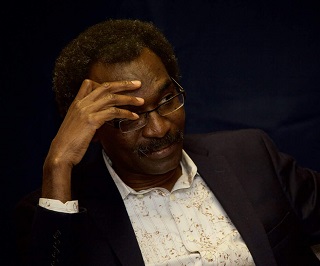
Salah Shoaib: Sudanese public opinion continues to strongly condemn the heinous crime committed by the Egyptian army against Sudanese land and sovereignty. For the first time since the fall of the Islamic Movement regime, a broad segment of Sudanese people are united in expressing their pent-up anger toward these violations, in a scene that reflects the depth of the sense of national insult and the abandonment of the state's dignity. Despite this escalating popular anger, the Port Sudan government—in both its military and civilian wings—seems mired in a deep slumber, as if it were outside the circle of events. Instead of taking a clear stance befitting the magnitude of the crime, Lieutenant General Abdel Fattah al-Burhan trivializes the matter, seeking to distract the people with performative initiatives, such as being photographed playing cards with his soldiers. It is a political facade intended to occupy people and divert their gaze from the truth, but it backfired, revealing the fragility of his position and his inability to face reality. Amid the priority of addressing Sudanese affairs in this circumstance, the Prime Minister seemed more concerned with the Pope's safety than the safety of the wounded who fell in the treacherous operation. As for the Minister of Information, he has completely disappeared from the scene, without offering public opinion a single word of reassurance or clarification, settling for his superior's token decision to dilute the issue through a nominal committee of no value. The matter becomes even stranger when it emerges that American officials have intervened, passing precise intelligence to the New York Times confirming that the attack occurred on Sudanese territory. Yet, the Port Sudan government ignored the entire matter, as if national sovereignty did not concern it, and as if the blood of Sudanese people did not deserve even an official statement. What the newspaper published, citing its government sources, is the most profound evidence of the Egyptian crime, and Al-Burhan should have been moved to explicitly condemn the act. However, Port Sudan's disregard for what was reported deepens suspicions regarding the possibility of coordination or prior knowledge by Al-Burhan of what Cairo undertook. On the other hand, some writings and voices supporting Port Sudan attempted to deviate from the consensus of overwhelming Sudanese anger, defending 'Egypt's right to protect its security and its lands,' ignoring the overwhelming evidence provided by satellite imagery, which confirmed that the attack occurred inside Sudanese territory, forty kilometers south of the Sudanese-Egyptian border. Al-Burhan is required today, rather than tomorrow, to face the anger of public opinion with a frank speech in which he condemns the incident, in order to distance himself from the suspicion of prior knowledge of it. Time does not permit him to continue ignoring, and feigning humility does not carry his massive problems. The longer the army remains silent, and the more Port Sudan government officials evade addressing public concerns, the more suspicions grow regarding the potential role Al-Burhan may have played in the loss of the innocent miners' lives. This reality that Sudan lives today, in the face of the Port Sudan government's incompetence, reveals catastrophic mistakes committed by the army leadership. The war that this leadership waged with the help of extremists from the remnants of the Islamic Movement was not just a military choice, but a decisive factor in pushing the country into this humiliation and disintegration. That war opened the doors of collapse before the state's institutions and turned the suffering of citizens inside and outside the country into an unbearable reality. Unless minds return to reason, and the bleeding of blood between the parties stops, these tragic conditions are likely to continue, or even escalate toward a complete collapse of state apparatuses. Sudan today stands on the edge of an existential danger, and nothing will save it except stopping the war, placing the nation's interest above all narrow calculations, and achieving a peace that restores the true meaning of sovereignty and dignity.
Sudanileمنبر الرأي
Share
Comments
No comments yet. Be the first to share your thoughts.
Subscribe to our newsletter
Get a summary of the latest news and analysis delivered to your inbox.